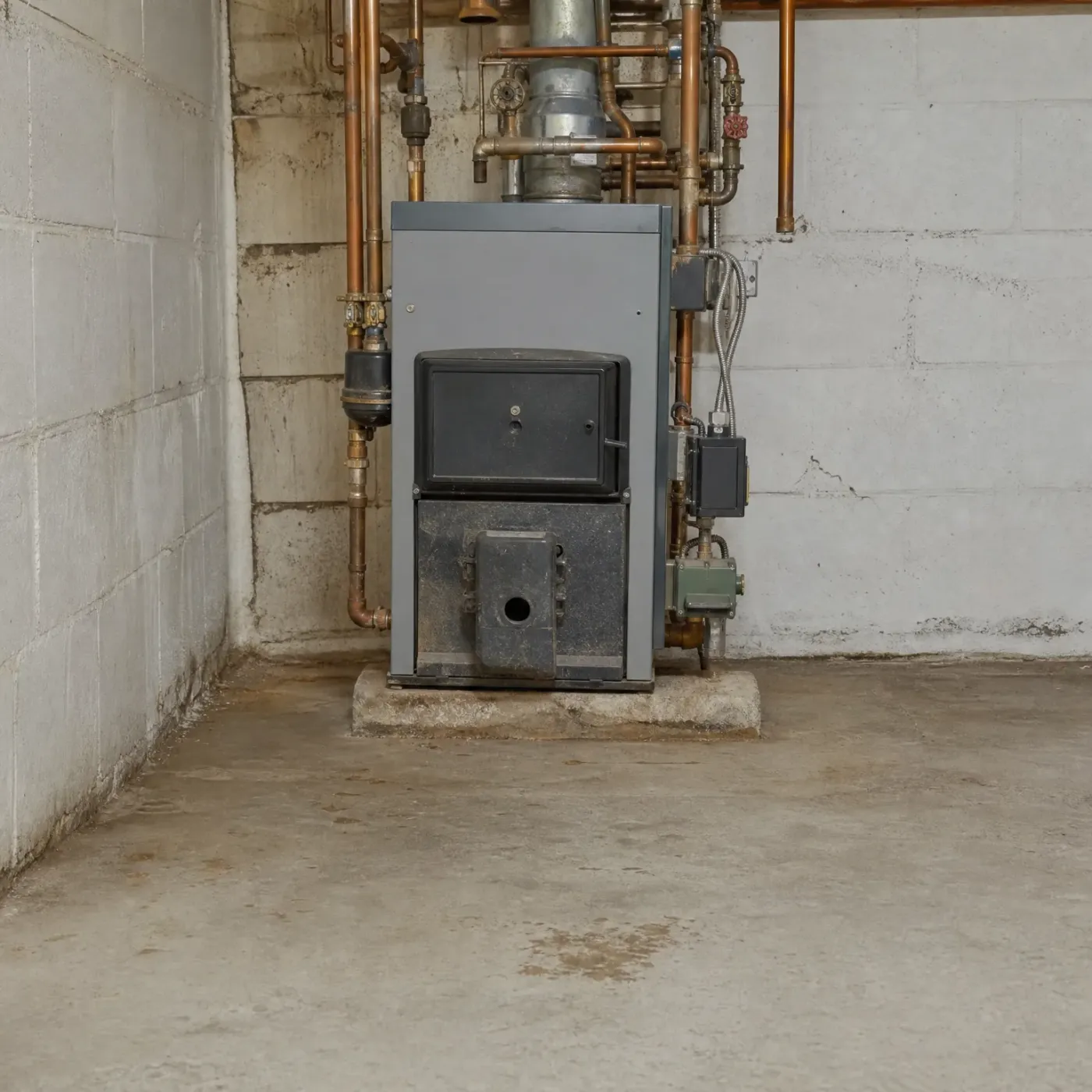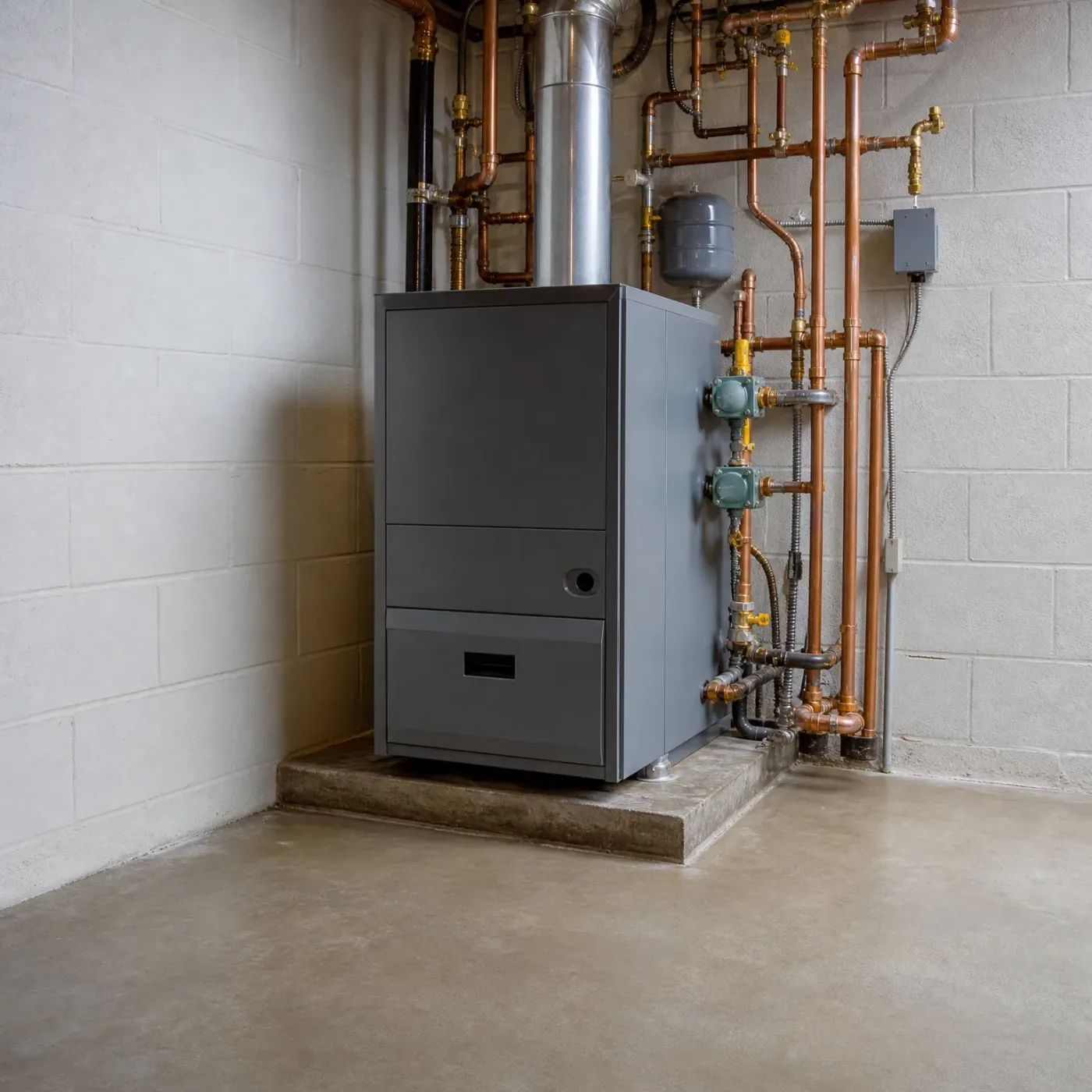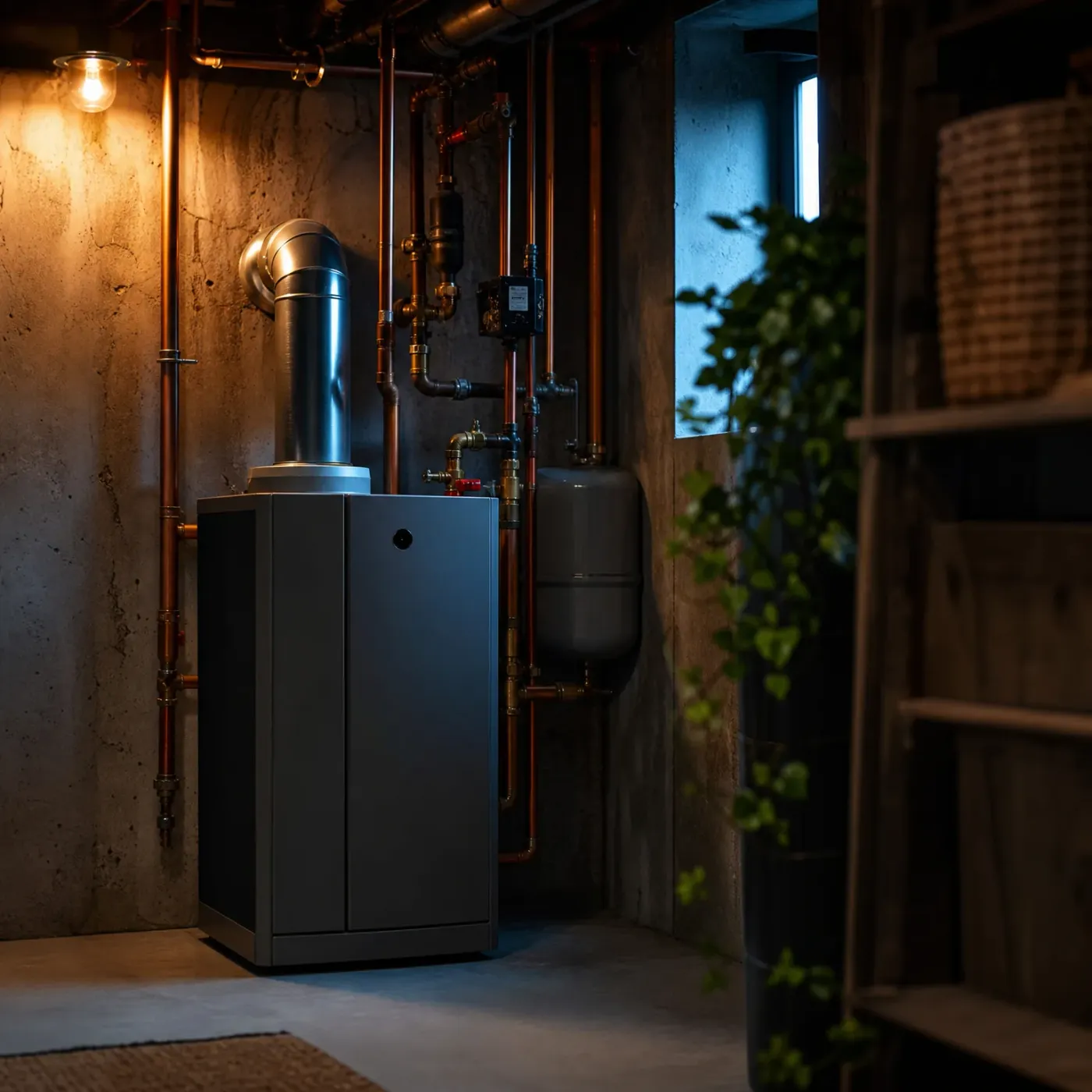




A dark grey floor-standing boiler with a metal flue stands against a concrete basement wall, surrounded by copper pipework, valves and a wall-mounted expansion tank, with ivy and a shelving unit at right.

Get your boiler to the right pro

Boiler pilot light keeps going out in North Dakota

A pilot that won't stay lit usually comes down to the thermocouple, a draft in the flue, or a valve on its way out. This page gets into why it keeps happening and what a cold snap in North Dakota does to make it worse. Skip calling around and explaining the problem twice. Answer a few questions and a contractor who handles boiler repair in your area will reach out.

Find my pro

A pilot light that keeps going out is almost always one of three things: a worn thermocouple that can't sense the flame anymore, a draft reaching the pilot from somewhere it shouldn't, or a gas valve starting to fail. The thermocouple is the most common. It's a small rod that sits in the pilot flame and tells the valve to keep gas flowing. Once it wears out, it reads the flame wrong and shuts the gas off, even though the pilot is lit. Cold matters here. When temperatures drop hard in North Dakota, boilers run longer and harder, and any weakness in the thermocouple or valve shows up sooner, usually as the pilot going out right when you need the heat most. A draft from a vent pipe or chimney that isn't drawing right can snuff the flame the same way. None of these fix themselves, and a pilot that won't hold means the boiler can shut down entirely until it's repaired.

A woman with long wavy brown hair in a grey ribbed sweater sits on a couch indoors, looking toward a window, with a potted palm-like plant and fireplace behind her.
A woman with long brown hair wearing a green V-neck top and beige cardigan sits on a light sofa, looking off to the side, with a dining table, lamp and framed picture in the background.
A woman with long dark hair in a cream knit sweater sits on a beige sofa indoors, looking toward a bright window with a houseplant and framed picture in the background.
A woman with long dark hair in a green knit sweater sits on a couch indoors, smiling and looking toward a window with a blurred room behind her.

Why cold snaps make it worse

A thermocouple that's borderline can limp along most of the year and still fail the test on the coldest nights. When the burner has to fire longer and more often to keep up with a hard North Dakota cold snap, a weak thermocouple gets exposed faster because it's cycling more. The same goes for a draft problem. Wind pressure against the house changes how air moves through the flue, and a pilot that stayed lit in October can get snuffed out in January once that pressure shifts enough.


What a bad valve looks like

A failing gas valve doesn't always announce itself the same way twice. Sometimes the pilot lights fine and goes out within a minute. Sometimes it holds for a day or two, then quits overnight with no warning. The valve controls gas flow to both the pilot and the main burner, so when it's wearing out, the symptom can shift around even though the cause stays the same. That inconsistency is often what tells a technician it's the valve and not the thermocouple.

A gray-haired woman in a cream knit sweater stands in a dimly lit kitchen at night, looking to her right, with a round loaf of bread in the foreground and a dark window and potted plant behind her.
A woman and a sleeping child wrapped together in a cream knitted blanket on a couch, with a potted plant, framed photo and lit lamp in the background.
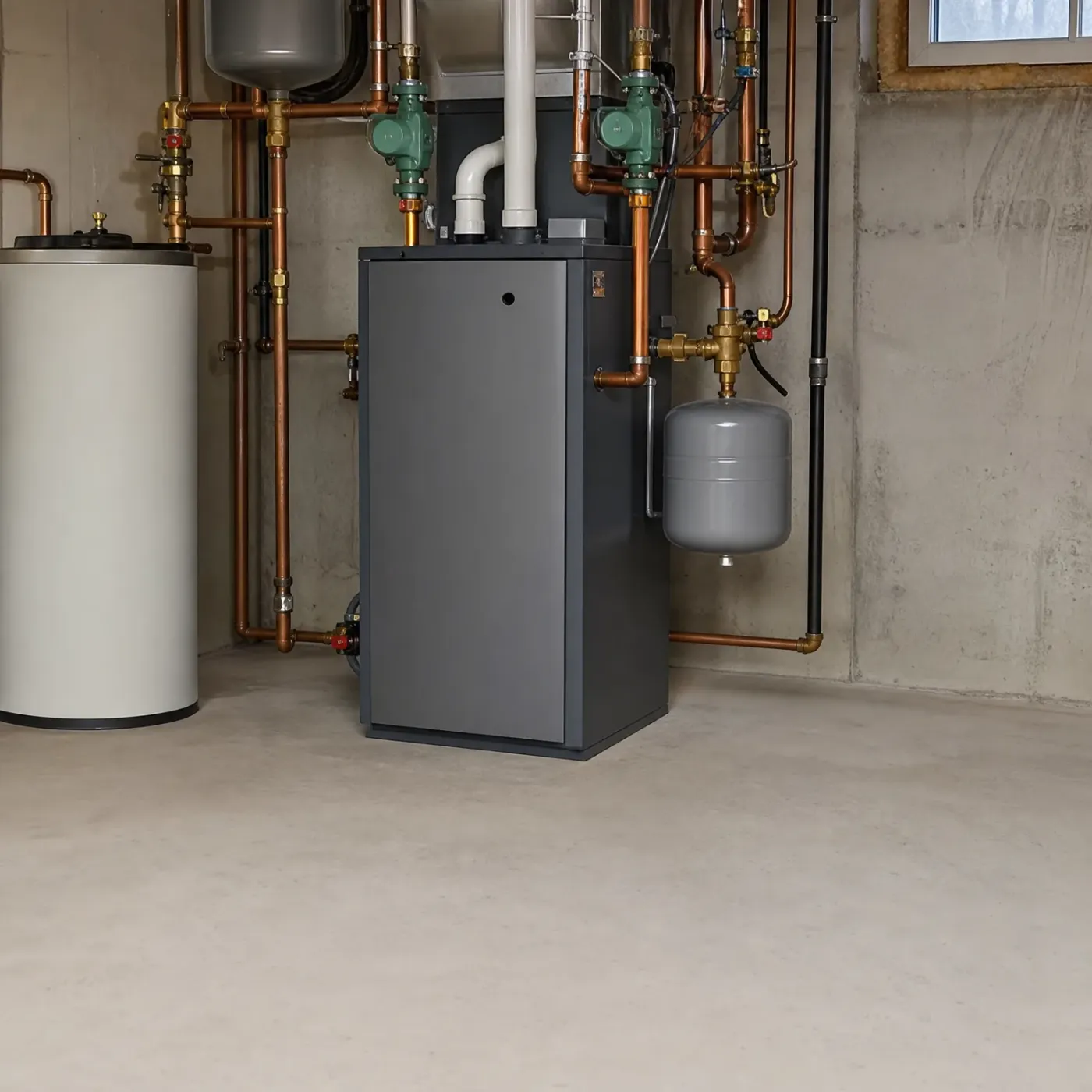
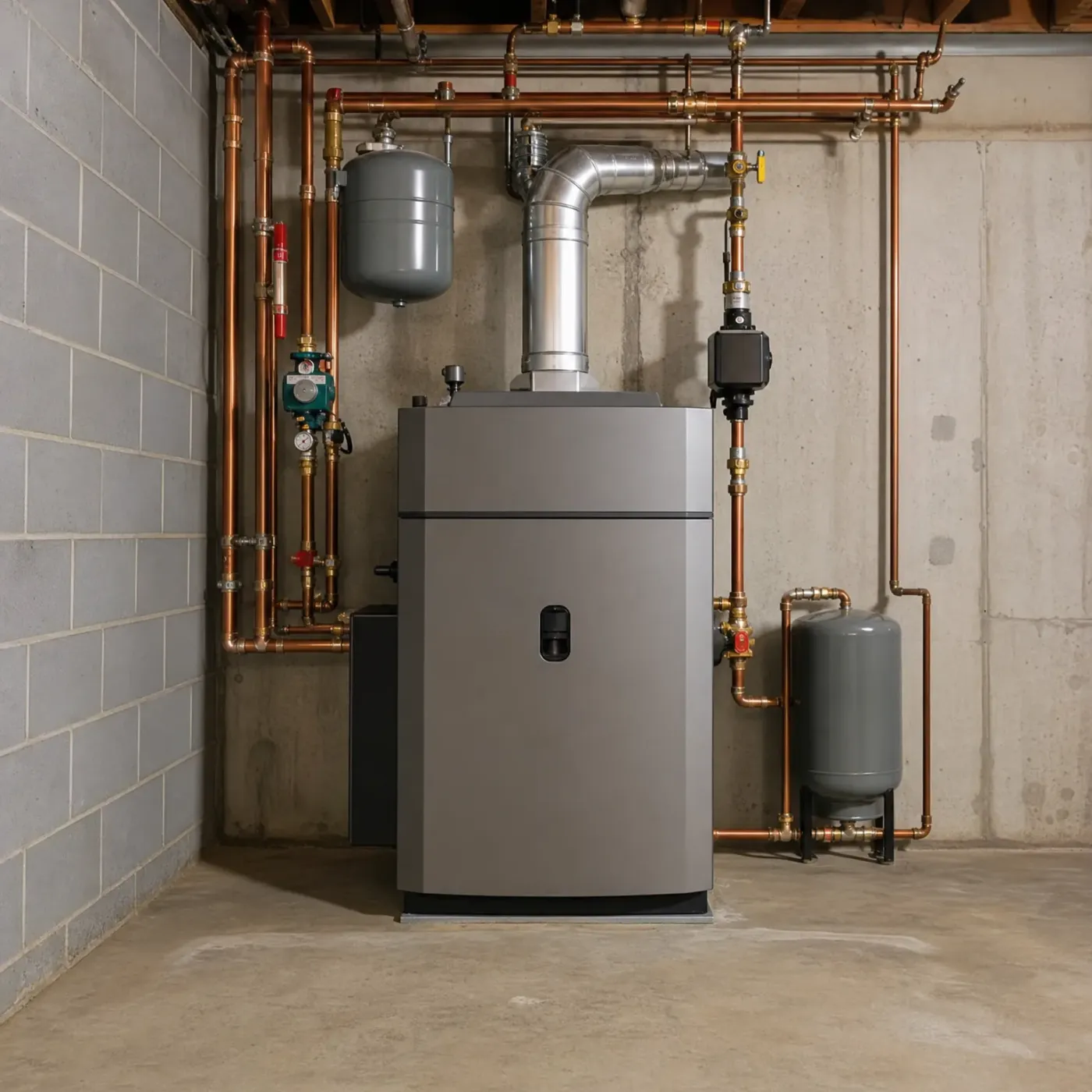
A dark gray floor-standing boiler in a concrete-walled basement, connected to copper piping, circulator pumps, a gray expansion tank, and a cream-colored storage tank to the left.

Pilot staying lit

This is what a working pilot looks like, a steady flame the thermocouple can sense, with the burner cycling normally through the pumps and copper lines to heat the house. No drafts reaching it, no flickering, nothing to relight.

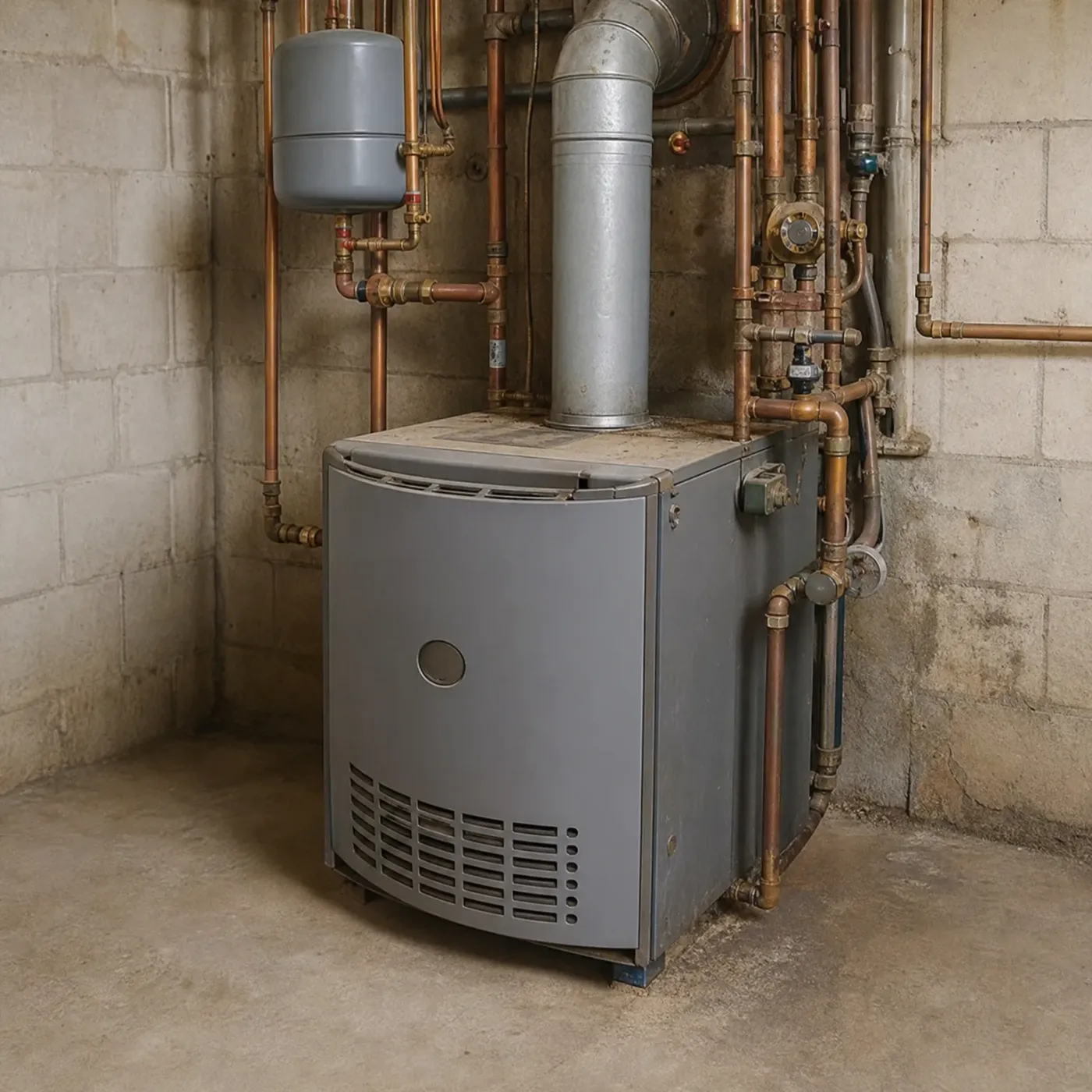
A gray residential boiler with a metal flue pipe stands in a concrete-block basement corner, surrounded by copper piping, valves and a gray expansion tank.

Pilot going out

Here the pilot won't hold. The flue draws air up through that galvanized pipe, and if a thermocouple is weak or a valve is failing, the flame drops out and the boiler shuts down, often on the coldest nights when it's running longest.

Why does my boiler's pilot light keep going out?

You've relit the pilot more times than you can count, and it never seems to hold for long. In the middle of a North Dakota winter, that's not something you want to keep gambling on, especially with the house depending on that boiler to stay warm.

Most often it's the thermocouple, not the pilot itself

The pilot flame is usually fine. What's failing is the thermocouple, a small rod that sits in the flame and tells the gas valve the pilot is lit. Once it wears out, it reads the flame as out even when it isn't, and the valve shuts the gas off to be safe. That's why relighting works for a while and then fails again. A draft hitting the pilot or a gas valve starting to go can cause the same pattern, but a thermocouple wearing down is the one that shows up again and again, especially once the boiler's been running hard through a stretch of cold.

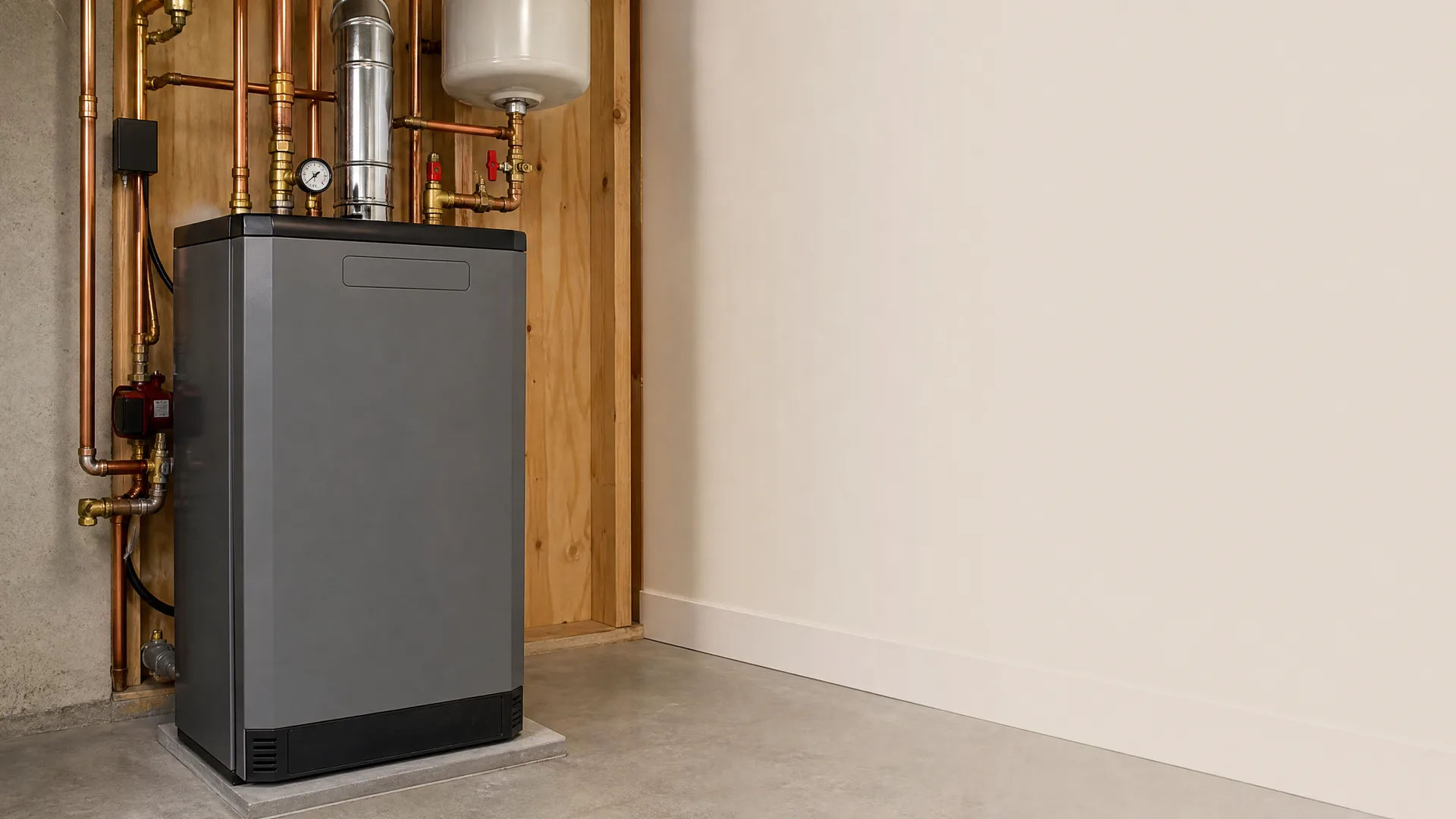
A dark grey floor-standing boiler on a concrete floor in front of a plywood wall, with copper pipes, valves, a pressure gauge, a flue pipe and a white expansion tank above it, beside a plain light-coloured wall.

What a relight tells you

Every time you're down in the basement relighting that pilot, it's worth noting how long it held before it went out. A few hours points to a draft, something stirred up by wind against the house. A pattern of going out around the same point in the burner cycle points to the thermocouple. If you're relighting it daily now, that's worse than it was a month ago, and it's heading toward not holding at all.

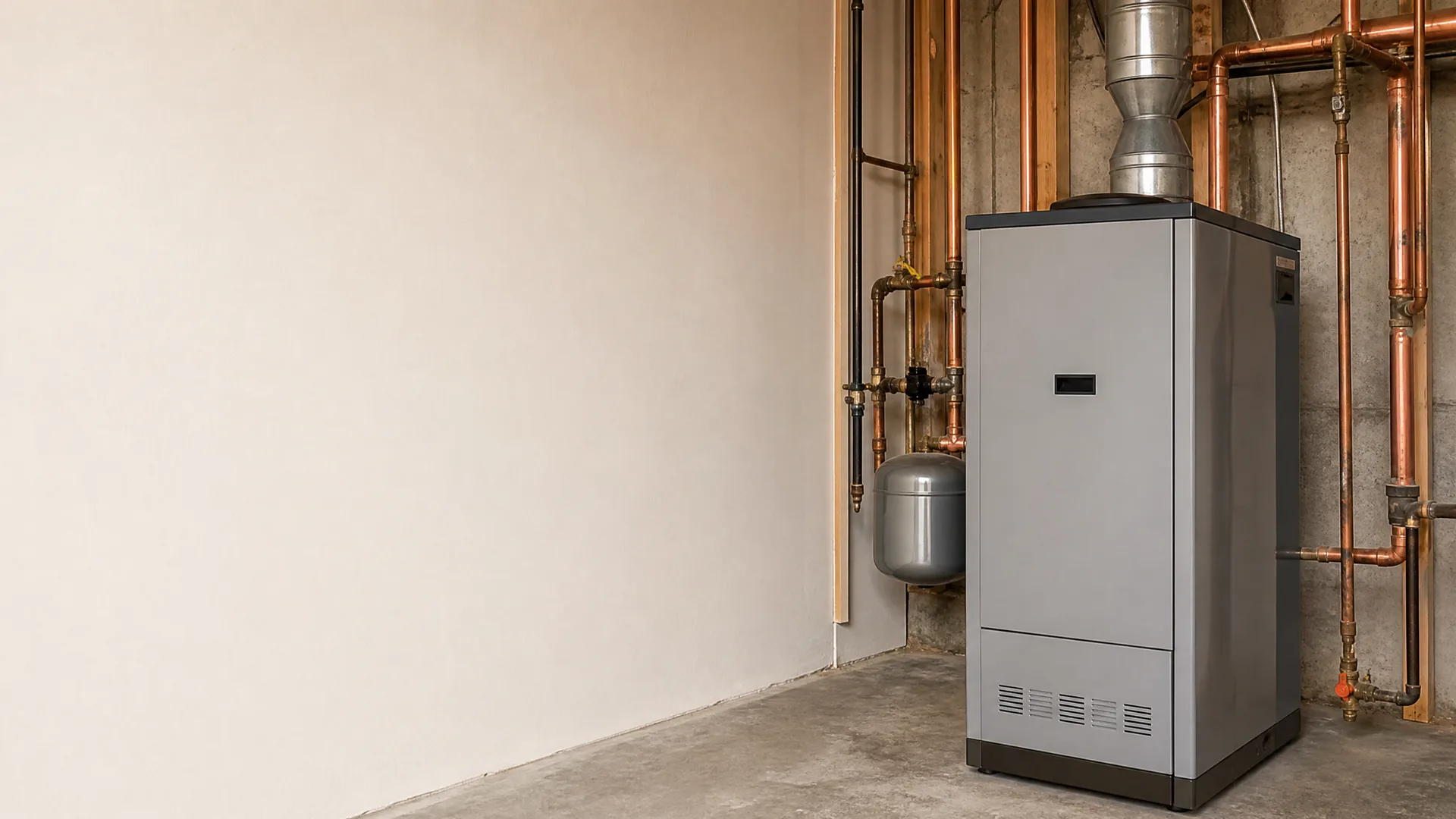
A gray boiler unit with a metal flue pipe stands in a basement corner, surrounded by copper piping and an expansion tank against a plain light wall and concrete floor.

What happens if it quits for good

If the pilot won't relight at all, the boiler stops making heat. In a North Dakota cold snap that's not something to sit on overnight, especially with kids or older people in the house who feel a cold house faster than you do. Most homes here heat with gas, and the boiler is the only thing standing between the house and the outside temperature once the furnace isn't an option.

Why does this keep happening in your basement

You know the drill by now. Down to the boiler, off with the access panel, hold the knob in, relight, wait, hope it holds. Some nights it does. Some nights you're back down there before you've even sat down again. You might notice the flame looks weaker than it used to, more yellow than blue, or leaning to one side like something's pushing on it. Maybe there's a faint gas smell in the seconds before it catches. On the coldest nights, when the house needs steady heat the most, that's exactly when it tends to quit, leaving the house to cool down while you're stuck relighting a pilot instead of sleeping.

A gray boiler on a concrete pad in a basement with painted concrete block walls, copper piping, a metal flue, and electrical control boxes.
Before you get your boiler repair
A gray boiler with a metal flue pipe stands in a basement against concrete and concrete-block walls, connected to copper piping, a circulator pump, and two gray expansion tanks.
After you get your boiler repair

The right pro for this job

A boiler that won't hold a pilot does not fix itself, and relighting it every few hours through a North Dakota winter is not a plan, it is a holding pattern. Somewhere between the thermocouple, a draft, and a gas valve is the actual cause, and finding which one takes someone down in your basement with a meter, not another guess from upstairs. That means calling around for a contractor who works on boilers specifically, explaining the relights and the timing to each one, then waiting on quotes to sort through while the pilot keeps going out. Hand that off instead. One contractor who works on boilers in your area gets your situation, and reaches out to you about it. No list of five companies to field, no retelling the story from scratch each time. You still have a cold basement and a pilot that won't stay lit tonight. What changes is you are not the one tracking down who can look at it.

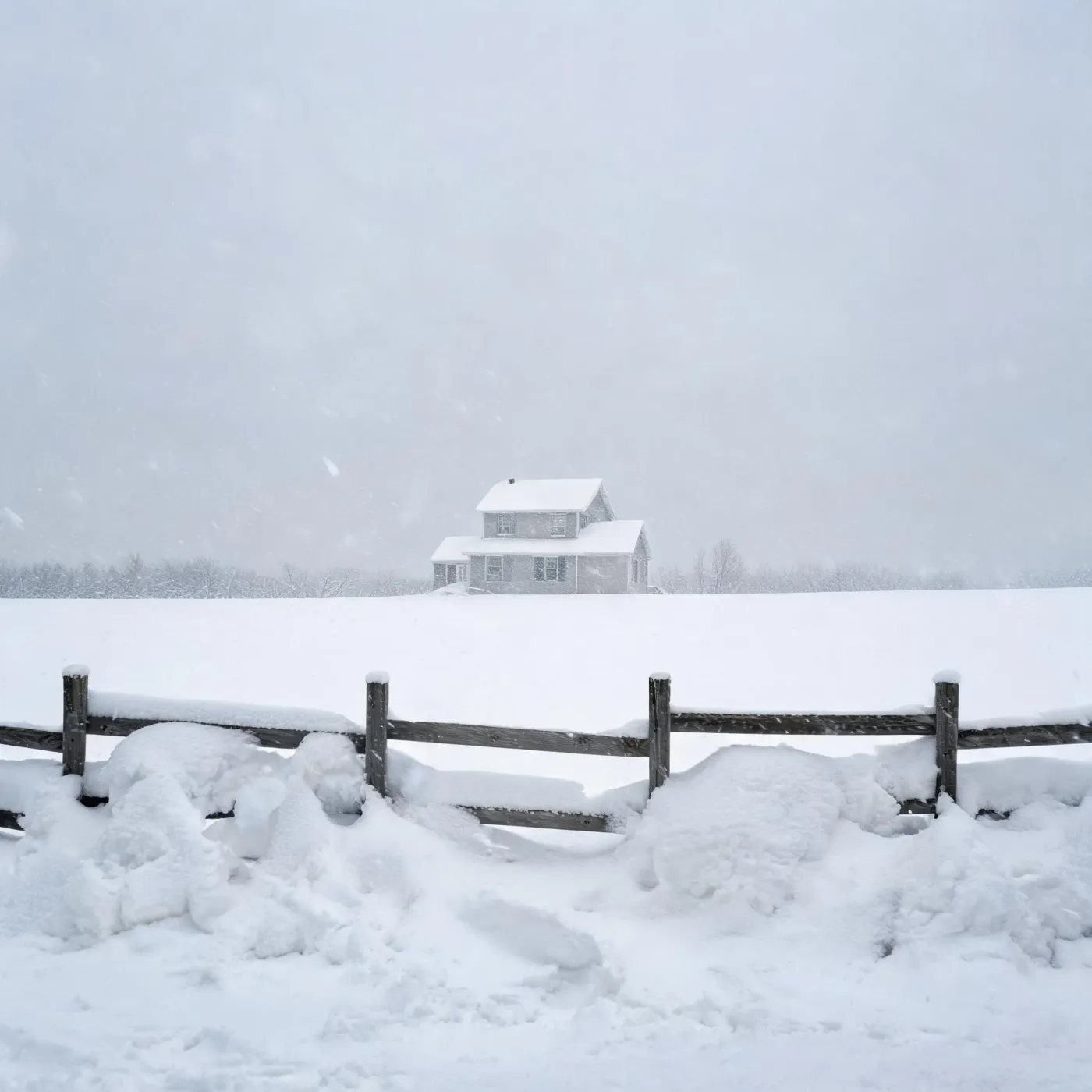
A two-story light-colored house with snow-covered roofs stands beyond a snow-filled field, with a weathered wooden post-and-rail fence half buried in drifts in the foreground under an overcast, hazy sky.

Winter nights here average 4°F statewide, according to NOAA. At that temperature your boiler isn't cycling off much, it's running long stretches to keep the house warm, which means the burner is lit more hours out of the day than it is in fall or spring. A thermocouple that's gotten weak has to hold through all of that extra runtime, and cold like this is what finally shows the wear that milder weather was hiding. If your pilot's been going out more often lately, a hard cold snap is usually when it starts.

NOAA nClimDiv 1991-2020 county normals weighted by homes

Keep Relighting It or Get It Fixed

Relight it yourself

  • You're down to the basement every time it goes out, holding the knob in and waiting to see if it catches.
  • A thermocouple that's failing doesn't announce itself, so you're guessing whether tonight is the night it holds.
  • If a draft is the real cause, relighting does nothing to stop the next one from going out a few hours later.
  • A gas valve on its way out can still let the pilot light, so relighting can mask the actual problem for a while.
  • Every trip down there in the cold is time you're not spending on anything else, and it adds up over a winter.

Get it repaired

  • A contractor can test the thermocouple's output directly instead of guessing from how long the pilot held.
  • Finding the draft means checking the flue, the vent, and the cabinet seams, not just watching the flame flicker.
  • A failing gas valve gets replaced before it strands you without heat on one of those 4°F nights.
  • Once the actual cause is found, you're not back in the basement relighting it every few hours.
  • Matching with a contractor means you explain the problem once, not every time you call around for quotes.
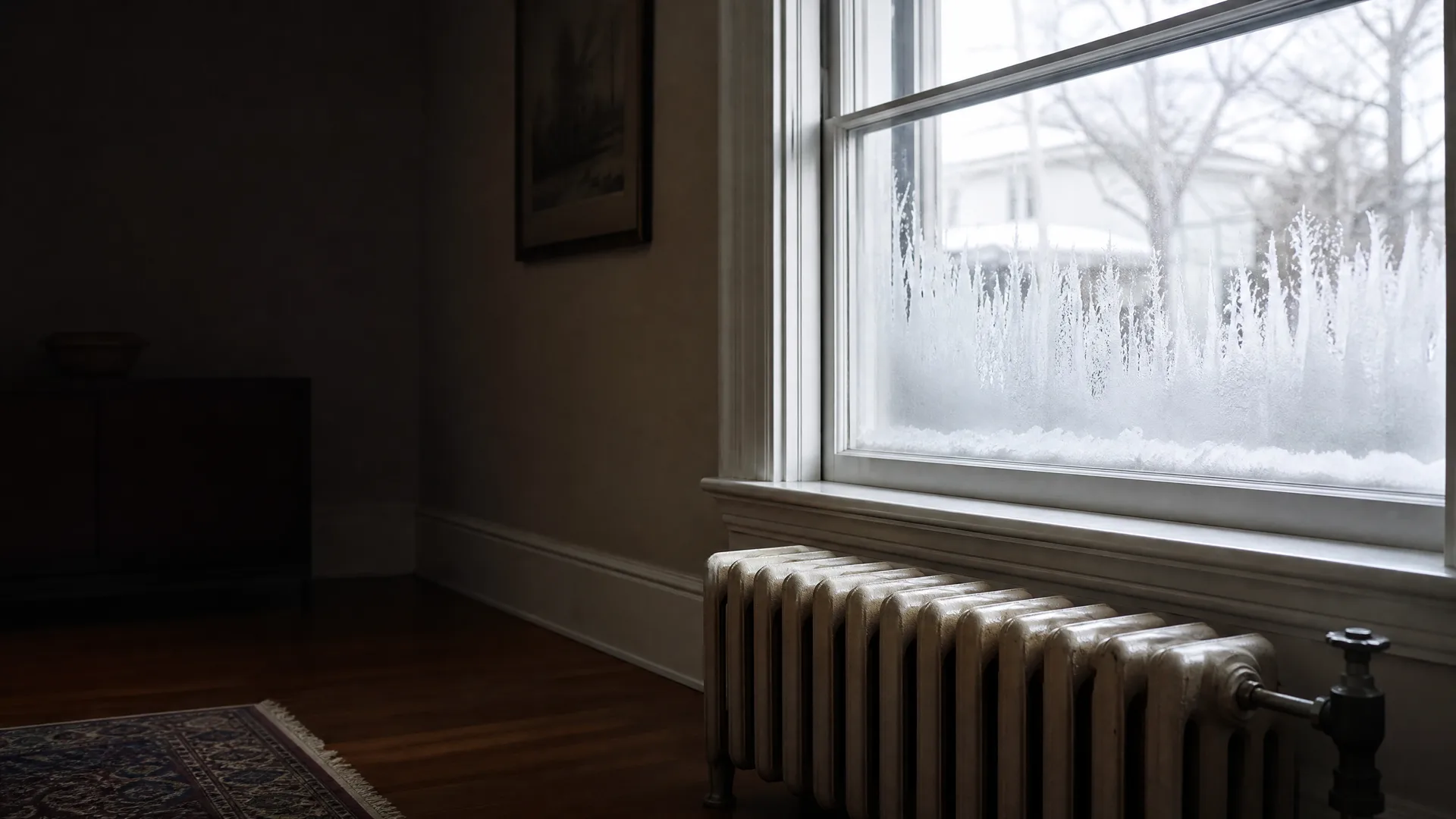
A cast-iron radiator with a valve sits beneath a frost-covered window in a dim room with dark wood floor, a patterned rug, a framed picture, and a low cabinet.

It's just past six in the morning and still dark outside. You're in the living room because you heard the radiator go quiet an hour ago, and now you can see your breath a little. Ice has formed on the inside of the window glass above the cast-iron radiator, a thin layer at the corners working toward the middle. The radiator is cold to the touch. You already know what you'll find downstairs: the pilot out again. Everyone else is still asleep, and you're standing here in last night's clothes, deciding whether to grab a sweater first or just go deal with the boiler now, before the house gets any colder than it already is.

A gray boiler unit on a concrete pad in a basement corner, connected to copper piping, valves and a metal flue against painted concrete block walls.
A pilot that holds steady lets the burner cycle the way it's supposed to, firing and shutting off as the copper lines and expansion tank do their job.
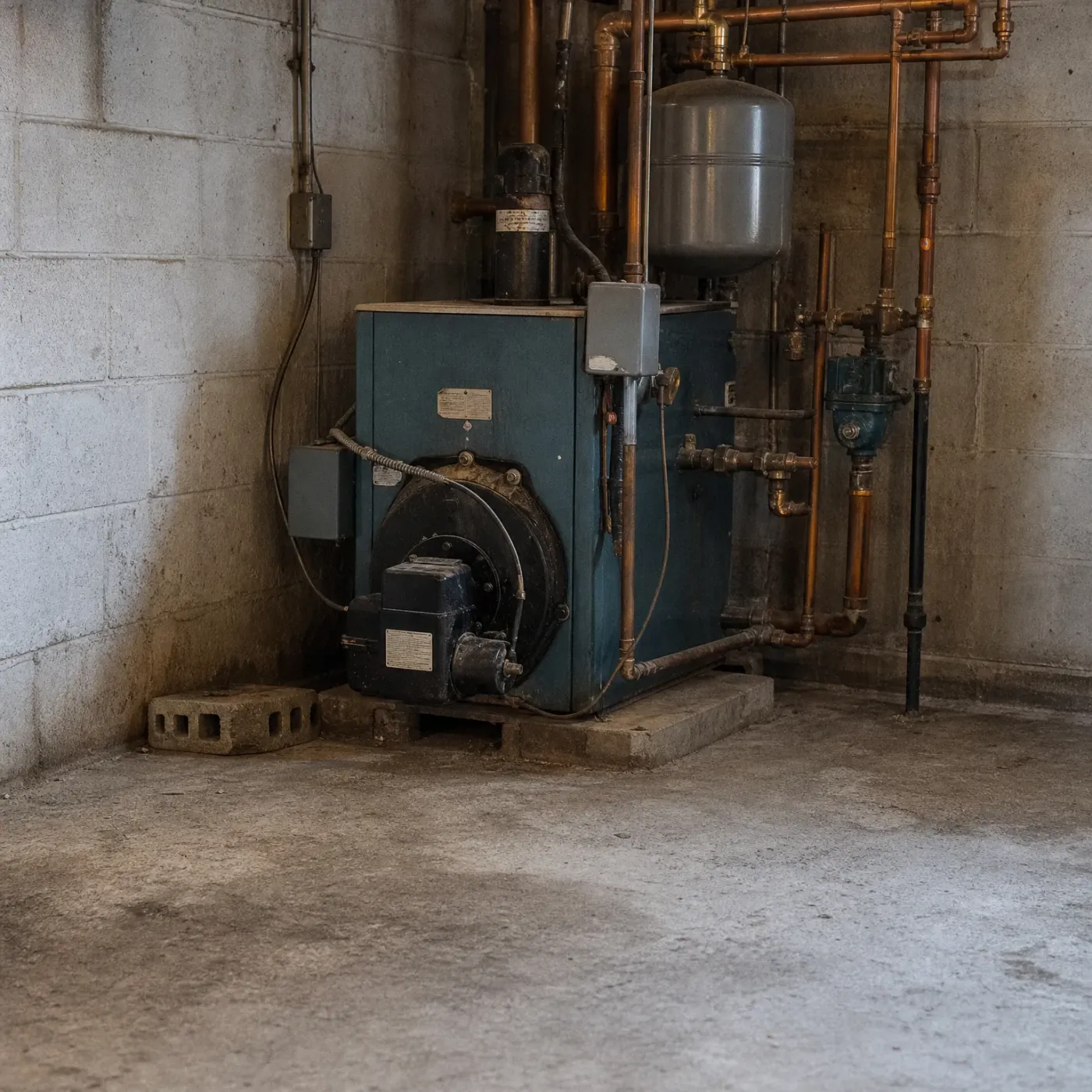
A blue oil-fired boiler with a burner unit sits on a concrete pad in a basement corner, with copper piping, valves and a gray expansion tank overhead against concrete block walls.
A boiler that's lost its pilot more than once is telling you one of its parts, maybe that expansion tank or the valve behind it, is on its way out.

Winter nights average 4°F statewide

At 4 below zero overnight, your boiler is running long stretches, not short cycles, to keep the house warm. That means more hours with the burner lit, and more hours for a weak thermocouple or a stray draft to catch it out. A pilot that barely held on through fall won't make it through a night like that.

NOAA nClimDiv 1991-2020 county normals weighted by homes

A woman in a cream cardigan and jeans stands with one hand raised facing an open front door of a gray horizontal-siding house, with a black lantern wall light, a potted shrub with yellow flowers, and a stone-faced porch column.

A pilot that keeps going out has a cause

A worn thermocouple, a draft finding its way to the pilot, or a gas valve wearing out. One of those three is behind every relight you've done this winter, and which one it is decides what happens next. A thermocouple gets replaced. A draft gets traced and closed off. A failing valve gets dealt with before it leaves you with no heat at all on a night like last night's.

You don't have to work out which one it is by yourself, and you don't have to spend an evening on the phone finding someone who will. Answer a few questions about what you've seen, how long the pilot holds, what the basement feels like when it goes out, and you'll be matched with a contractor who takes boiler calls in your part of North Dakota. They'll reach out to you directly. No describing the problem again to three different companies, no sorting through quotes to guess who's worth calling back.

A living room corner with a light beige sofa holding a textured taupe cushion, a large ceramic vase of olive branches by a window, a framed neutral artwork on the wall, and a dark bowl with stacked books in the foreground.
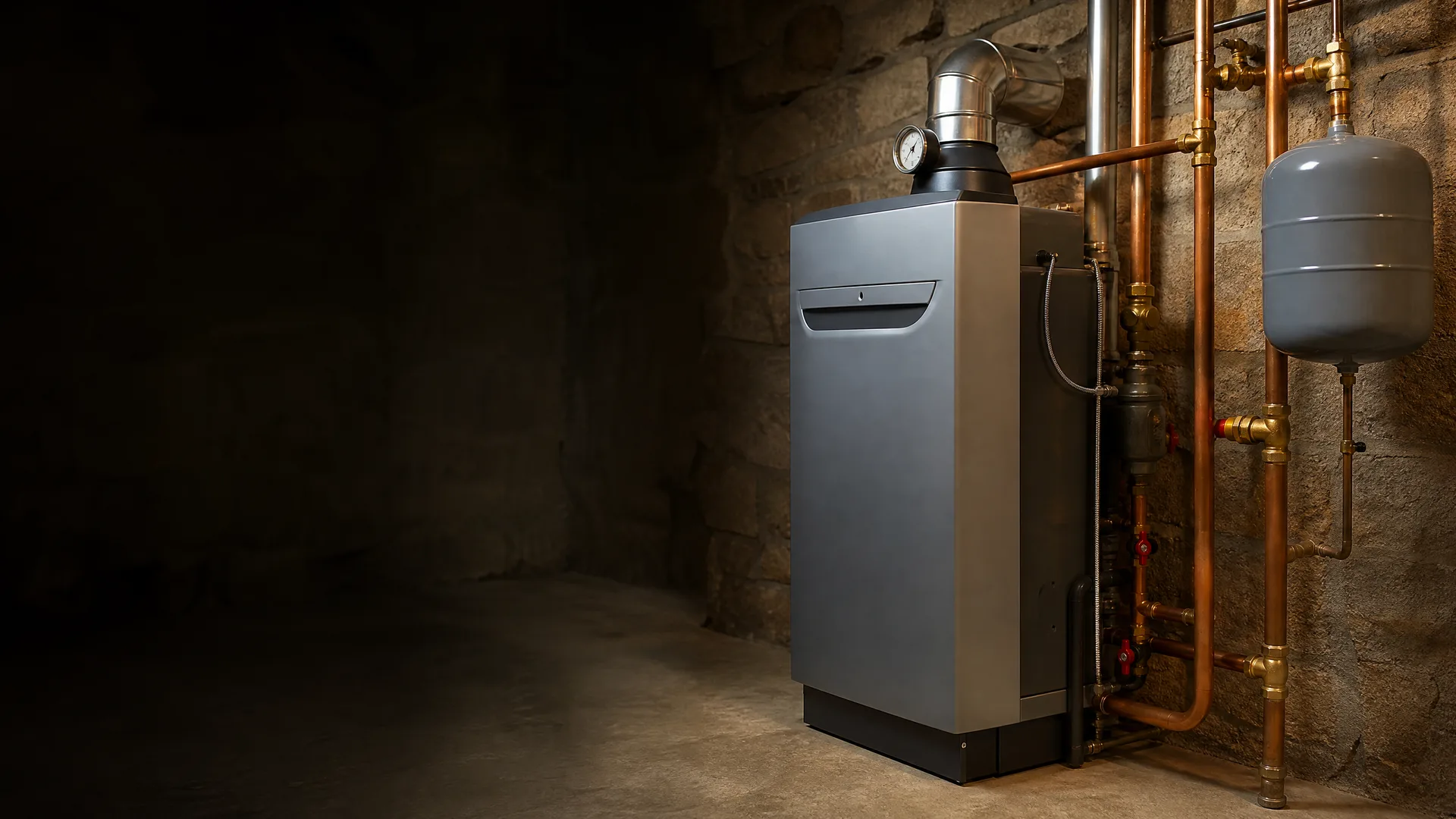
A gray floor-standing boiler with a flue pipe and pressure gauge stands against a stone basement wall, connected to copper and brass piping and a gray expansion tank.

Matched to your boiler job

Step 1 of 3: Equipment