Running the way it should
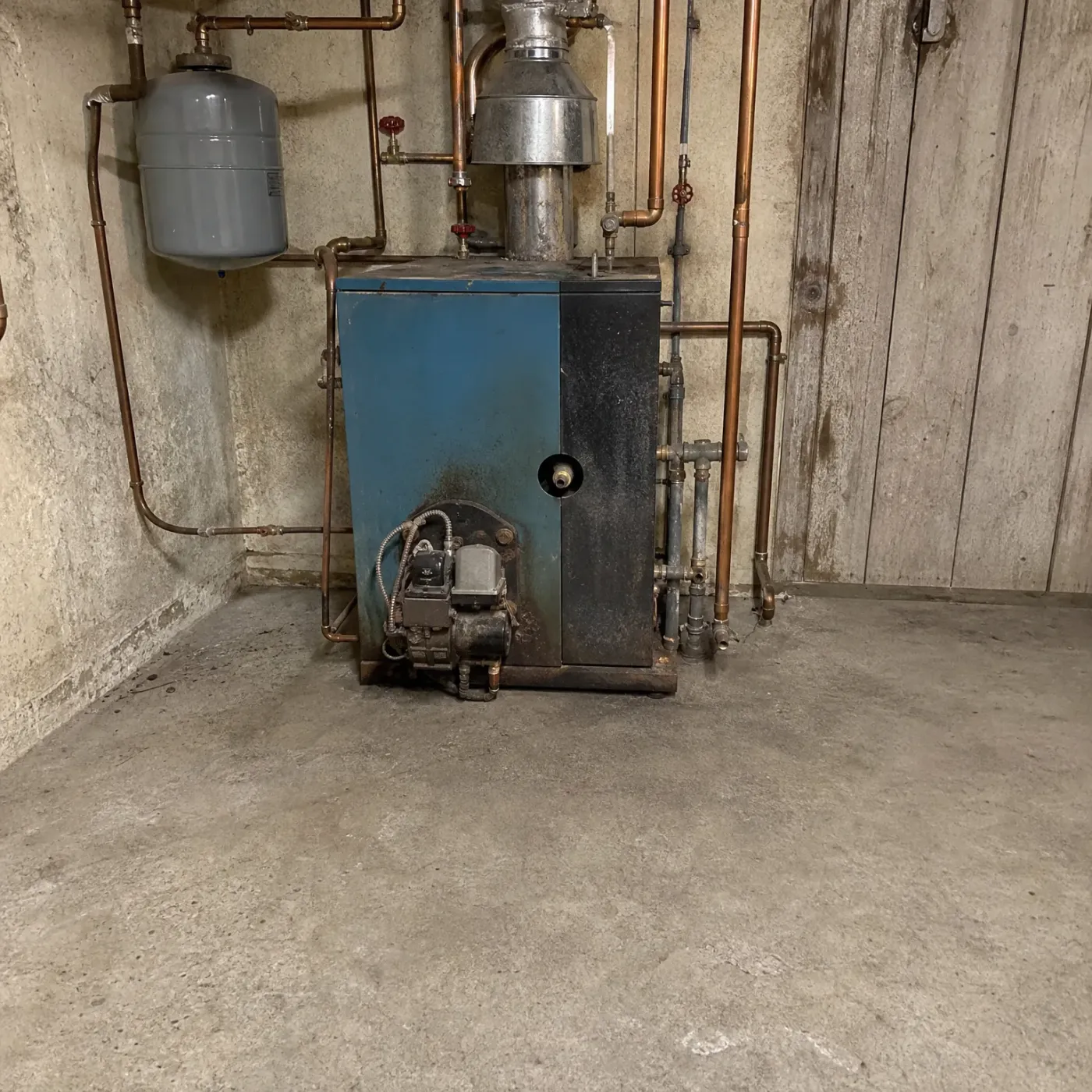
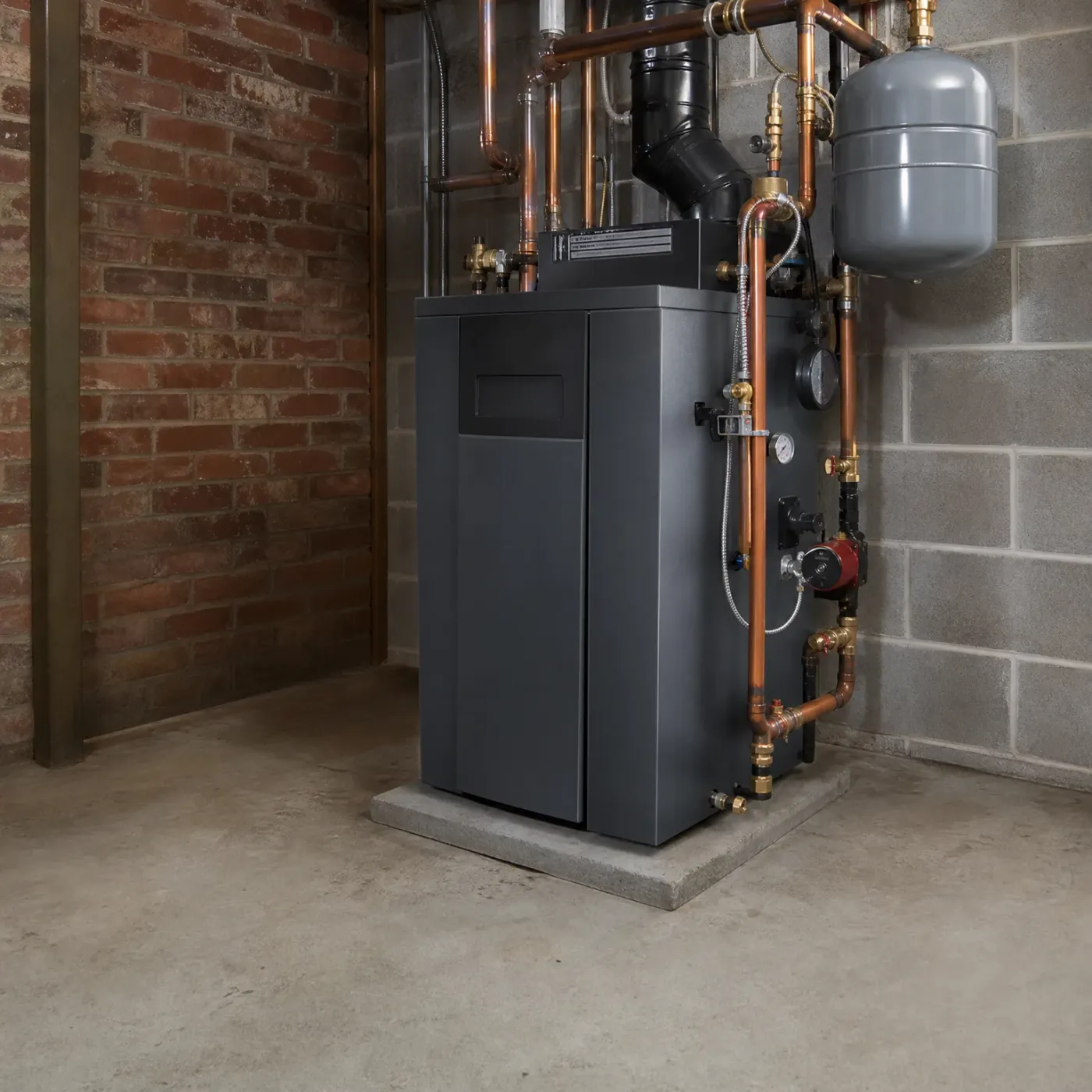
This is a boiler doing its job. Pipes, fittings and pumps all tied in clean, the flue drawing properly, the expansion tank holding steady pressure. Nothing here is guesswork. Someone's kept an eye on it.
 Get a boiler pro
A local installer who puts in boilers gets your project.
A gas boiler in North Dakota can run 15 to 20 years, sometimes longer, if it was sized right for the house and kept up every year. The ones that fail early are usually the ones nobody looked at until something stopped working.
Cold winters mean the boiler runs for months straight without a break. That kind of steady use wears on the heat exchanger and the circulator pump faster than a mild climate would. Cheap power here doesn't change that. It just means the strain shows up in repair calls instead of a painful bill.
How many winters yours has left depends on things a page like this can't see. Whether it came with the house. Whether the venting and the near-boiler piping were done right the first time. Whether it's been flushed and inspected or just left running until it quits. Those are things a local contractor can tell at a glance, and you can't always tell from the basement.
If yours is getting old or already giving you trouble, the next step isn't figuring out the exact year to replace it. It's getting someone who works on boilers in North Dakota homes all winter, every winter, to look at what you've actually got. That's someone who knows what tends to fail in this cold and what a straight install looks like versus one that was rushed.
When you request a match here, you're connected with one licensed local contractor, not a handful competing for your number. They know the climate and they know boilers, and they'll reach out to talk through your specific setup before anything is decided.
A gas boiler in North Dakota typically lasts 15 to 20 years. Cold winters here mean yours runs long stretches without a break, from October through March in a lot of houses, and that steady demand is what wears down a boiler faster than warmer states see. The parts that go first are usually the ones that handle heat and pressure cycling: the heat exchanger, the circulator pump, the ignition system. A boiler that gets checked every year, before the cold sets in, tends to hit the far end of that range. One that doesn't often needs replacing well before 15 years, sometimes because of a single part failing at the worst time, in the middle of a January cold snap. If yours is original to the house and has never had a real inspection, that history matters more than its age alone.
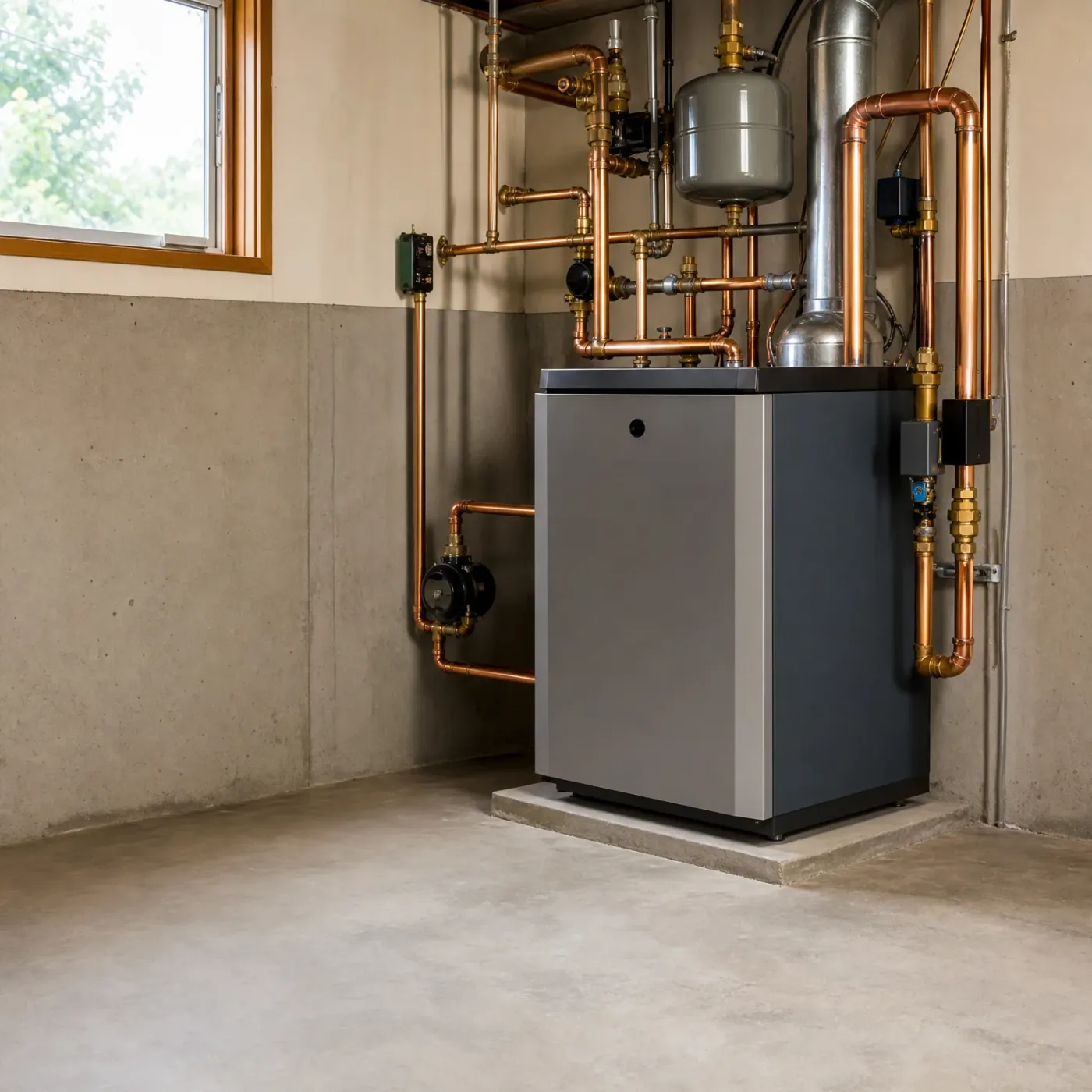
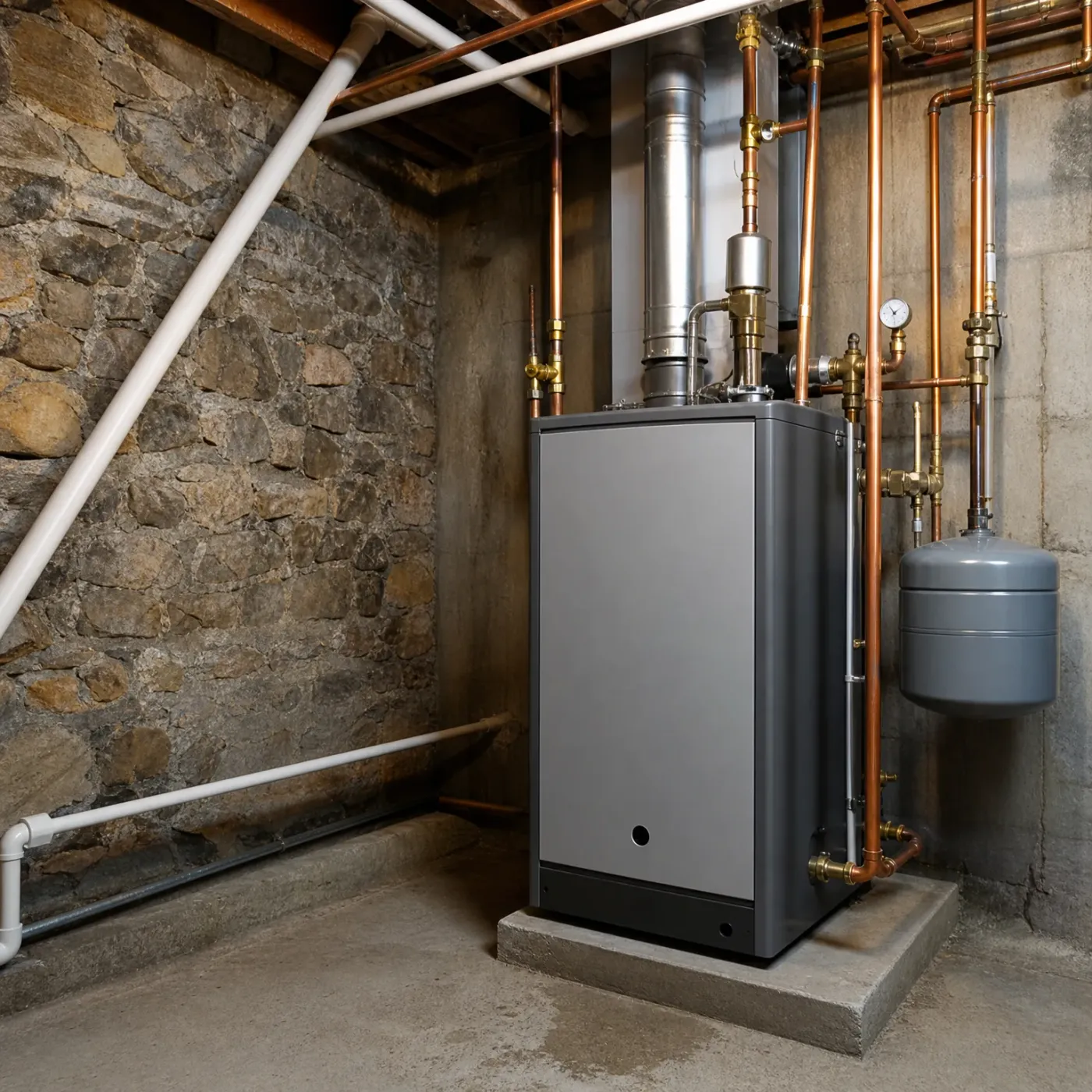
A boiler's job sounds simple. Heat water, push it through a sealed loop, send it out to the baseboards or radiators. The heat exchanger does the heating, and that's the part that eventually gives out once scale or corrosion coats it. The circulator pump does the pushing, and when it seizes up or starts making noise, that's usually the first warning something's going wrong. Low pressure trips a switch and shuts the whole system down, which is why topping it off to around 12 to 15 psi is part of a yearly check. Air trapped in the lines, or a bad aquastat, can make a boiler short cycle, turning on and off in quick bursts that look like a burner problem but usually aren't. Mineral buildup makes the burner run longer than it should to hit the same water temperature, and that extra runtime adds up across a North Dakota winter. Bleeding the radiators each fall clears that trapped air and stops the banging, and it's one of the easiest things anyone can check before the cold sets in for good.




One installer gets your project, so there's no bidding war over it.
Get in touch with a local installer about a new boiler.
Asking costs nothing, and the choice to hire stays yours.
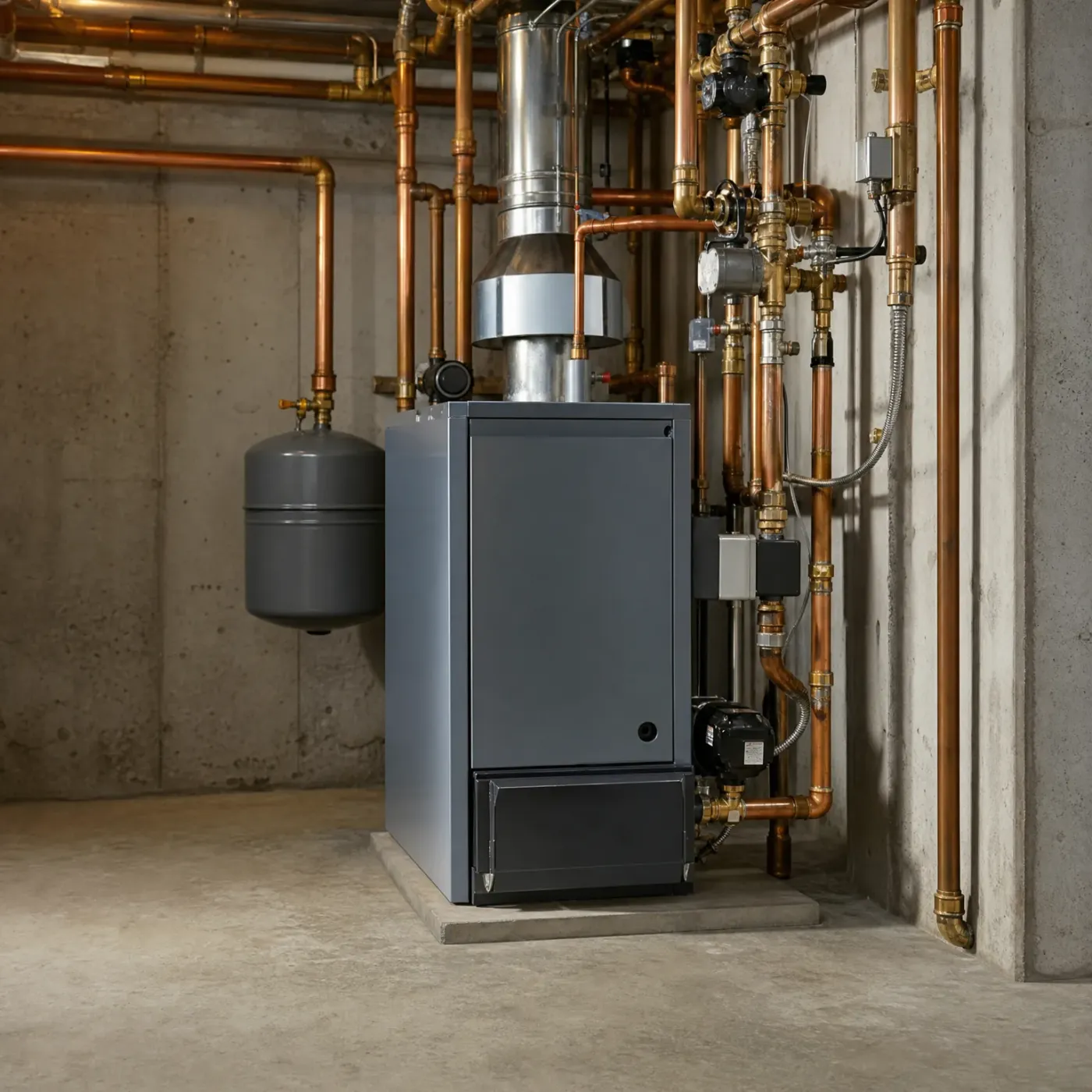
This is a boiler doing its job. Pipes, fittings and pumps all tied in clean, the flue drawing properly, the expansion tank holding steady pressure. Nothing here is guesswork. Someone's kept an eye on it.
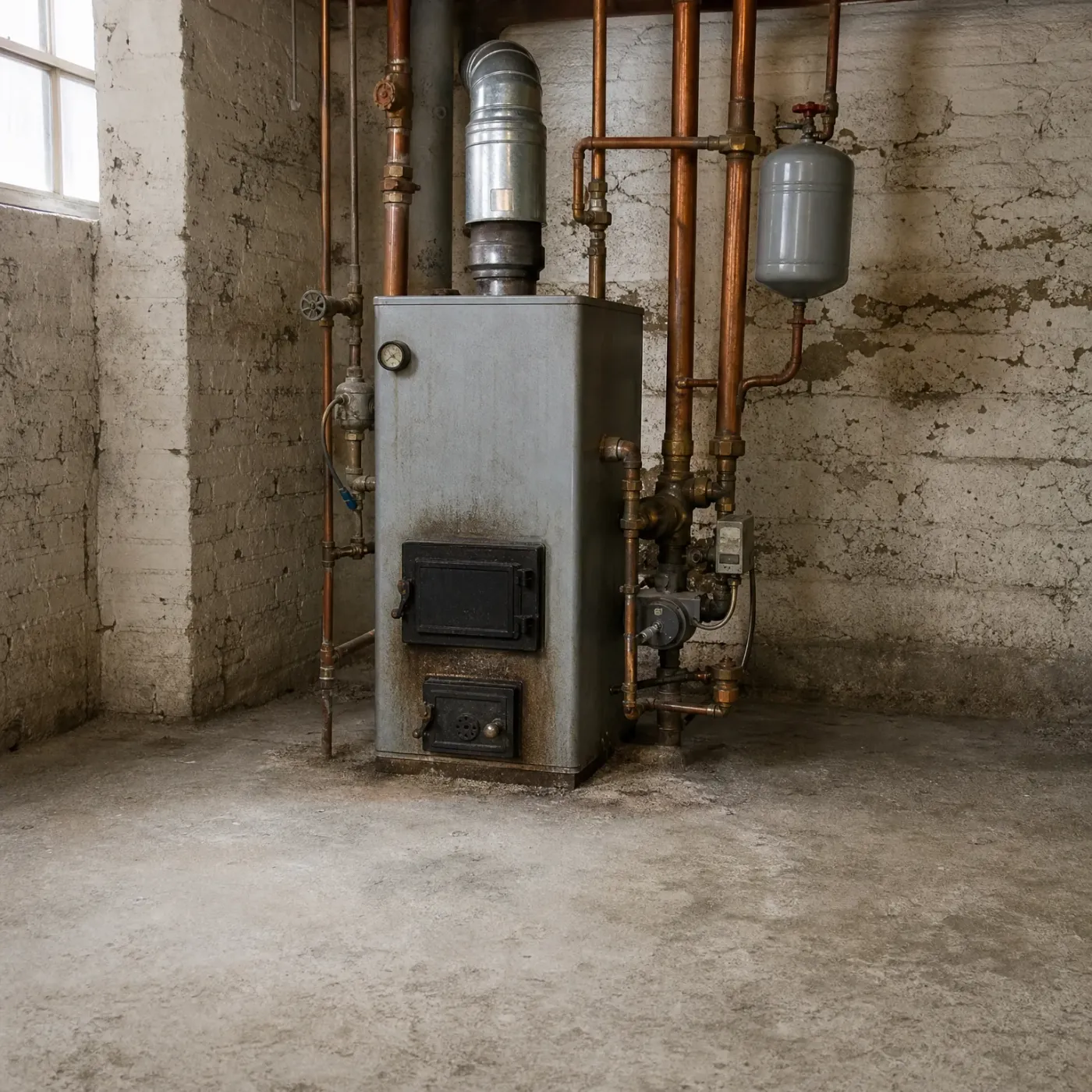
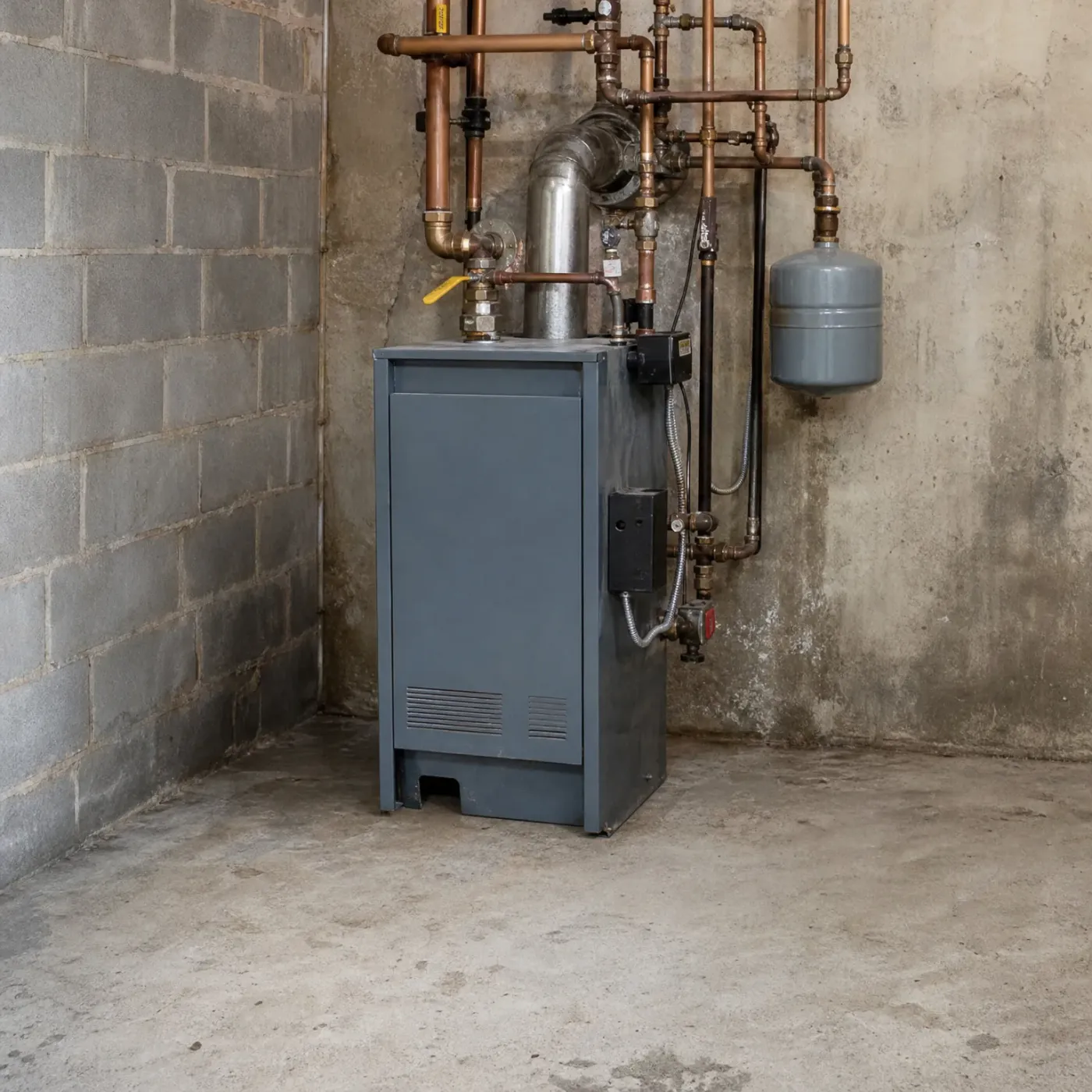
This one's old cast iron, pushed into a corner and left alone. The pipework still carries heat through the house, but nobody's checked the pressure or the flue in years. By the time it quits, it's usually the coldest week of winter.
Four degrees is the average overnight low here in December, January and February. Your boiler isn't cycling on and off those nights, it's holding a steady burn for hours at a stretch. That kind of run time adds up faster than a mild-winter state ever sees, and it's why the yearly check matters more here than almost anywhere else.
NOAA nClimDiv 1991-2020 county normals weighted by homes
Fifteen to twenty years is what you can expect from a gas boiler in North Dakota, and the range exists for a reason. Sizing matters from day one. A boiler that was never matched to the house works harder than it should every winter, and that extra strain shows up as a shorter life, not right away, but eventually. Upkeep matters just as much. The pressure gets checked, the lines get bled, the pump gets tested before the cold comes in October. Skip that for a few years and the parts most likely to fail, the heat exchanger and the pump, are the ones nobody was watching.
None of this means every repair is the end. A cracked gasket or a bad igniter gets fixed, same as it would on a boiler half its age, because those parts stay available and the fix is usually simple. What actually ends a boiler's life is scale or corrosion building up inside the heat exchanger, or pressure problems that go unnoticed long enough to do real damage. A boiler can pass fifteen years and still have plenty left in it, as long as those two parts are sound.
So the question at that point isn't how old the boiler is. It's whether the heat exchanger and pump have been looked after. That's what decides whether yours makes it to twenty years or gives out at twelve.


Get the right pro for your boiler
Only one pro gets your request, so you hear from one company.
