How to bleed radiators before a North Dakota winter
Step 1 of 3: Equipment
Bleeding a radiator means letting the trapped air out of it so hot water can fill the whole thing again. Air works its way into a hot water heating system over months of running and settles at the top of each radiator, which is why the bottom gets hot and the top stays cold. Use a radiator key or flathead screwdriver on the small valve at the top end, hold a cloth or cup underneath, and open it slowly until the hissing stops and water starts to dribble out, then close it. Do this on every radiator in the house, not just the cold ones, since a little air can sit in one without blocking heat yet. In North Dakota, you want this done before the system runs hard and steady for months straight. A radiator that's only half heating in October is one your boiler has to work harder to make up for all winter.
Winter nights average 4°F statewide
At 4 below zero some nights, a radiator that's only half heating isn't keeping up. Trapped air in just one or two of them makes your boiler run longer to reach the same room temperature. Bleeding them before the cold sets in gets every radiator back to full heat when you need it most.
NOAA nClimDiv 1991-2020 county normals weighted by homes
A radiator you bleed in October warms up even and quiet before you need it to. You find the valve, you find out if it still turns, and you have time to get a part if it doesn't.
A radiator you leave alone stays cold on top through the first hard freeze. Now you're bleeding it with the boiler running flat out, trying to heat a house that's already losing the fight.
Every radiator has a bleed valve near the top, a small square fitting or a slotted screw depending on the age of the radiator. A radiator key fits the square kind, a flathead screwdriver handles the rest. Turn it a quarter turn and air starts hissing out. That hiss is trapped air leaving, and it's what you came for. Keep a cup under the valve while you wait, because the hiss will stop and water will follow right after, and that's the moment to close it again. Turn it clockwise, just until the water stops, nothing more. Go radiator by radiator starting with the one nearest the boiler, then work out to the ones farthest away, since that's the order the water moves through the system. After a few radiators, look at the pressure gauge on the boiler itself. Letting air out drops that pressure, and if it's fallen below where it should sit, the system needs a bit more water added before the boiler runs right again.
How to bleed a radiator
The bleed valve sits near the top of the radiator, usually a square-headed fitting or a slotted screw, and it takes a radiator key or a flathead screwdriver to open it.
Turn it a quarter turn counterclockwise and you'll hear the hiss of air escaping, which means the valve is doing its job.
Hold a small cup or rag under the valve, because once the hiss stops, water starts coming out, and that's your sign to close it.
Close the valve clockwise as soon as the water runs steady, snug but not forced, since overtightening can wear out the seal.
Work from the radiator closest to the boiler first and move outward, so you're bleeding the system in the same order the water travels.
Check your boiler's pressure gauge after bleeding a few radiators, since letting air out drops the system pressure and it may need topping up.
Before you get your boiler maintenanceAfter you get your boiler maintenance
Get the right pro for your boiler
Only one pro gets your request, so you hear from one company.
Say what's going on with your boiler, and a pro who works on them reaches out.
Asking costs nothing, and the choice to hire stays yours.
What order do I bleed radiators in, and how do I know when to stop?
You've got more than one radiator in the house and you don't want to end up doing the job twice. It matters which one you start with, since a boiler system fills from one end, and it matters what you're listening and feeling for at each valve so you're not guessing whether air is still in there or you're just letting water run.
Start with the radiator farthest from the boiler and work your way back to it
Air tends to collect furthest from the boiler, so working from the farthest radiator back toward it clears the whole system in one pass instead of pushing air around from room to room. At each one, open the valve until the hiss stops and water comes out in a steady stream with no sputtering. That's your sign to close it. If a radiator never hisses and water comes out right away, there wasn't air in it to begin with. Once you've gone through all of them, check your boiler's pressure gauge. Letting air and water out lowers system pressure, and most boilers need it brought back to the range marked on the gauge before you're done.
Running right
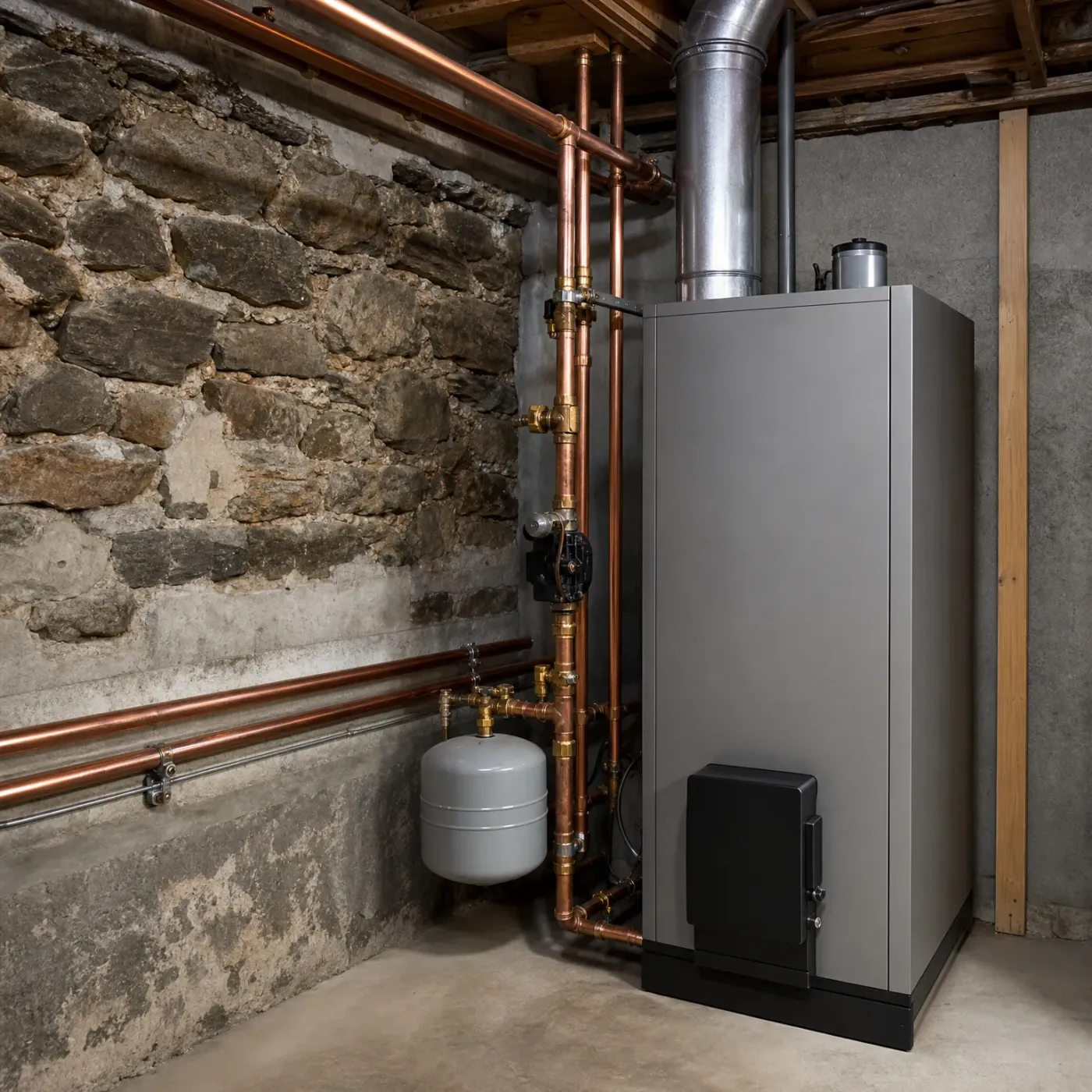
This is a boiler that got bled before the cold came. The pump moves water through every radiator without a pocket of air stalling it, and the pressure on the gauge holds where it should. It fires less because it doesn't have to fight trapped air to heat a room.
Running on borrowed time
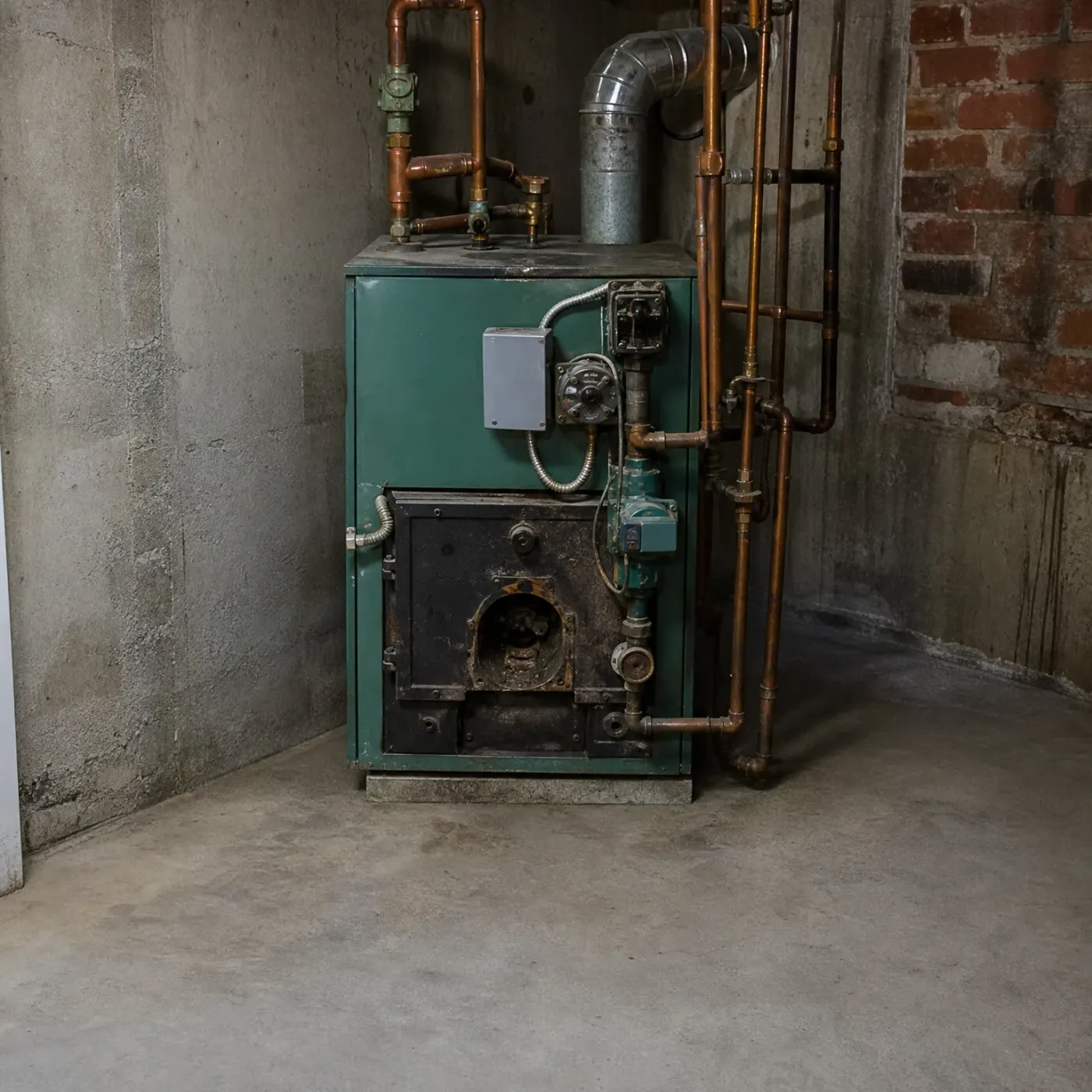
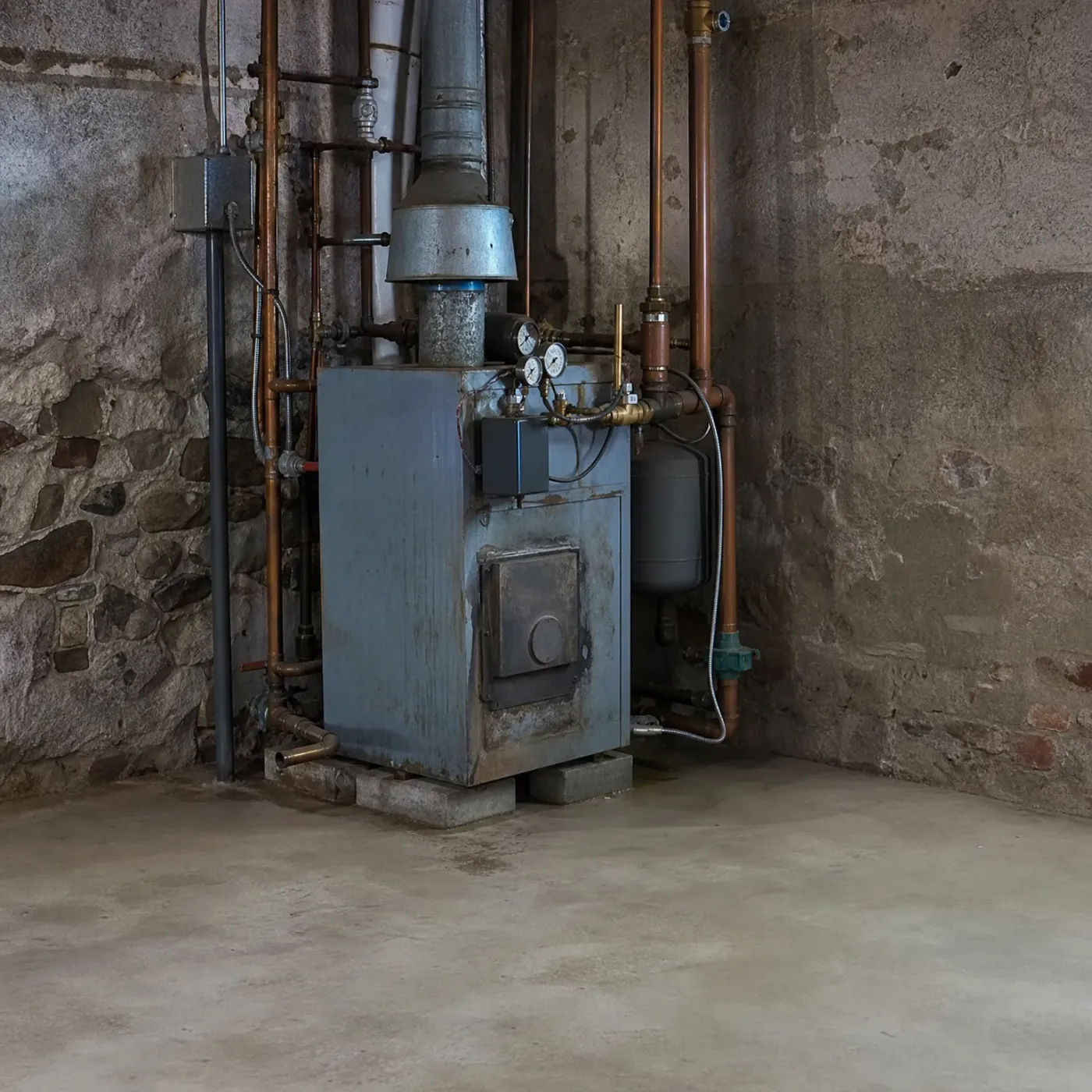
An old cast-iron boiler like this one can still carry a house through a North Dakota winter, but a radiator with air trapped in it is making it work harder than it needs to. Left alone, the pressure drifts and the boiler short-cycles trying to catch up on a cold night.
Bleed them now and the furthest radiator in the house still gets hot in January.
A radiator key, a rag, and twenty minutes before the hard freezes get here is the whole job. You've gone through the house, found which ones have cold spots at the top, and let the air out of each one until water came through steady. That's it. The boiler fills every radiator the way it was built to, and it doesn't have to run longer than it needs to just to get a cold bedroom up to temperature.
If a valve wouldn't turn, or one radiator stayed cool no matter how long you held it open, that's worth having someone look at before you're relying on it every day. A local contractor who services boilers all winter has likely seen that same stuck valve in a dozen other houses on your street, and knows what usually causes it. You'd be matched with one contractor near you, not a handful calling at once, and they'd reach out to go over what you found.
A pro who works on boilers
You can bleed every radiator in the house with a key and a rag in twenty minutes. If a valve won't turn or the system won't hold pressure after you're done, that's a boiler problem worth having looked at before January, not during it. A contractor local to North Dakota who works on boilers all winter knows what usually goes wrong with yours. Ask to be matched and one of them, not several, will reach out to look at it.