
Signs your boiler won't last a North Dakota winter
A boiler that won't make it through a North Dakota winter usually tells you first with short cycling, uneven heat, or a pilot light that keeps going out when it's twenty below and staying lit matters most. Watch for water pooling near the base, which means a crack or a joint giving way under pressure, and for rooms that stay cold no matter how long the system runs. A kettling or banging sound from the tank often means sediment has built up inside, and that makes the boiler work harder to push out the same heat. If your energy bills have climbed while the house feels the same or colder, the boiler is losing efficiency even if it hasn't failed outright. None of these signs mean it will quit the day it gets coldest, but they mean the margin is gone. A boiler running on worn parts in January has no slack left if something more serious fails.





What a dying boiler does to your house in January
When a boiler starts to fail, you feel it room by room before you see it on the unit. The bedroom farthest from the boiler goes cold first. You turn up the thermostat and the kitchen gets hot while the back of the house stays cold, because the boiler can't push heat evenly anymore. If you've got cast iron radiators, listen for banging or knocking when they heat up. That's a sign of a cracked section, and a cracked section means replacement, not repair.
A boiler running rough also runs longer to make the same heat, and on a cold snap that shows up on your gas bill. If yours is already struggling in November, it won't get easier in February. A local contractor who services boilers through a North Dakota winter has likely seen your model fail before and knows whether it's worth repairing or past that point. Get matched with one who can look at your system directly, rather than guessing from a list of symptoms.

Why cycling wears a boiler out
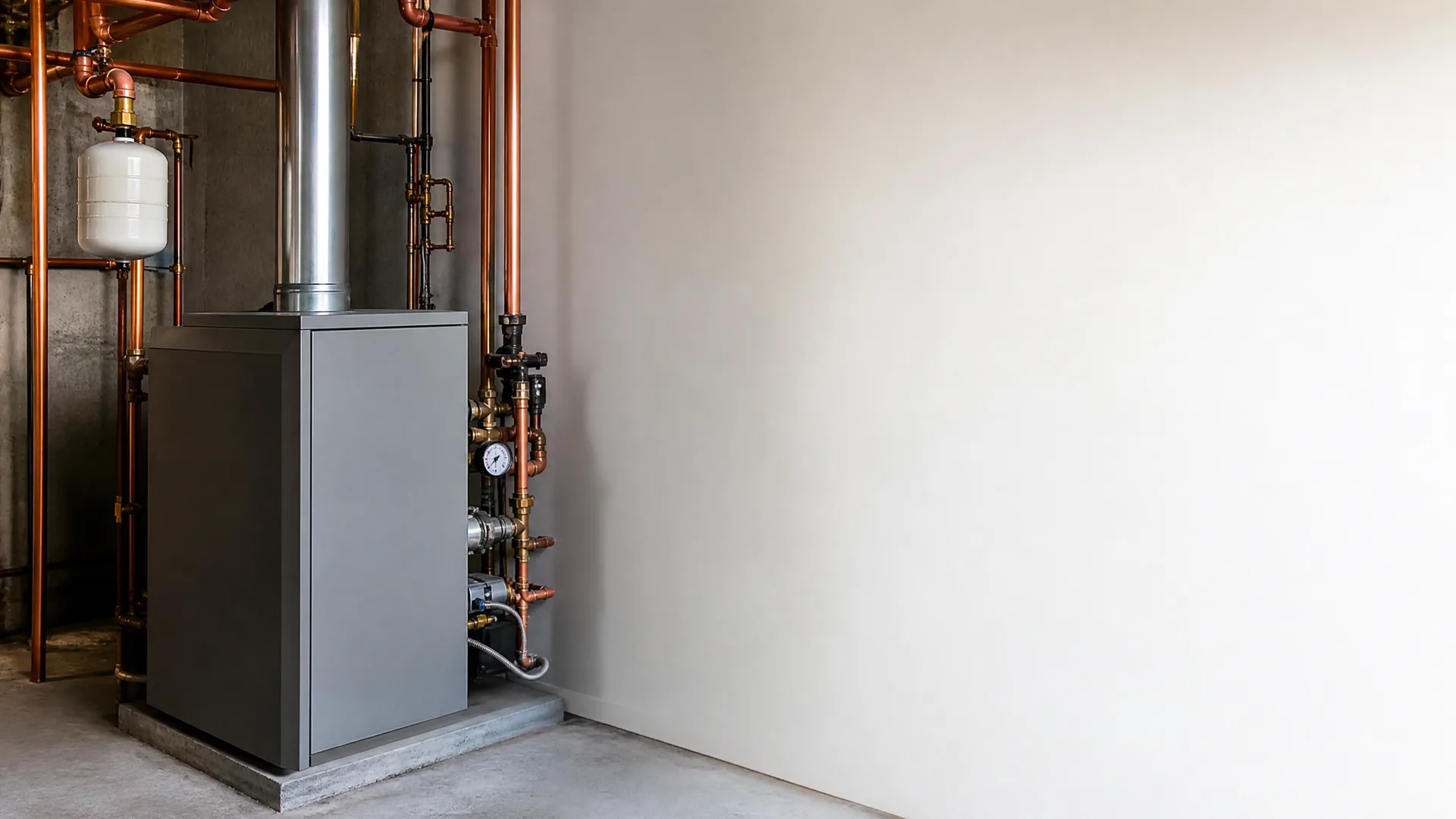
A boiler that short cycles is starting and stopping before the water ever gets up to temperature. Each start puts a jolt through the igniter and the heat exchanger, and a boiler that's struggling to keep up does this dozens of times a day in a cold snap. That's more wear in one January than a healthy unit sees in a normal year. If yours is cycling fast, the strain is already adding up, not waiting to happen.
What the pressure gauge tells you
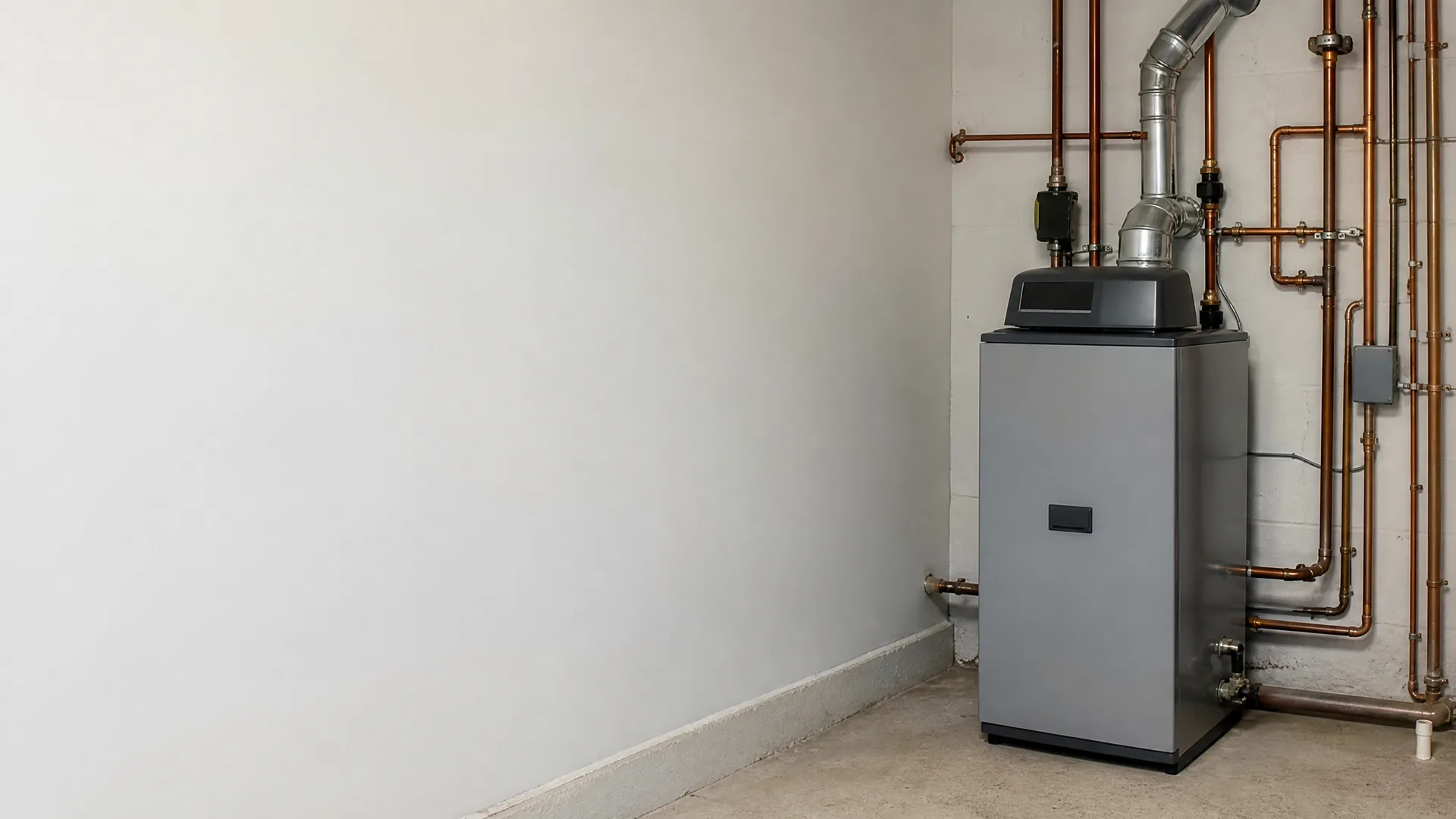
Every boiler has a pressure gauge, and most hold steady between 12 and 15 PSI when cold. If you're topping off the system every week or the needle keeps drifting down, there's water leaving somewhere it shouldn't, through a valve, a fitting, or the expansion tank. A boiler that can't hold pressure can't hold heat either, and that's a harder problem to chase down once it's thirty below outside.
Repair It or Plan to Replace
Worth Repairing
- It's holding pressure between visits and not losing water, so the leak isn't inside the heat exchanger itself.
- The cycling or pilot trouble showed up recently, not something that's been getting worse for a couple of winters.
- A contractor can get the part. Older boilers from certain makers still have circulator pumps, igniters, and controls on the shelf.
- It's kept pace through at least one real cold snap without the burner struggling to catch up to the thermostat.
- The cast iron sections show no cracking or rust-through, just wear on a part that bolts on and off.
Likely Past It
- Water is pooling at the base and it's coming from the heat exchanger, not a fitting or valve that a contractor can just tighten or swap.
- It's short cycled through more than one winter already, and each one has put more wear on the igniter and heat exchanger than the last.
- A contractor has already had to source a part from a salvage unit because the manufacturer stopped making it.
- The rooms farthest from the boiler stay cold no matter how high the thermostat goes, even with the burner running long and often.
- Pilot or ignition failures are showing up more often as the outdoor temperature drops, not steady from one cold night to the next.
Cold air outside pulls heat from the water in the loop.
The thermostat drops and calls the boiler for heat.
The igniter lights the burner under the heat exchanger.
Flame heats water circulating through the heat exchanger.


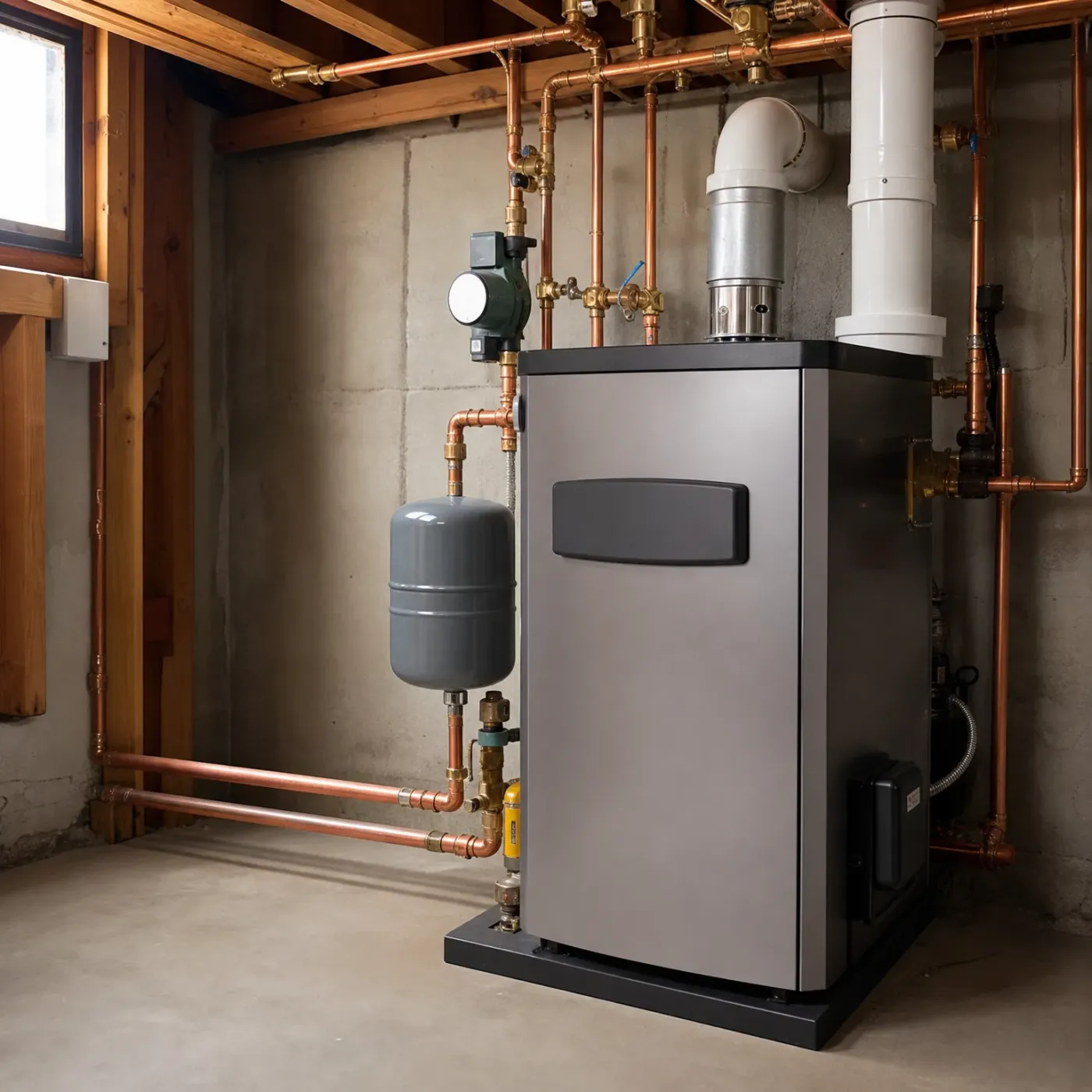
A boiler pro near you
Your request goes to one pro, not a list of companies.
Tell a local repair pro what your boiler is doing.
There's no charge for the request.
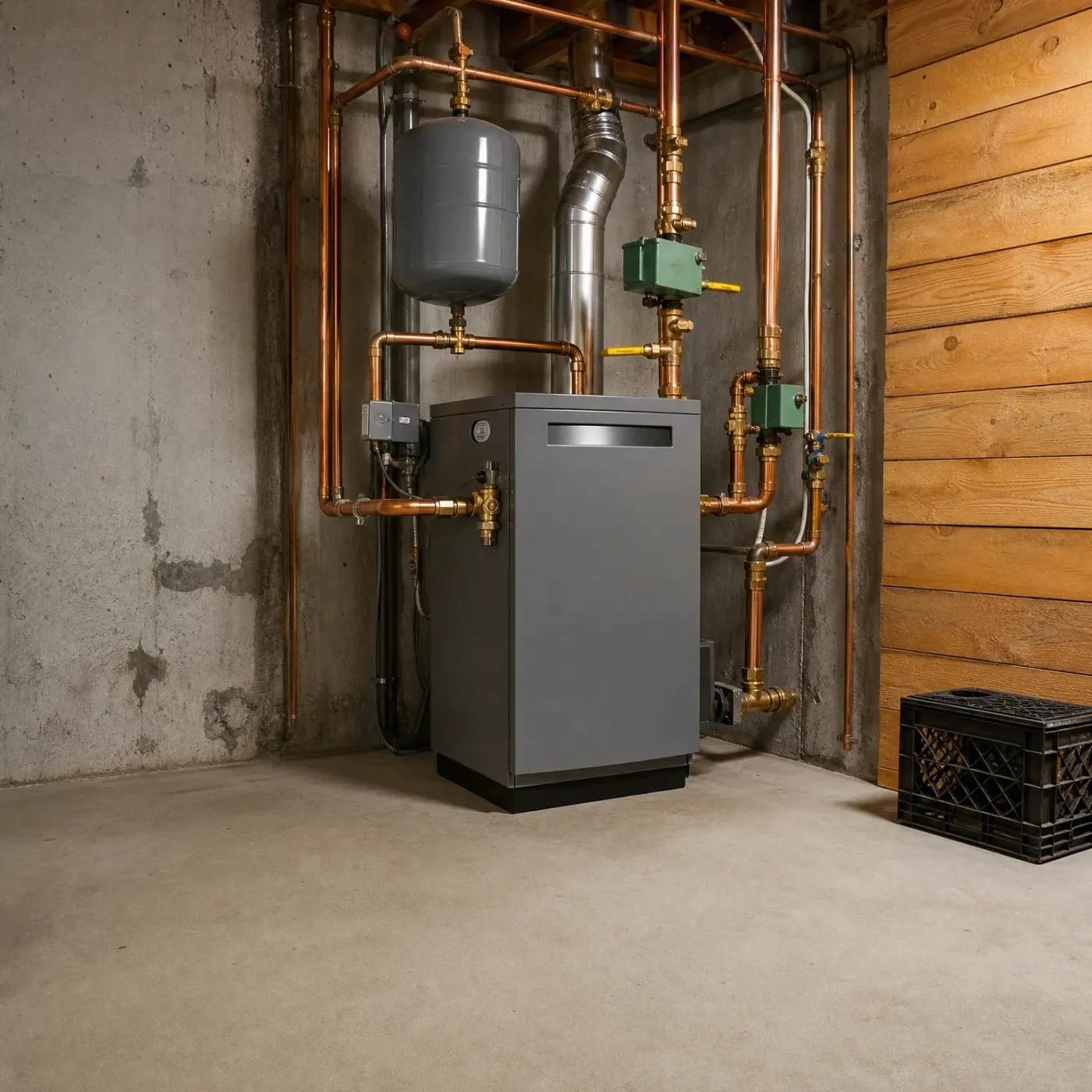
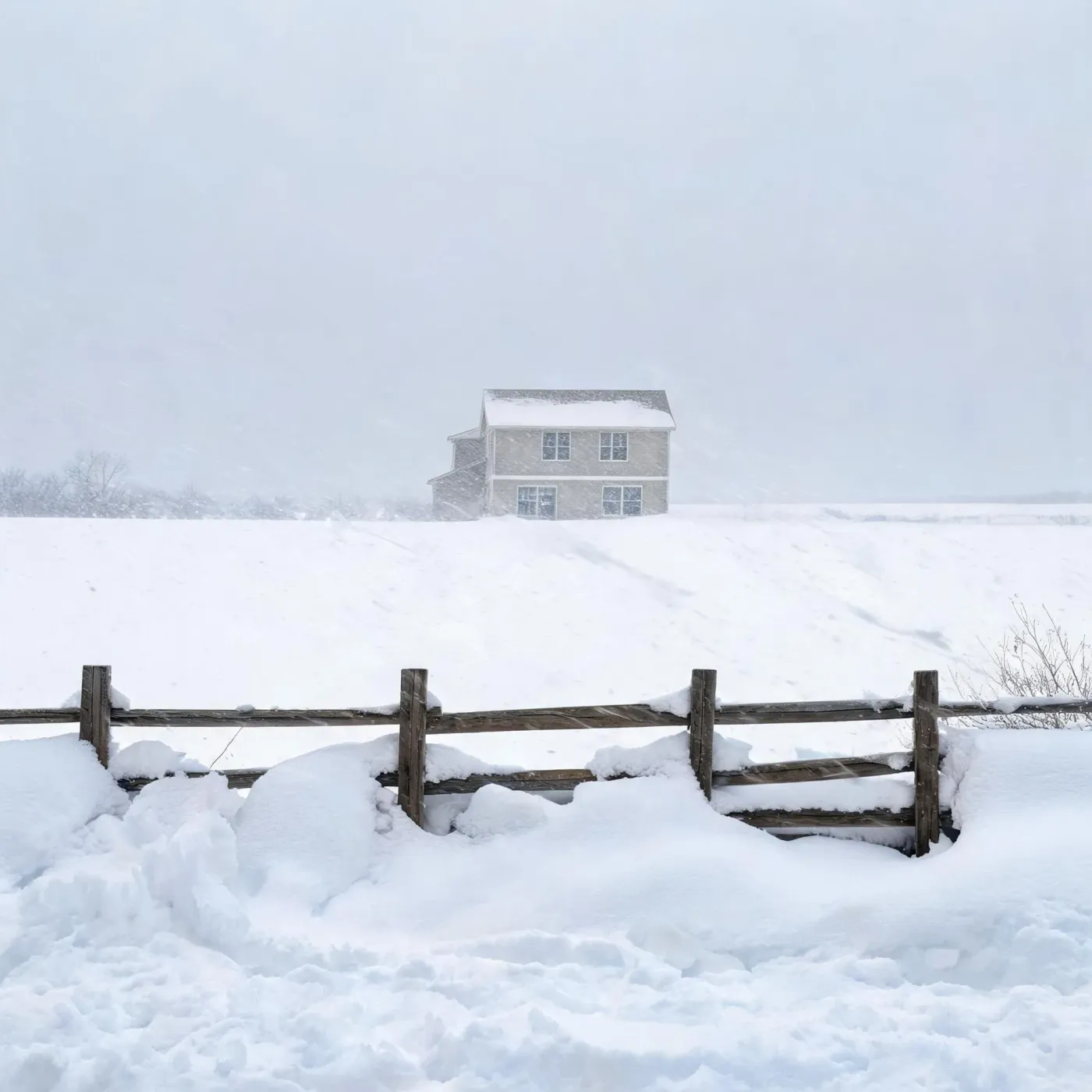
Winter nights here average 4°F statewide, according to NOAA. At that temperature your boiler almost never shuts off for long. It's firing through most of the night to keep the loop warm, and a unit that's already struggling to hold pressure or stay lit gets no break to recover before the next call for heat. That's when you'll notice the problems most, not at ten below in a mild stretch but on the coldest nights, when the boiler has the least room for error and the least time between cycles to make up for a part that's wearing out.
NOAA nClimDiv 1991-2020 county normals weighted by homes
What does your own boiler sound and look like right now
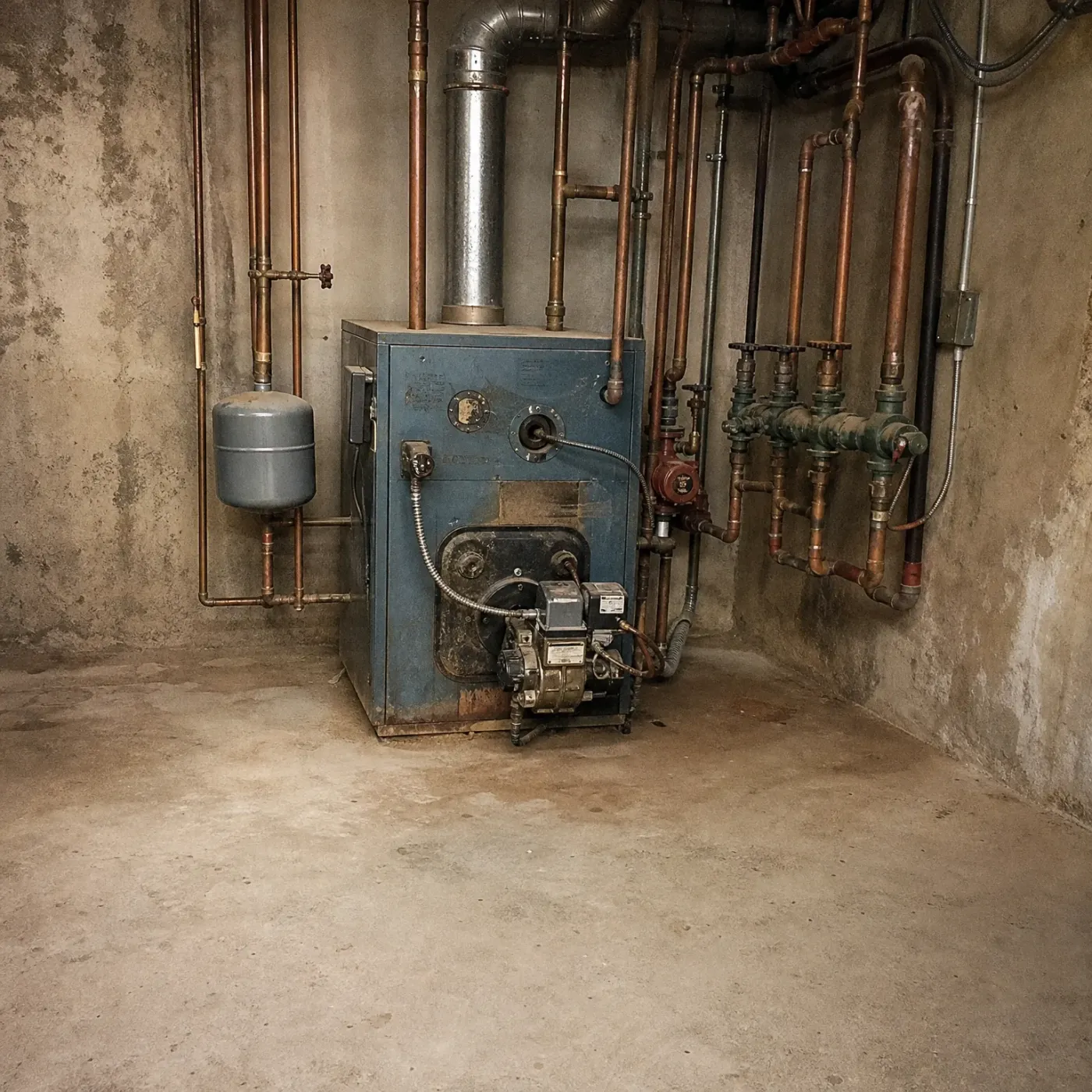
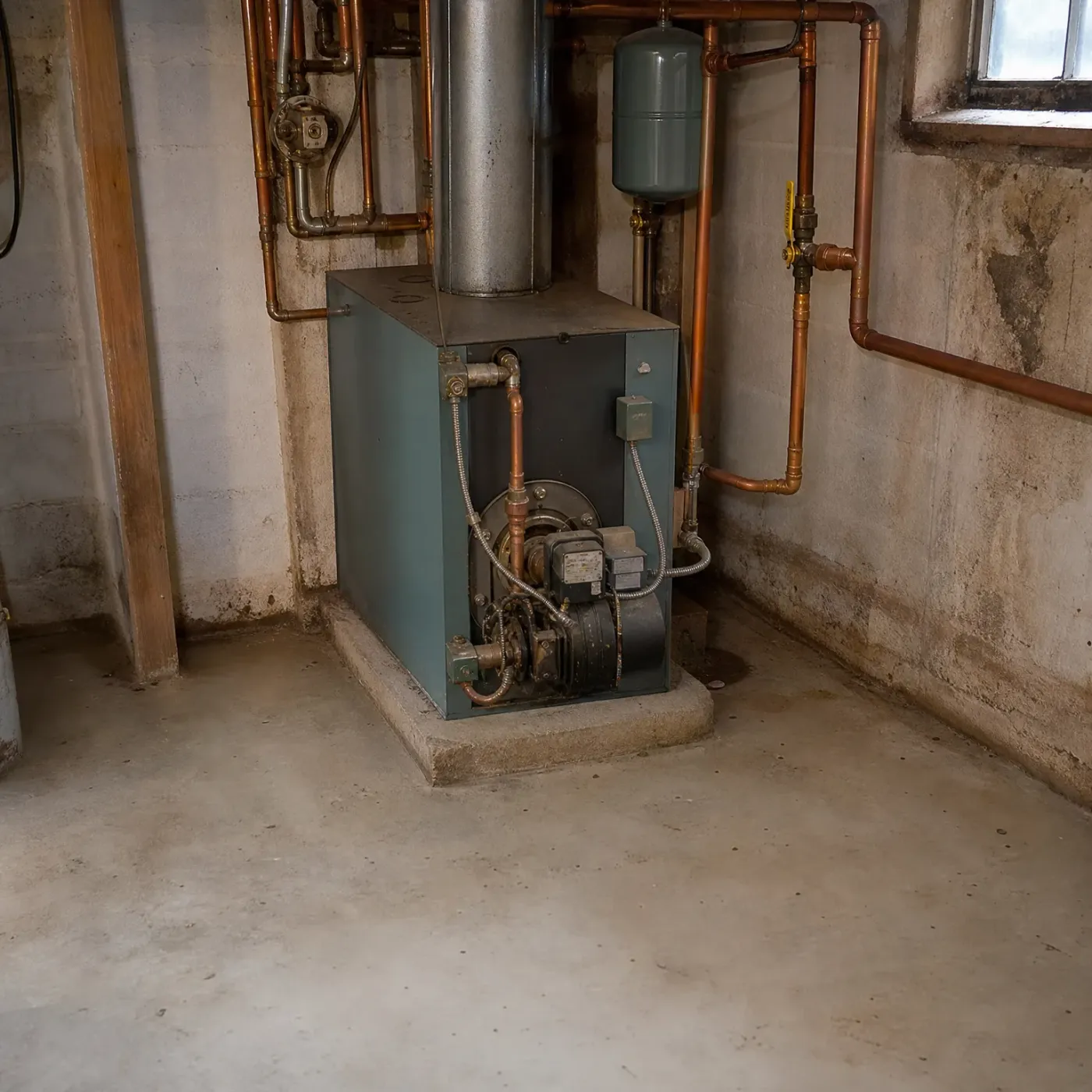
Go stand near it. Listen for banging or kettling in the heat exchanger, a sign of scale or sediment buildup inside. Check the floor around the base for a damp ring or rust streaks, and look at the pressure gauge. If it's crept below 12 psi since you last checked, it's losing water somewhere in the system. Smell for anything metallic or like rotten eggs near the flue. If your radiators or baseboards take longer to warm up than they did last winter, or one room never gets as warm as the rest, the boiler is working harder to move heat it used to deliver easily. Left alone through a hard freeze, a leak or a cracked exchanger can turn a repair into a full loss of heat overnight.
What the signs add up to
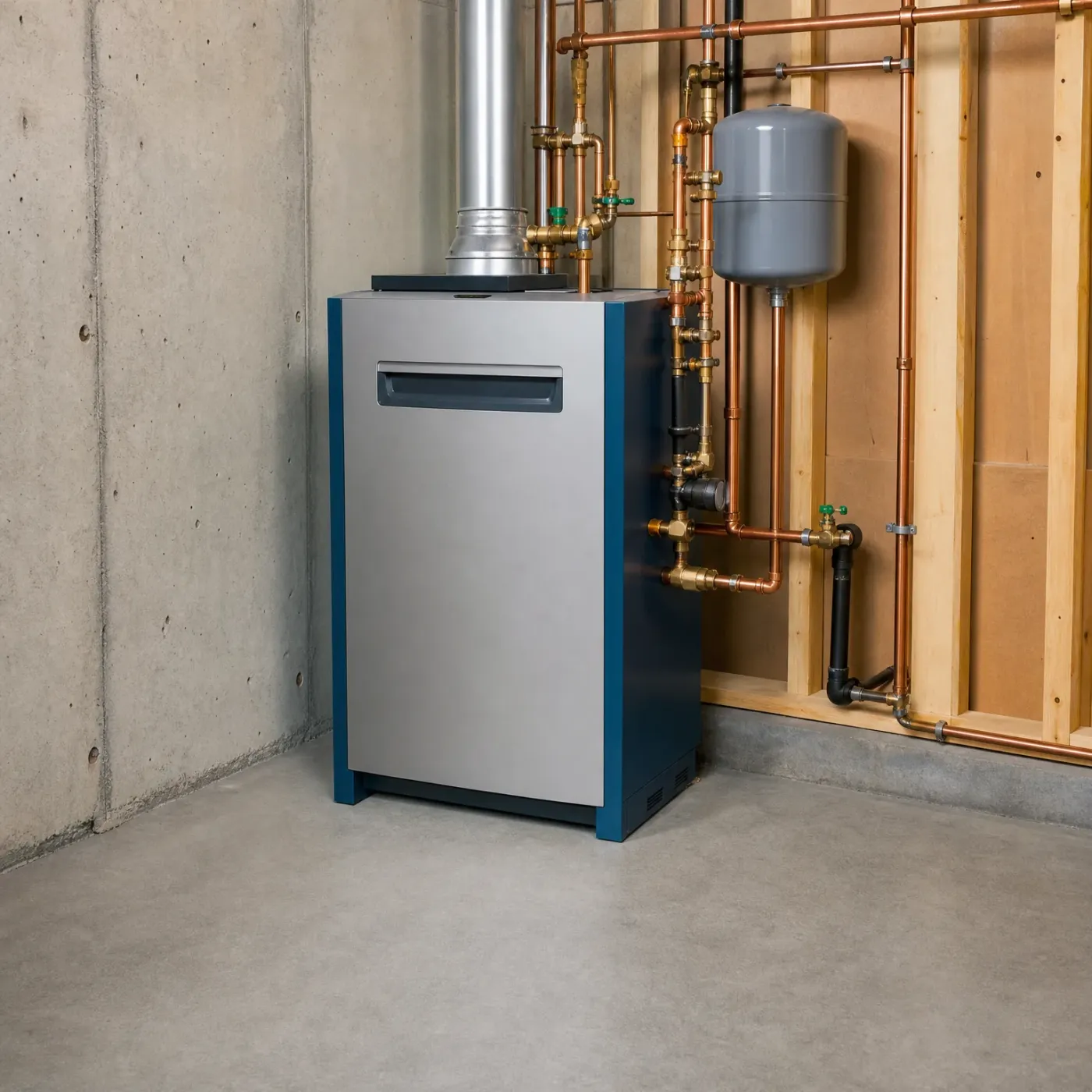
- Short cycling, uneven heat, and a pilot that won't hold are the three signs that mean a boiler likely won't hold up through a North Dakota winter.
- A unit losing pressure between visits or kettling at the heat exchanger has mechanical wear a thermostat adjustment can't fix.
- A boiler that's been fine for years but just started cycling oddly this month is a different case than one that's been failing for winters in a row.
- Rust streaks or a damp ring at the base point to a leak that needs a look before the next cold snap, not after.
- A local contractor who services boilers through North Dakota winters every year has seen which parts fail first in weather this cold.
- Getting matched with one licensed contractor instead of several means someone who already knows this equipment handles it, not a rotation of strangers.
Short cycling, a pilot that won't hold, pressure that drops between visits, kettling at the heat exchanger, rust or a damp ring at the base. Any one of these on its own is worth a look. A few of them together, especially if they showed up this winter and not last, mean the boiler is telling you something before it fails outright in a cold snap. The timing matters as much as the symptom. A unit that ran fine for winters and just started acting up is a different repair than one that's been getting worse for a couple of seasons running.
None of this is something to work out on your own at eleven at night with the heat dropping. It's also not something you want handled by whoever picks up first out of a batch of calls. North Dakota winters put a specific kind of strain on a boiler, long stretches where it barely shuts off, repeated hard starts in deep cold, water lines that have nowhere warm to sit between cycles. A contractor who works on this equipment through winters here has already seen which parts give out first in weather like this, and knows the difference between a boiler that needs a part and one that's done.
Getting matched with one licensed local contractor means the person who calls you back already has that experience, not a stranger reading off a script. You explain what you're seeing once, to someone who's seen it before.





A local pro for your boiler repair
The pro who reaches out is licensed in North Dakota.
You only hire the pro if you want to.