
North Dakota Boilers

What a boiler tune-up covers before a North Dakota winter

Send the form, and lining up the boiler tune-up stops being yours to chase.

Let a pro reach out

A boiler tune-up before winter means a technician checks the parts that let the system run for months without stopping. That includes testing the pressure and temperature, checking the pilot or ignition, cleaning the burner, inspecting the heat exchanger for soot or cracks, bleeding air from the radiators or baseboards, and checking that the expansion tank is holding pressure the way it should. A boiler running low on water or with air trapped in the lines will run louder, heat unevenly, or shut off on its own. Most homes in North Dakota heat with gas, and once your boiler is running steady from the first cold night through the coldest week, you want it to keep running that way without a callback. A tune-up catches the small failures, a weak seal, a dirty burner, a stuck valve, before they turn into a cold house at ten below.

A dark gray floor-standing boiler on a concrete pad in a basement, surrounded by copper piping, brass valves, a gray expansion tank, a circulator pump, and a metal flue pipe against concrete block walls.

Running the way it should

Pressure holds steady, the water heats evenly through the copper lines, and the pump moves it without strain. A boiler kept up this way starts clean on the first cold morning and doesn't need a second look until spring.

A blue boiler on a raised concrete pad in a basement corner, with copper and steel pipes, a gauge cluster, an expansion tank, and a metal flue running up the bare concrete walls.

Running on borrowed time

Sediment builds in the exchanger, the pilot drifts out of adjustment, and the pump works harder to push water through scale it can't see. None of that shows up until a January night when the house won't hold heat.


A blue oil-fired boiler with a pressure gauge, burner unit and metal flue sits on a concrete pad in a basement corner, surrounded by copper and black pipes against bare concrete walls.
Before you get your boiler maintenance
A gray boiler unit on a concrete pad in a basement corner, connected to copper piping, circulator pumps, and a ceiling-mounted expansion tank against bare concrete walls.
After you get your boiler maintenance

The heat exchanger

A technician checks it for soot and cracks. A dirty or cracked exchanger burns more gas to put out the same heat, and it's the one part that's expensive to replace.

Find a licensed pro

One pass, every part that matters

Pressure, ignition, burner, exchanger, and the pump all get checked in the same visit, so nothing gets missed waiting on a second trip out.


Find a licensed pro
A woman with dark hair in a bun reclines on a sofa with her eyes closed, wrapped in a cream fleece blanket, a closed blue hardcover book resting in front of her, with a lit lamp and a vase of dried flowers in the background.
A smiling bearded man in a navy sweater sits at a candlelit dinner table with a glass of red wine, a bowl of salad, and plates of food in the foreground.

Most of this work happens in places you never see. A technician bleeds air out of the radiators or baseboard loops first, because trapped air is what leaves one room warm and another cold no matter how high you set the thermostat. The aquastat gets compared against what the water is actually running at. If it's drifted, the boiler runs longer than it should every single cycle, all winter. The low water cutoff gets tested directly, not assumed, since that's the switch that keeps the burner from firing with no water behind it. The circulator pump gets a close look at the bearing and the seal, because that pump failing is what leaves a house without heat on the coldest night rather than a mild one. Flue and venting get checked for anything blocking them or eating through the metal, since a boiler that can't vent right pushes exhaust where it shouldn't go. Last, the expansion tank pressure gets checked against system pressure. A tank that's gone waterlogged is a common reason a boiler that was fine at bedtime has no pressure by morning.


What a tune-up actually checks

  • A technician bleeds air from the radiators or baseboard loops so heat reaches every room instead of leaving cold spots.
  • The aquastat gets checked against the actual water temperature, since a setting that's drifted off makes the boiler run longer than it needs to.
  • Low water cutoff gets tested to confirm it will actually shut the burner down if water level drops, which is what keeps a boiler from running dry.
  • The circulator pump gets checked for a seized bearing or a seal starting to weep, since that's the part that fails mid-winter without warning.
  • Flue and venting get inspected for blockage or corrosion, because a boiler venting incorrectly can push exhaust back into the house instead of outside.
  • Expansion tank pressure gets checked against the system pressure, since a waterlogged tank is a common reason boilers lose pressure overnight.
A smiling man in a dark navy sweater sits on a light sofa in a living room, with a glass bowl of popcorn on a wooden coffee table and bookshelves behind him.
A smiling man in a dark green sweater sits on a tan leather sofa in a dimly lit living room, with a bowl of popcorn in the foreground and a kitchen area blurred behind him.
A smiling middle-aged man in a dark shirt sits on a gray sofa in a living room, with a bowl of popcorn on a side table and shelves, a window and kitchen area behind him.
A smiling bearded man in a dark gray t-shirt sits on a gray couch in a living room, with a large glass bowl of popcorn on a wooden table in the foreground.
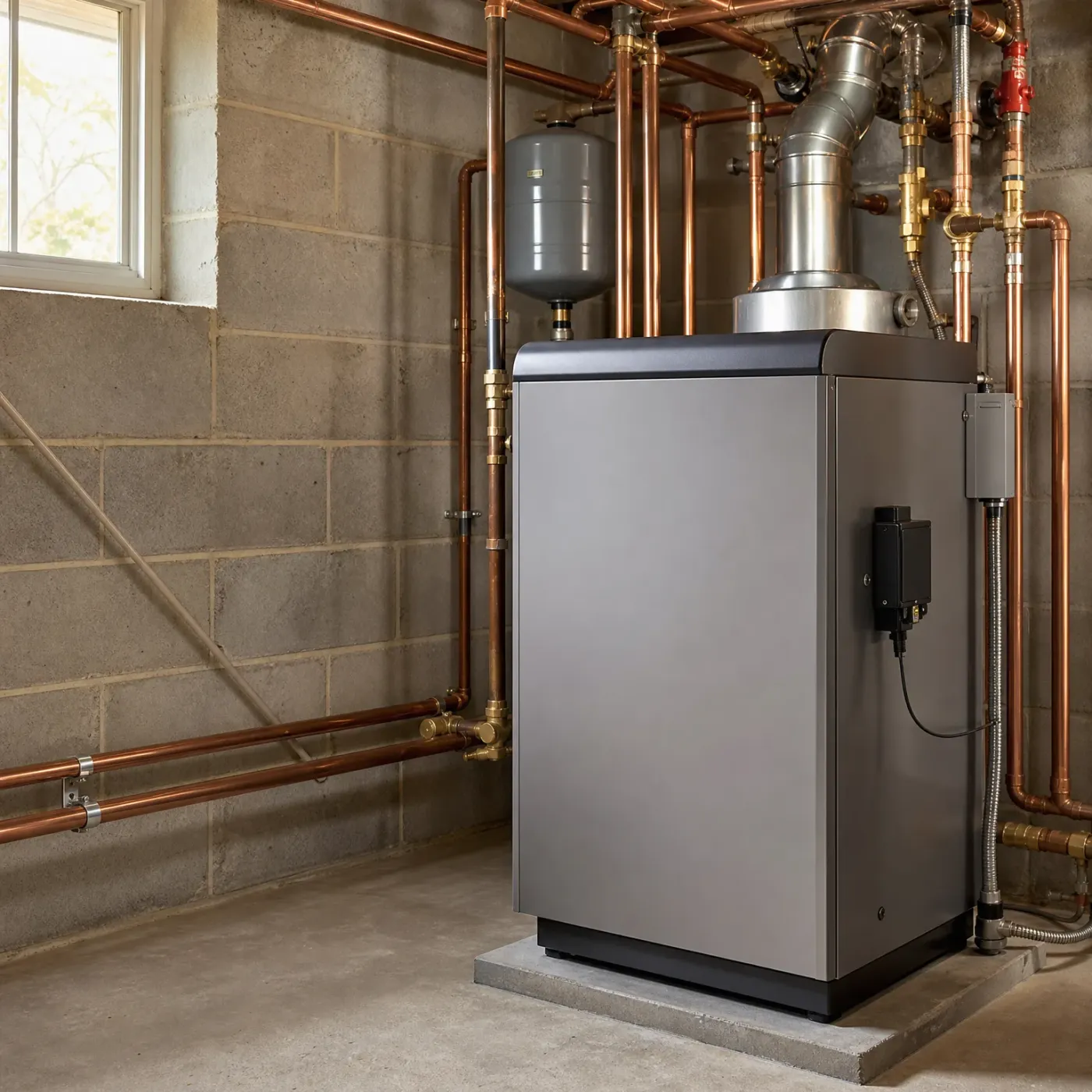
A gray floor-standing boiler on a concrete pad in a basement with concrete block walls, connected to copper piping, a flue vent, and an expansion tank.

Let someone else find the pro

Your request stays with one local pro.

After this form, you can stop searching for a boiler pro.

Find a local pro

You only hire the pro if you want to.

Skip it or get it checked before winter

Skip it

  • A dirty burner has to run longer to heat the same water, and that shows up on the gas bill all winter.
  • If the pilot or ignition is already weak, a hard January morning is when it tends to quit.
  • Sediment in the heat exchanger builds slowly, and by the time it's cracked, it's a replacement, not a cleaning.
  • Air trapped in the radiators or baseboard loops means some rooms stay cold no matter how long the boiler runs.
  • A pressure problem that's just starting won't announce itself until the system can't keep up with the cold.

Get it checked

  • A technician who works on these systems every fall knows which parts in North Dakota's cold tend to fail first.
  • Pressure, burner, ignition and heat exchanger get looked at in one visit instead of waiting to find out which one failed.
  • The aquastat gets set against the water's actual temperature, so the boiler isn't running longer than it needs to.
  • Radiators and baseboard loops get bled so heat reaches every room instead of just the ones closest to the boiler.
  • One local, licensed contractor takes the call, so you're not fielding quotes from three different companies.
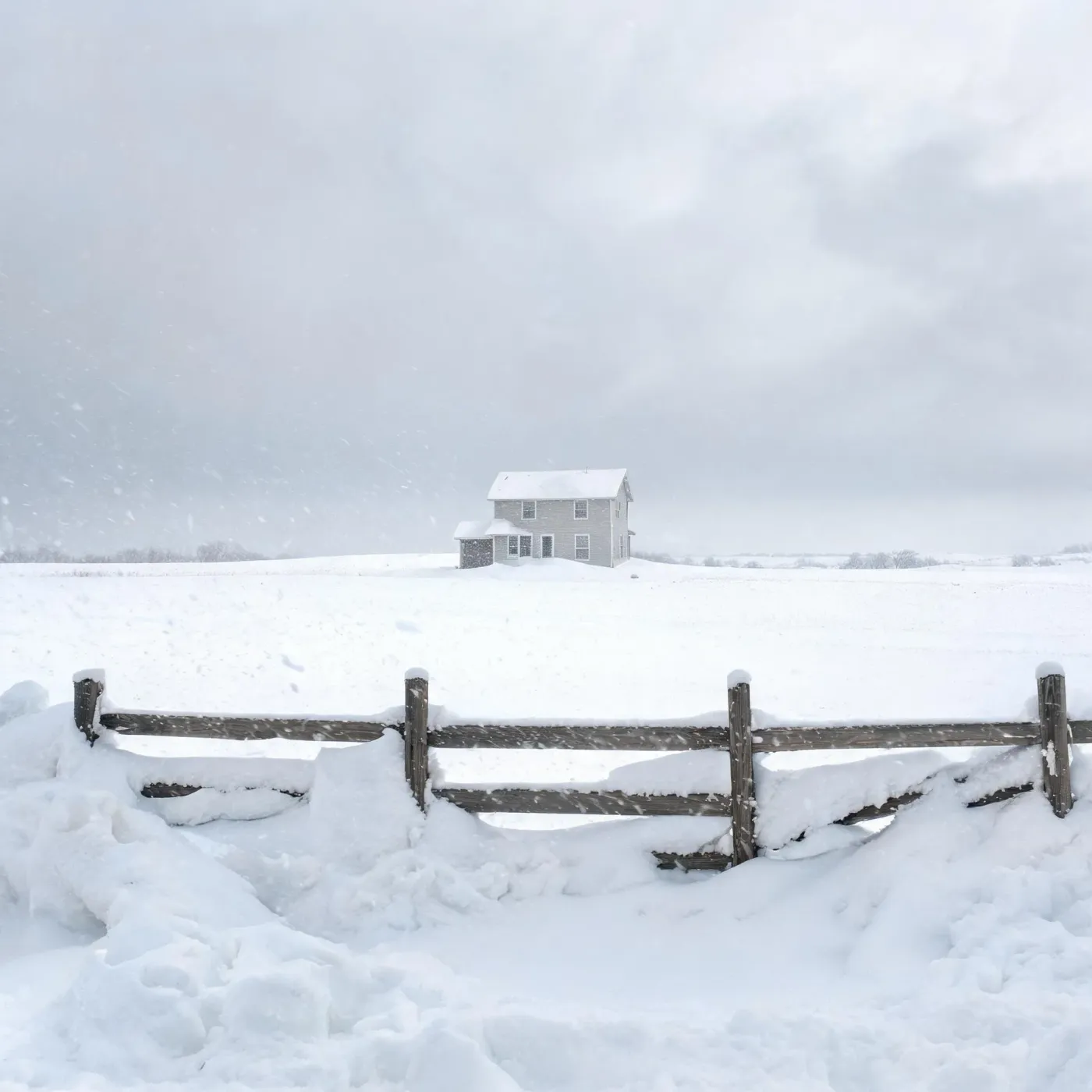
A two-story light-colored house with a gabled roof stands alone on a snow-covered field under an overcast sky, with a weathered wooden post-and-rail fence half-buried in snow drifts in the foreground.

Winter nights average 4°F across North Dakota, according to NOAA. At that temperature your boiler isn't cycling on and off the way it does in October, it's running long stretches just to hold the house steady. A system that starts the season with tight pressure, a clean burner, and an ignition that lights on the first try can carry that load. One that doesn't will show it fastest at night, when the thermostat calls for heat and the boiler has to work hardest to keep up. That's usually when a weak part gives out, not during a mild afternoon.

NOAA nClimDiv 1991-2020 county normals weighted by homes
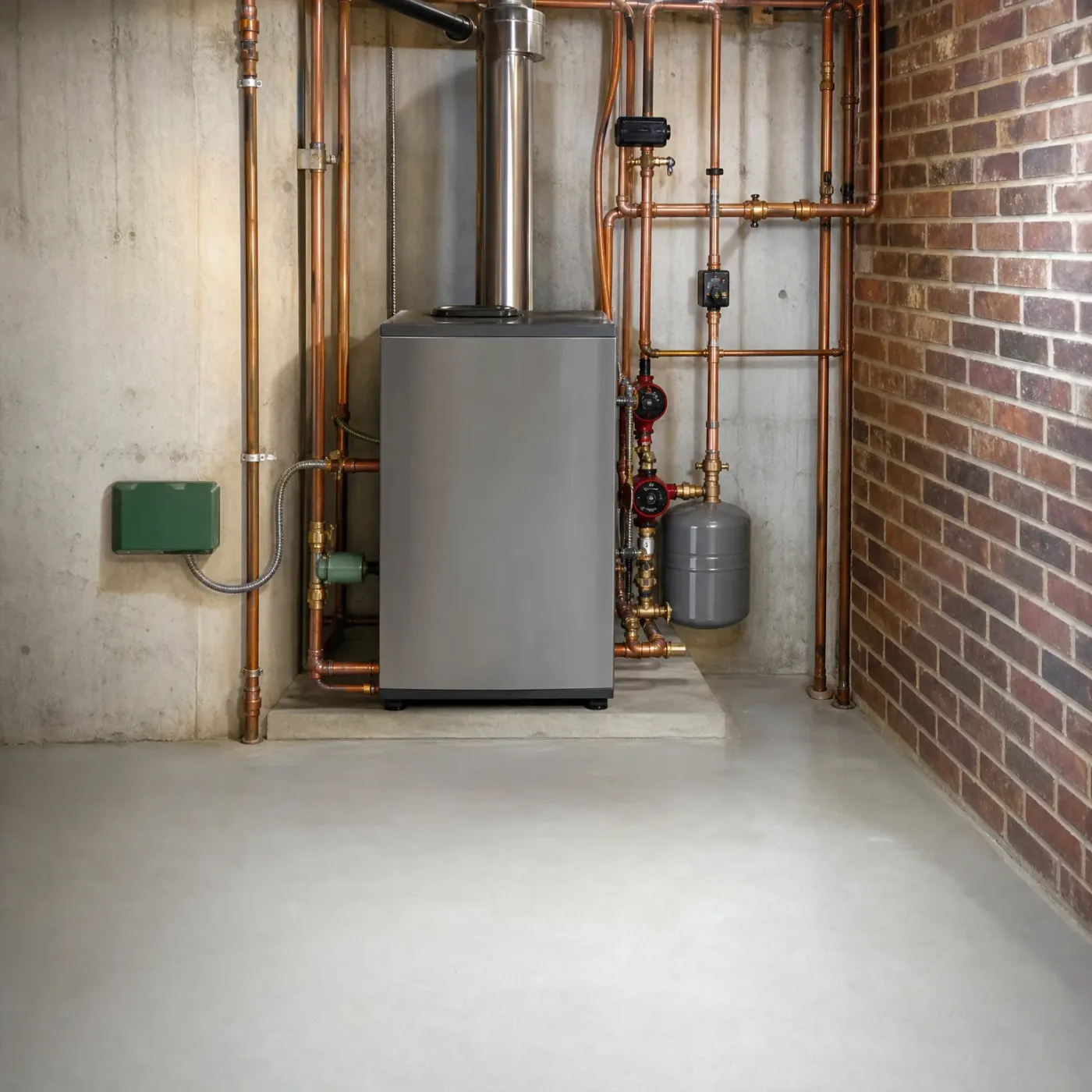
A gray boiler on a concrete pad in a basement, connected to copper piping, valves, pumps and a gray expansion tank, with a concrete wall on the left and a brick wall on the right.
Pressure holds where it should and the burner fires clean, so the copper lines heat evenly all through the house.
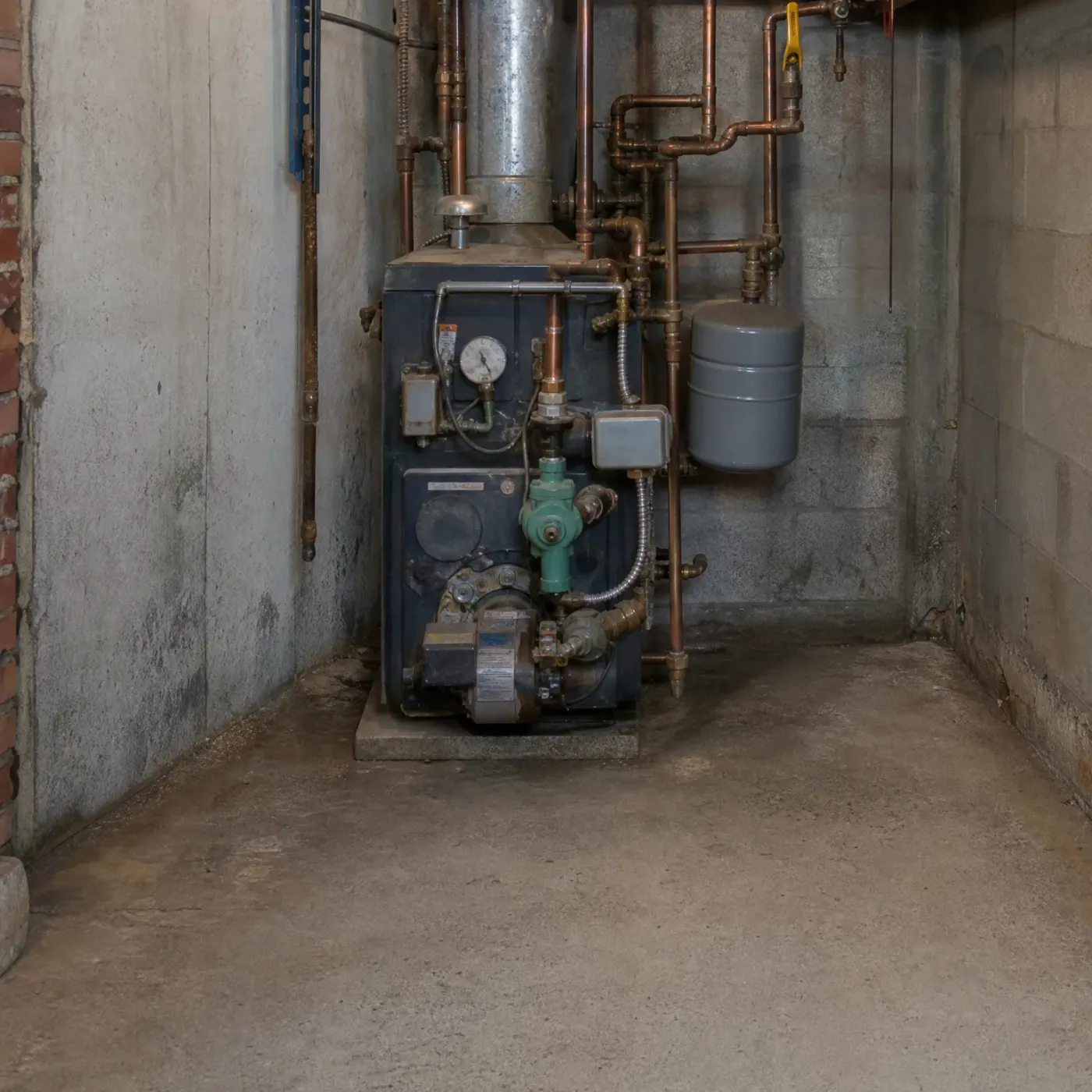
A dark cast-iron boiler with copper piping, pressure gauge, and a gray expansion tank sits on a concrete pad in a basement corner with concrete block and brick walls.
An aging oil boiler like this one leans on a worn pump and gauge, and a January cold snap finds that weak point fast.
  1. The technician shuts off power and gas before opening the boiler

  2. The burner and ignition components come out for inspection and cleaning

  3. The heat exchanger gets checked for soot, cracks, and buildup

  4. System pressure, water temperature, and the aquastat setting get tested and adjusted

Winter nights average 4°F statewide

At 4 below zero on a typical winter night, your boiler isn't cycling, it's running continuously to keep the house at temperature. That kind of steady load finds any weak spot in the pressure or the burner fast, usually on the coldest night of the month.

NOAA nClimDiv 1991-2020 county normals weighted by homes
Where That Leaves Your Boiler

  • A tune-up before winter checks pressure, ignition, the burner and the heat exchanger in one visit.
  • A boiler that passes these checks runs steady through a North Dakota winter without a callback.
  • A local technician who services boilers all season already knows which parts tend to fail first in a cold snap.
  • Matching with one licensed local contractor means a single visit instead of fielding calls from several companies.
  • Skipping the check leaves weak points in the pressure or burner to surface on the coldest night of the month.

A boiler tune-up before winter comes down to one visit where a technician checks pressure, ignition, the burner and the heat exchanger, and fixes what's drifted before the cold finds it. That's the whole job. Nothing about it changes once the temperature drops, except how much the system is asked to do.

Once you send the request, you're matched with one licensed contractor local to North Dakota, not a handful of companies competing for the callback. Someone who works on boilers all season has already seen which part gives out first when a cold snap sets in, whether that's a pump losing its grip or a pilot that was never quite right. That's the kind of thing you learn from doing the work here, not from a manual.

A boiler that passes these checks holds its pressure, fires clean, and heats the house evenly through the lines without anyone needing to look at it again until spring. One visit, one contractor who knows the equipment, and the question of who's going to handle it stops being something you carry around.

The alternative is finding out what's weak on the night it matters most, when the house needs the boiler running steady and it isn't. That's the whole difference a tune-up makes, and it's the reason to settle it now instead of in January.
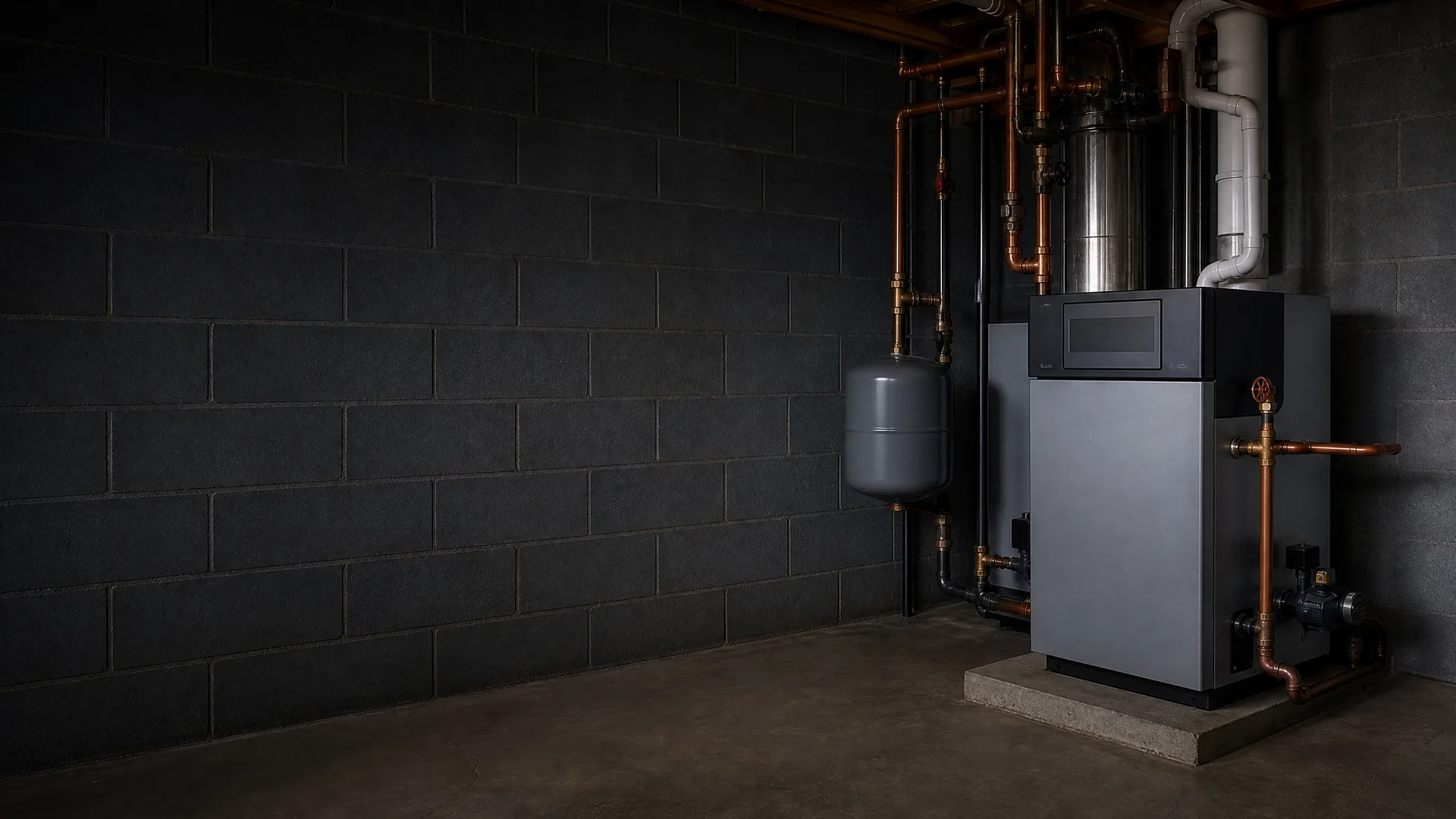
A gray boiler unit with a control panel sits on a concrete pad in a basement room with dark concrete block walls, connected to copper and metal piping, a gray expansion tank, and an insulated flue.

One request and it's handed off

A licensed local pro takes the request for your boiler tune-up.

Step 1 of 3: Equipment