
What size boiler a North Dakota home needs

Send the form and the search for an installer is over.

Hand it off

What size boiler do I need for my house in North Dakota?

A North Dakota winter doesn't leave room for guessing on this. You want the new boiler to actually keep up when it's well below zero outside, without paying for more boiler than the house needs. The right size depends on your square footage, your insulation, and how cold it gets where you live, not on matching whatever is in there now.

It's sized to your home's heat loss, not its square footage alone

A boiler is sized by how much heat your house loses on the coldest nights, which a contractor works out with a heat loss calculation that accounts for square footage, wall and attic insulation, window count, and ceiling height. Two houses the same size in North Dakota can need different boilers if one has more windows or less insulation. Going too big wastes fuel and causes the boiler to cycle on and off more than it should. Going too small means it can't keep the house warm when it's well below zero outside, which happens often enough here that undersizing shows up fast. A contractor who installs boilers in this climate regularly will know how to weigh that cold against your home's construction.

A gray boiler unit with a flue pipe stands on a concrete pad in a basement, surrounded by copper piping, a circulator pump, an expansion tank mounted on a stone wall, and an electrical outlet.

Boiler sized right

A boiler matched to your house runs long, steady cycles and keeps every room even when it's well below zero. The pump and expansion tank are doing the job they were built for, nothing straining to keep up. That's what lets it get through a North Dakota winter without drama.
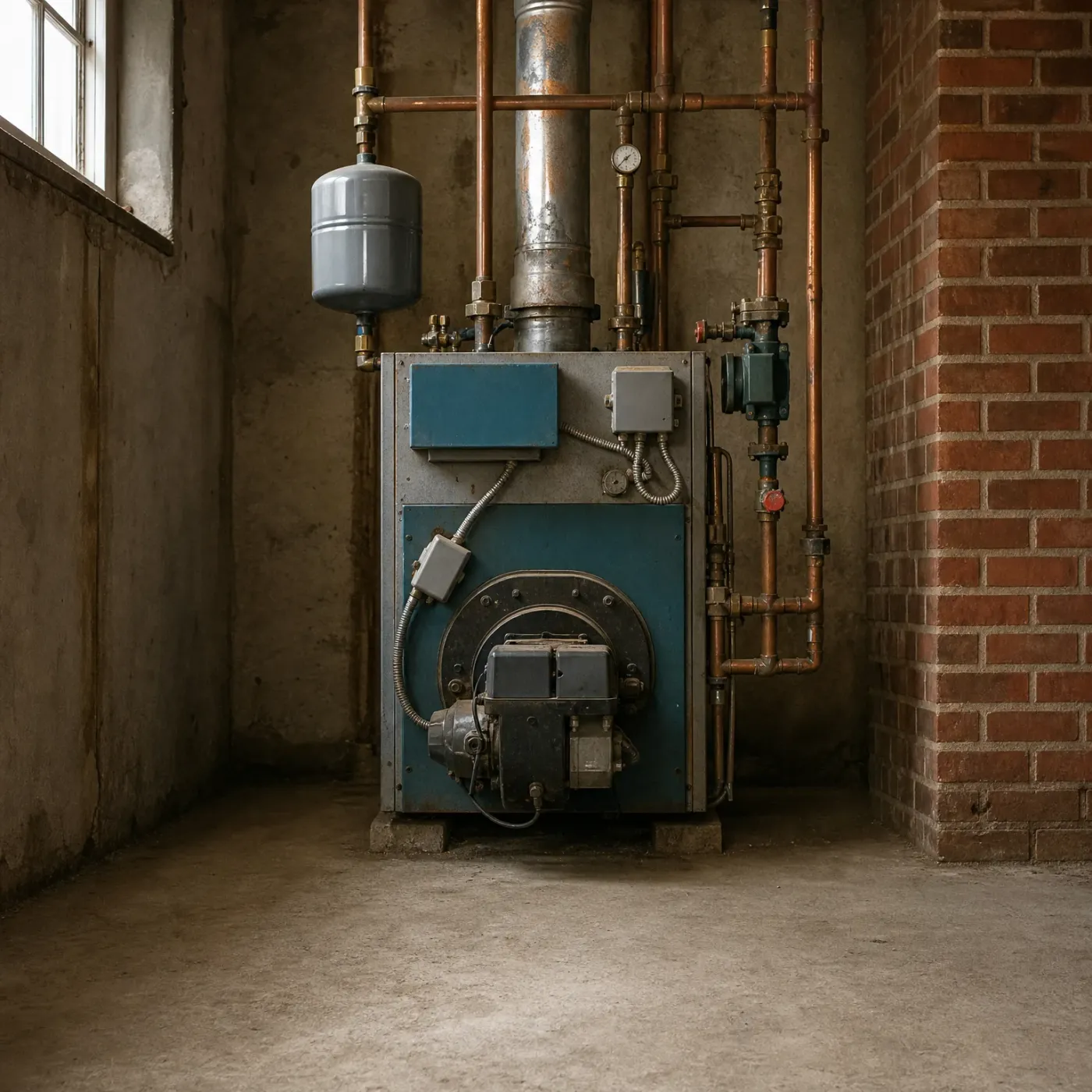

A blue cast-iron boiler with a burner unit, gauges and copper piping stands in a concrete-floored basement room beside a red brick pillar and a window.

Boiler sized wrong

An oversized boiler short-cycles, kicking on and off instead of running steady, which wears the parts faster. An undersized one never stops trying to catch up on the coldest days. Either way shows up as rooms that won't hold heat or a gas bill that doesn't match what the house should use.

Is your boiler actually the right size for your house?

A boiler that's too small struggles to keep rooms warm once it drops well below zero, especially the ones farthest from the mechanical room. You might notice the thermostat set at 70 and the house still sitting at 65, or the boiler running almost nonstop without catching up. One that's too big does the opposite: it fires, satisfies the thermostat fast, and shuts off again and again, a pattern called short cycling. That wears on the pump, the valves and the ignition parts sooner than it should, and it can mean cold spots even with a bigger unit, since the heat never runs long enough to spread evenly through the house.

A man in a blue sweatshirt reclines with closed eyes in a brown leather armchair in a living room with a bookshelf, houseplant, sofa, window, and a side table holding newspapers and a dark mug.
A bearded man in a gray pullover reclines with closed eyes on a brown leather sofa in a sunlit room with a window, framed picture, potted plant, and a wooden cabinet holding papers and a dark mug.
A man in a gray sweater leans back with closed eyes in a brown leather armchair beside a wooden side table holding a dark mug and a folded newspaper, with bookshelves and a window seat behind him.
A man in a green sweater reclines in an armchair with his eyes closed and a slight smile, beside a window with plants, a small table holding a mug and folded newspaper, and bookshelves behind him.
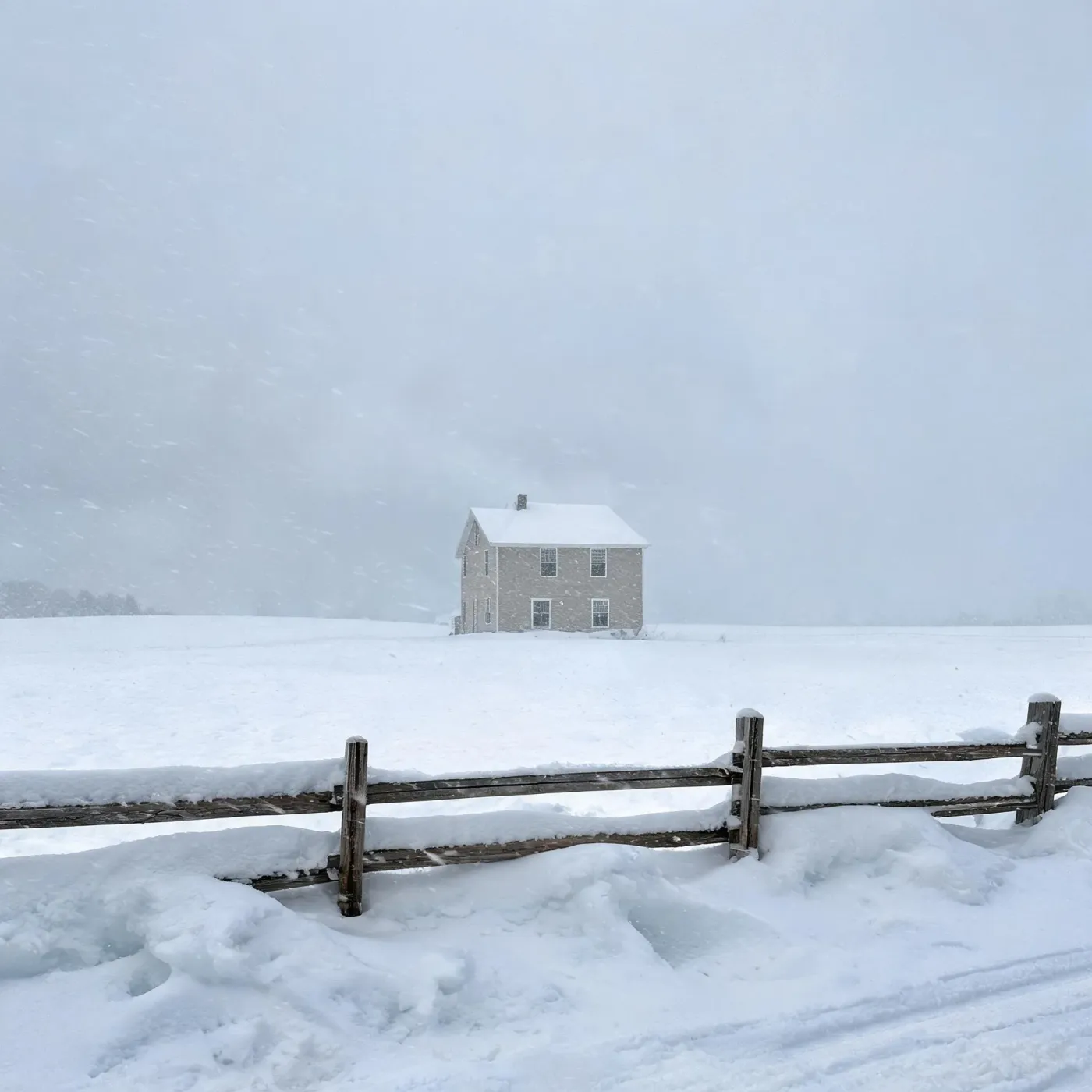
A two-story house with a snow-covered roof and chimney stands alone in a white field during falling snow, with a wooden post-and-rail fence in the foreground.

Winter nights average 4°F across North Dakota, according to NOAA climate data. That's the cold your boiler has to answer for hour after hour, not just on the worst night but most nights from December through February. A boiler sized right for your house will run long, steady cycles at that temperature and still bring every room up to 70. One sized too small falls behind and never quite catches up, so the far bedrooms stay cool while it runs almost nonstop trying to close the gap.

NOAA nClimDiv 1991-2020 county normals weighted by homes

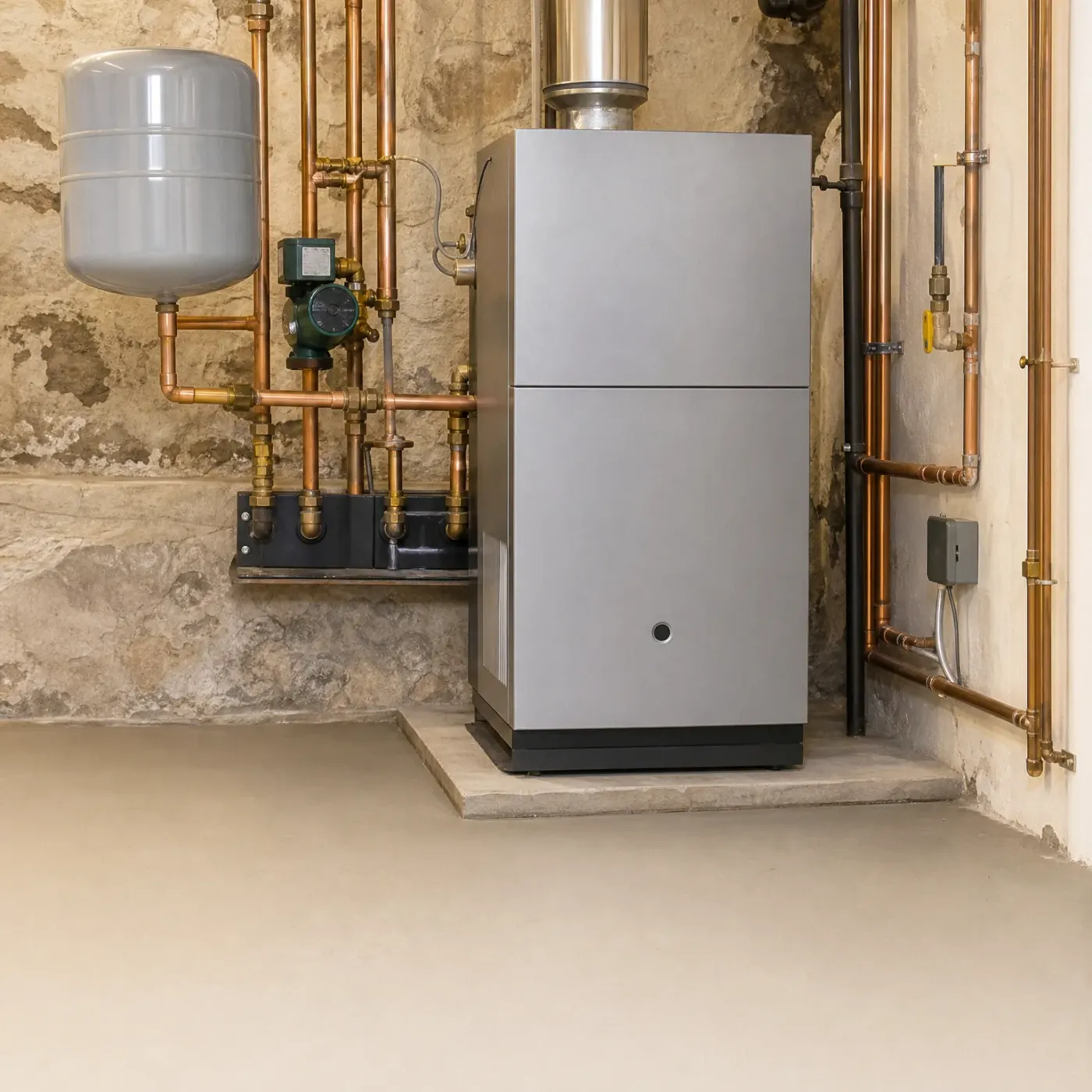
A gray boiler on a concrete block base in a basement, with copper piping, a metal flue, and a gray expansion tank mounted beside it against a concrete wall.
Before you get your boiler installation
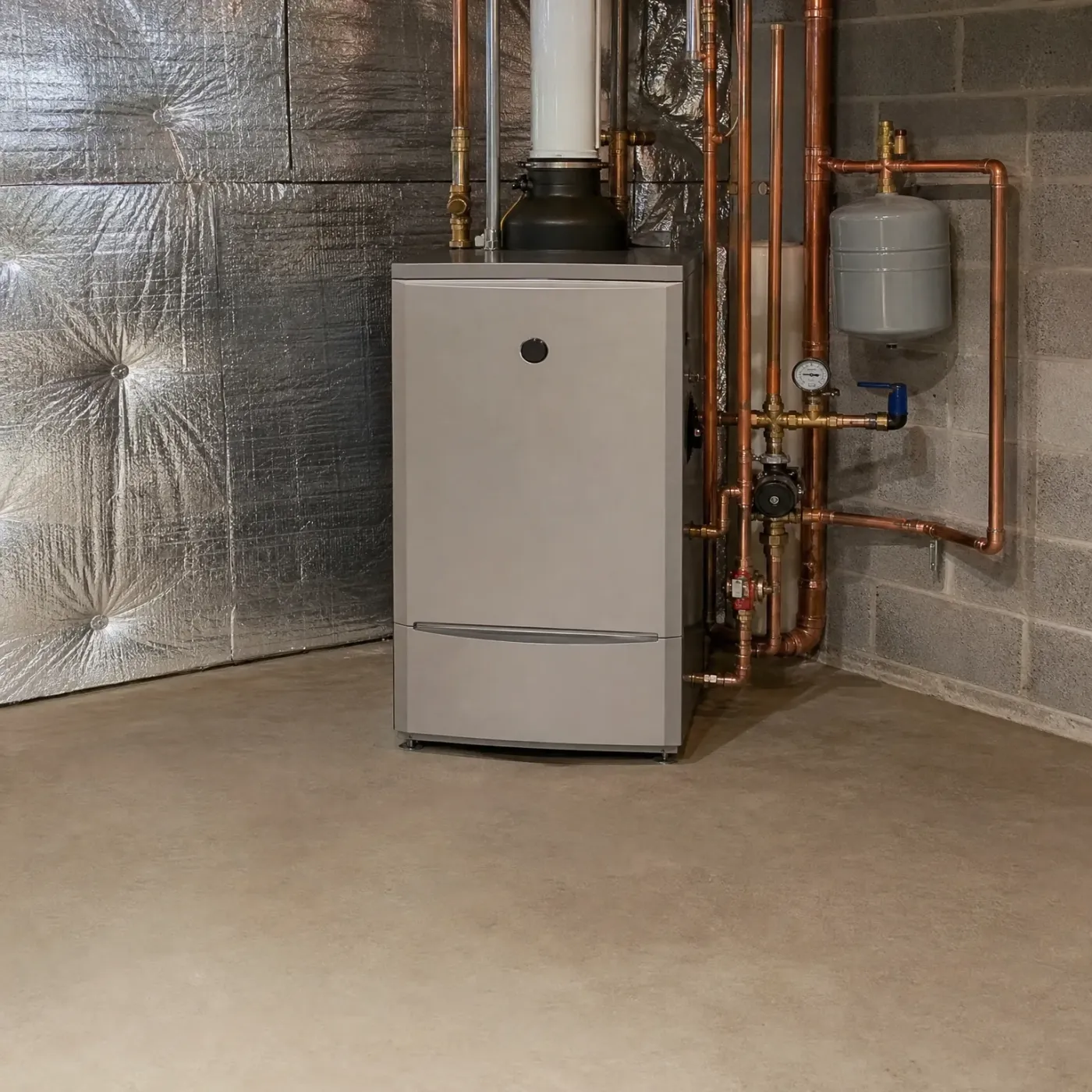
A gray residential boiler in a basement corner with copper piping, a circulator pump, pressure gauge, blue-handled valve and gray expansion tank against a concrete block wall, next to a foil-insulated wall.
After you get your boiler installation

Square footage alone doesn't tell you

Two houses the same size can need different boilers. A house with a few years of attic insulation added on holds heat different than one that still has what it came with. Ceiling height changes it too, and so does how many walls face north into the wind. This is why a contractor measures the house instead of going by a chart with square footage on one side and BTUs on the other. Get that number wrong and you're either paying for a boiler that's bigger than the house will ever need, or living with one that can't keep up in January.

Oversizing causes its own problems

A boiler too big for the house heats it fast, shuts off, and starts again a few minutes later. That's called short cycling, and it wears on the ignition and the pump harder than normal runtime does. It also means the house swings between a little too warm and a little too cold instead of holding steady. A correctly sized boiler runs longer at a lower output and holds the temperature even. More capacity sounds like insurance against the cold, but past a certain point it just means a shorter-lived boiler and a less comfortable house.

Winter nights average 4°F statewide

At 4 below zero, your boiler isn't cycling on and off, it's running close to flat out for hours at a time. Size it right and that long run keeps every room even. Size it wrong and you'll feel it first in the rooms farthest from the mechanical room.

NOAA nClimDiv 1991-2020 county normals weighted by homes

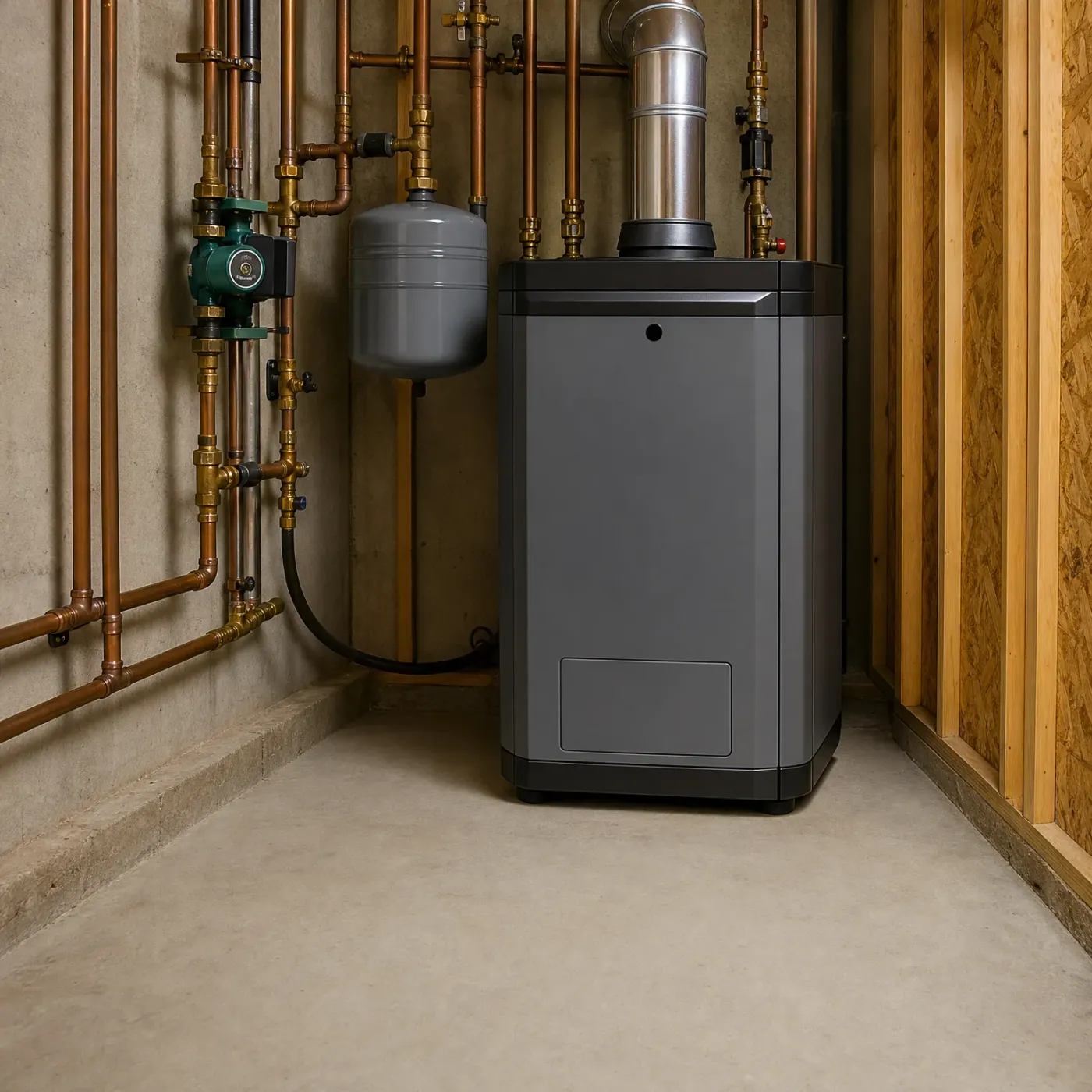
A gray floor-standing boiler with a metal flue pipe stands in a basement corner beside copper piping, brass valves, a green circulator pump, and a gray expansion tank on a concrete wall, with exposed wood framing and sheathing at right.

The right size

This is what steady heat looks like. The pump and expansion tank are sized to the load, so the boiler runs long and even instead of racing to catch up. Pipes, valves and the flue all do their job without strain.

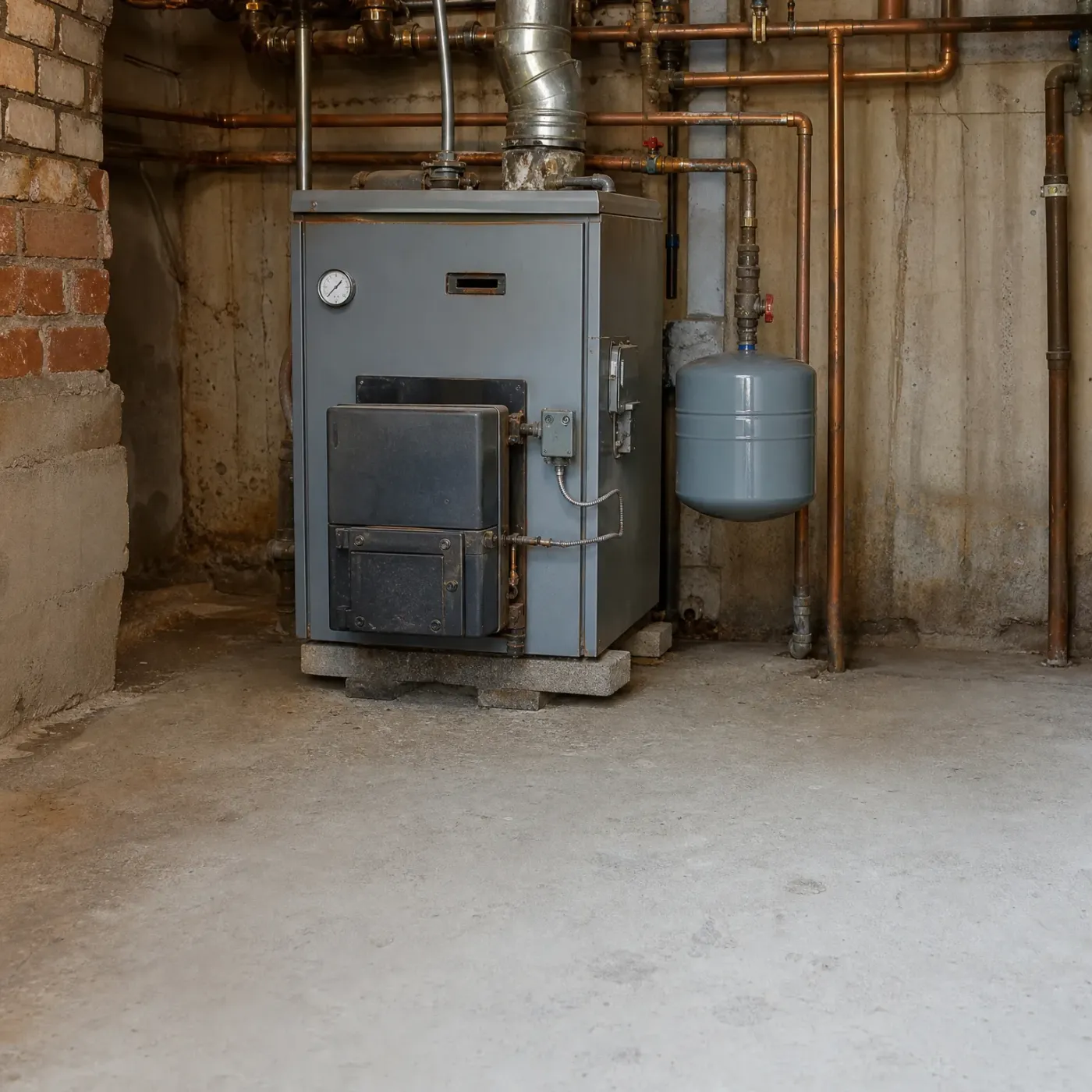
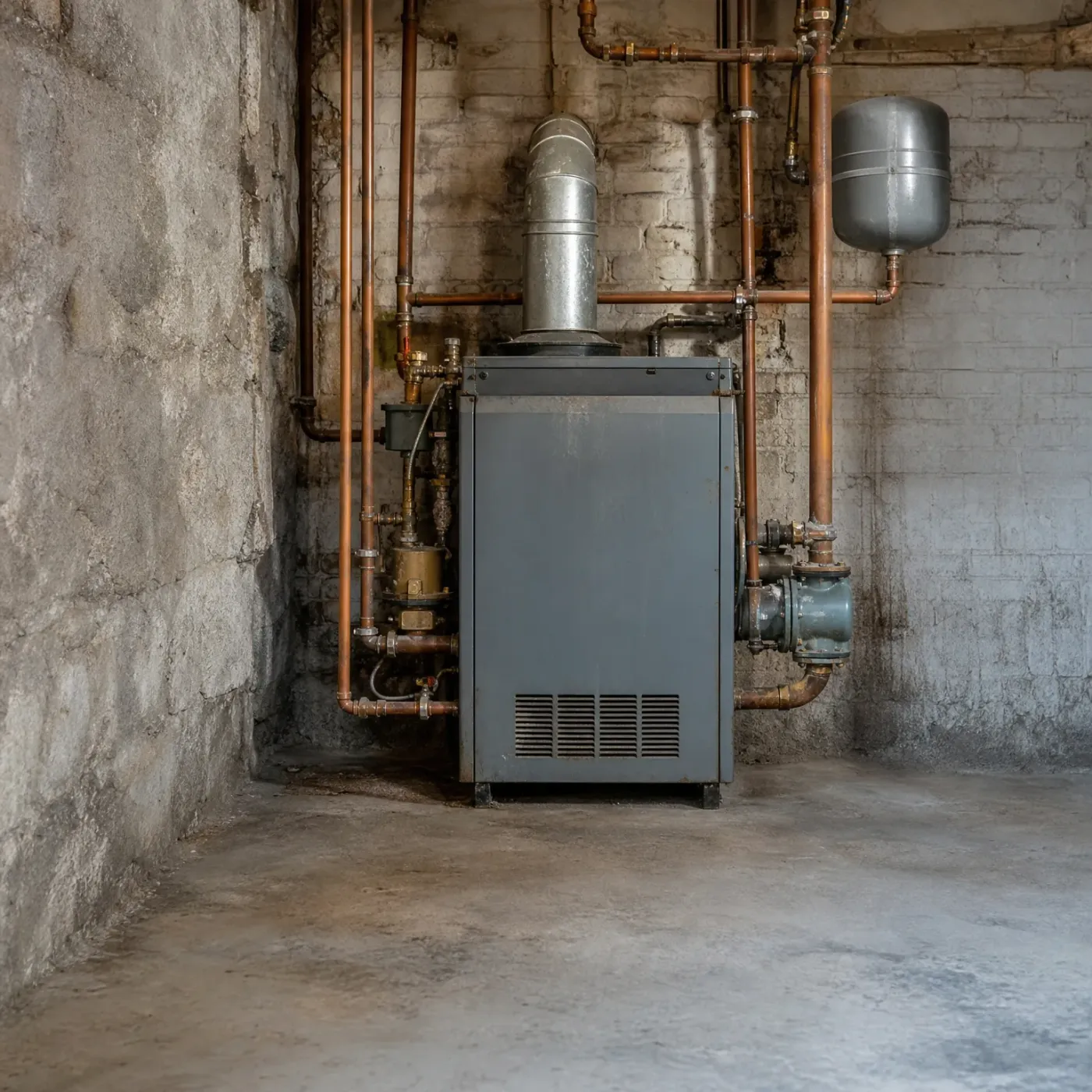
A gray boiler with a metal flue pipe and copper piping stands against a weathered painted brick basement wall, with an expansion tank mounted overhead and a bare concrete floor in front.

The wrong size

This cast-iron boiler is older, and if it was sized for a different house or a different era of insulation, it's fighting that mismatch every day. Galvanized venting like this is also worth a second look when you're already replacing the unit.

A gray-haired man with a beard in a blue button-placket shirt reclines on a couch with his eyes closed, beside a sunlit window with a green plant.
A woman in a cream knit sweater sits in an armchair with her eyes closed near a window showing yellow autumn foliage, with a mug on a round wooden side table beside her.

Stop chasing a boiler pro

One installer gets your project, so there's no bidding war over it.

Sending the form costs nothing.

How a contractor actually sizes it

  • A heat loss calculation, not square footage, is what a contractor uses to size your boiler correctly.
  • Manual J is the standard calculation that accounts for your windows, insulation and ceiling height room by room.
  • The output of that calculation is measured in BTUs per hour, the number that actually determines boiler size.
  • Radiators and baseboard need different water temperatures, and that changes what the boiler has to deliver.
  • An oversized boiler short cycles, turning on and off instead of running the long steady cycles cast iron and copper pipe depend on.
  • The near-boiler piping, including the primary loop and any zone valves, has to match the boiler's output or the whole system runs uneven.

A contractor doesn't measure your house in square feet and hand you a number off a chart. They walk the rooms and run a heat loss calculation, usually Manual J, which looks at how much heat every room actually loses through its windows, its walls, its ceiling height, even which way it faces. That room by room total gets added up into a BTU per hour figure, and that figure is what tells you the boiler size, not the square footage on your listing.

Then there's what the heat moves through once it leaves the boiler. Cast iron radiators want hotter water than baseboard does, and the boiler has to be matched to whichever one is on the walls. Get the output wrong on the high side and the boiler short cycles, firing up and shutting off again before it ever settles into the long steady run that cast iron and copper pipe are built around. That kind of cycling wears on the parts years before they'd otherwise quit.

None of this stops at the boiler itself. The near-boiler piping, the primary loop, the zone valves, all of it has to be sized to match the boiler's output. A boiler sized right but fed through piping that doesn't match it still won't heat evenly. It's the whole system working together, start to finish, that gets a North Dakota house through a night at 4 below.

A gray boiler on a concrete pad in a basement corner, connected to copper and black pipes with a gauge, circulator pump, and gray expansion tank, beside a wood-framed wall.
A boiler sized to your heat loss runs steady through a stretch at 4 below and still gets the far bedroom warm.
An older oil-fired boiler with a burner unit, flue pipe, expansion tank and copper piping stands in the corner of a concrete-floored basement with weathered plaster walls.
A boiler too big or small for the house shows it fastest here, in the old copper and the pump working harder than it should.

Finding a sizer: you or a match

Get a quote yourself

  • You're calling around, explaining your square footage over and over to people who haven't seen the house.
  • You have no way to know if the number you're quoted came from a real heat loss calculation or a guess based on square footage.
  • If three contractors give you three different sizes, you're the one who has to figure out which one to trust.
  • Finding someone who still works on boilers, rather than just furnaces and AC, narrows the list fast in North Dakota.
  • You carry the risk of picking the undersized unit that can't keep the far bedroom warm at 4 below.

Request a match here

  • One form, and the job of finding someone who installs boilers stops being something you have to do.
  • The contractor who calls is local and licensed, someone who sizes boilers for houses dealing with the same winters as yours.
  • You're matched with one contractor, not handed off to a list of five companies all calling you the same afternoon.
  • Someone who works on this equipment every season already knows what tends to go wrong in a house your size.
  • You get a heat loss calculation done by someone who's walked into houses like yours before, not a square footage guess over the phone.
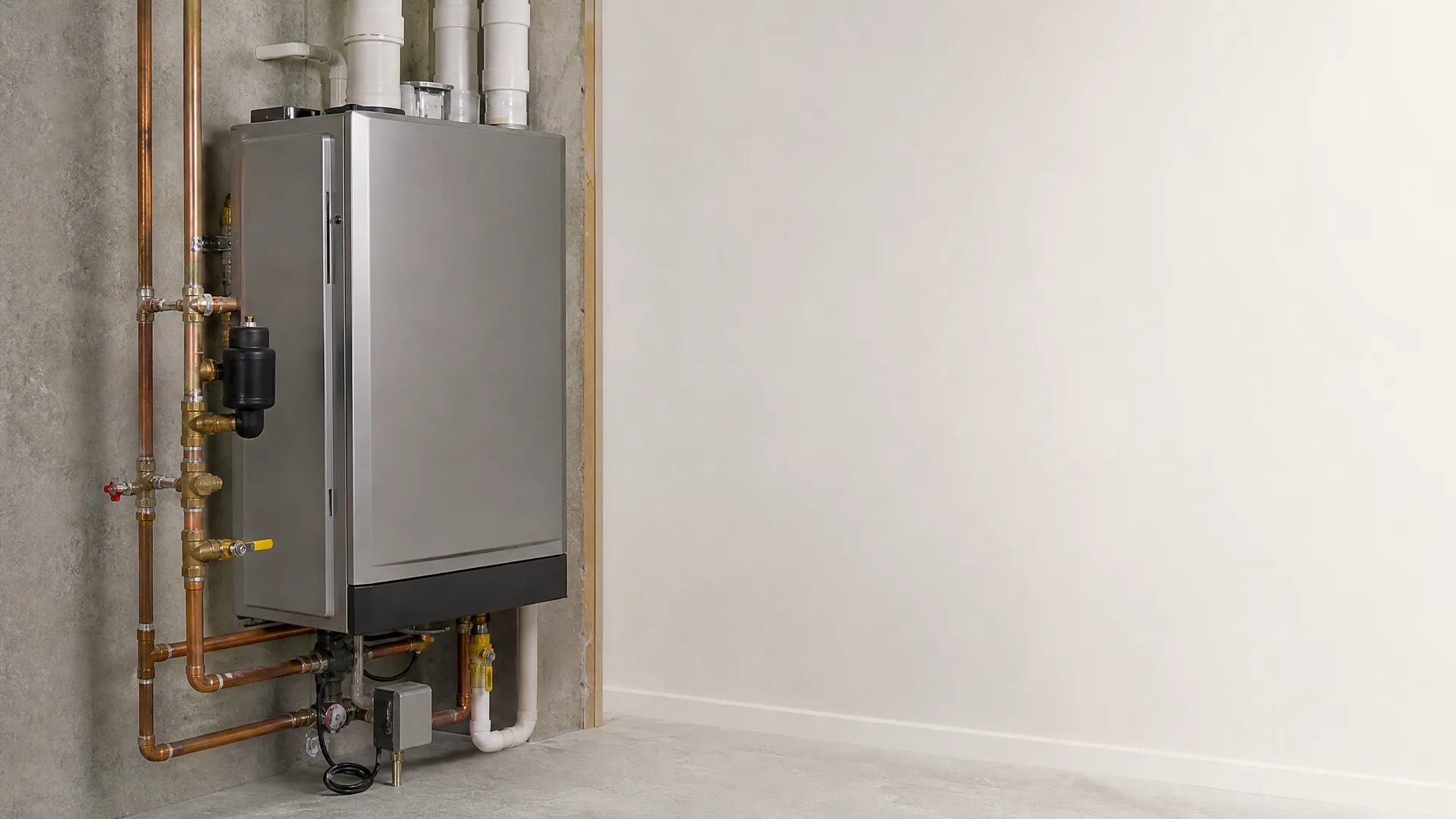
A wall-mounted grey boiler with copper pipework and white flue pipes installed against a concrete wall in an empty room with a plain pale wall to the right.

Sizing it yourself from a chart

You can find square footage charts online and land on a number. The trouble is a chart doesn't know if your attic has six inches of insulation or two, or how many windows face north toward the wind. You end up with a figure that sounds specific but was built for a different house. If the boiler goes in on that number, you won't know it's wrong until a night near zero shows you.

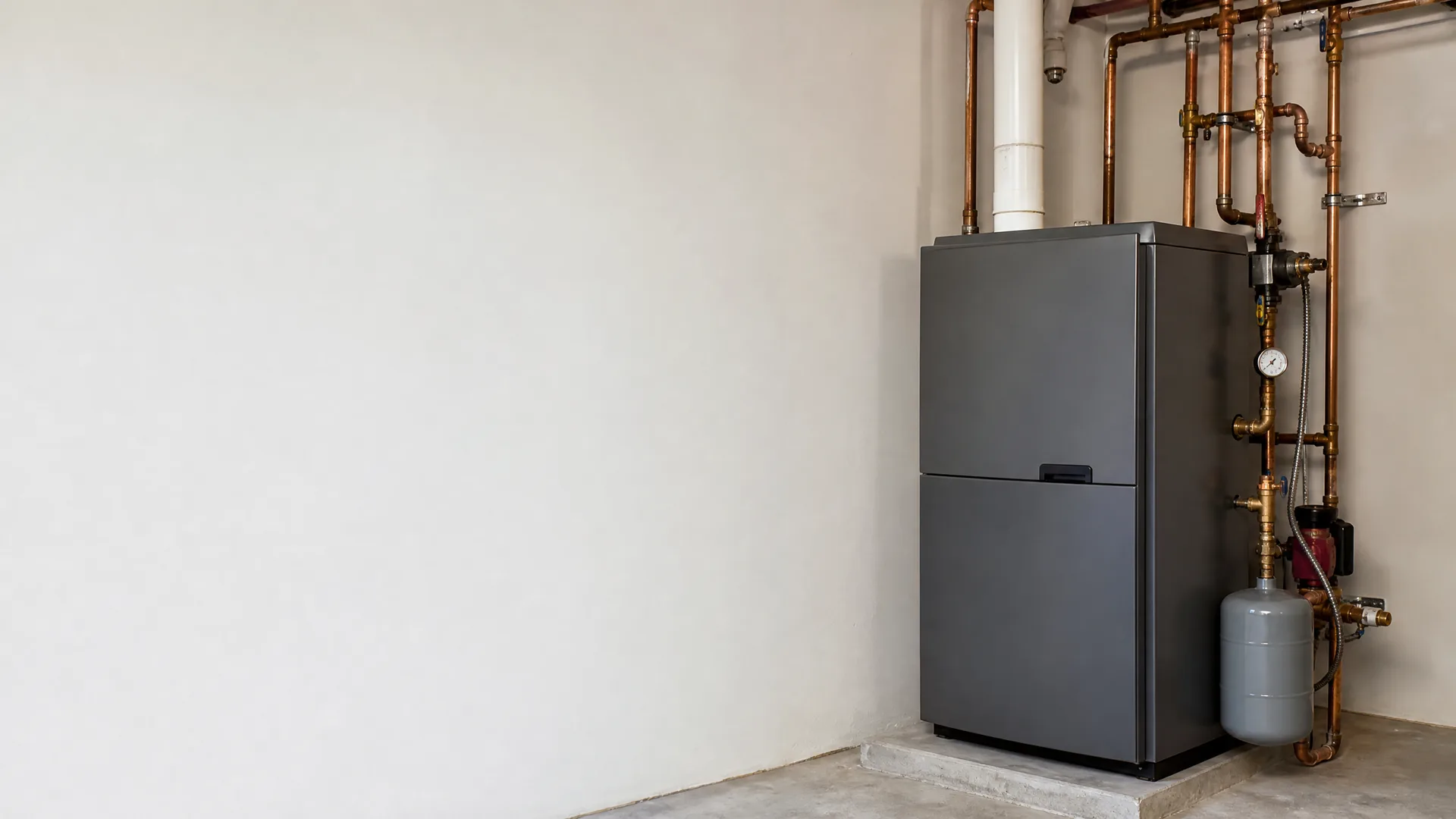
A dark grey boiler unit stands on a concrete pad against a plain light wall, connected to copper pipes, a pressure gauge, a pump and a grey expansion tank.

Having a contractor run the numbers

A contractor who does this every winter walks the house, room by room, and runs the heat loss calculation on what's actually there. That number accounts for your insulation, your windows, your ceiling height. It tells the installer what the boiler, the pump and the expansion tank all need to be sized to. You get one answer, from someone local who's seen what fails in houses like yours, instead of a guess dressed up as a quote.

The right size for your boiler comes from a heat loss calculation on your house, not a square footage chart, and that's the number that keeps every room warm when it's well below zero outside. Once you send the request, you're not the one who has to track that down. A local contractor who works on boilers in North Dakota winters every year picks this up, the kind who's seen what a cast iron boiler does in a house like yours and what it takes to size the replacement right. You'll hear from one contractor, not a handful of strangers reading off the same square footage chart you could've found yourself. They'll come look at your windows, your insulation, your ceiling height, the rooms farthest from the mechanical room, and size the boiler to what your house actually loses on a cold night, not to a guess. That's the whole answer. The rest is just getting someone qualified to measure it.

At dusk, a dark board-and-batten house with a standing-seam metal roof and lit entry walkway of stone pavers, with two large outdoor heat pump units on a stone-walled pad at right and trees and hills in the background.

Boiler Installation

Send one request and you're done looking

Step 1 of 3: Equipment
  • A brown leather and wood armchair with a cream knit throw sits in a corner beside a woven basket holding a dark cushion, under a framed mountain photograph, with a wood-trimmed window showing yellow and green foliage.
    • A local installer who puts in boilers gets your project.
    • Get in touch with a local installer about a new boiler.
  • A dark wood dresser against a pale wall holds a ceramic vase of eucalyptus branches, a stack of books with a wooden bowl, and a woven basket, with a framed landscape painting above and a woven basket holding a knit blanket on the floor beside a window.
    • Send it once and finding someone is no longer on you.
    • Once you send the form, finding a pro is off your list.
  • A window seat with beige linen and brown textured cushions, a chunky knit blanket, and an open book, beside a window showing blurred yellow autumn foliage.
    • Skip collecting and comparing quotes for the new boiler.
    • Skip the round of in-home estimates for a new boiler.
  • A cream upholstered armchair with a rust-colored pillow and knit fringed throw sits beside a window with a ceramic vase of orange-leafed branches on the sill, overlooking autumn trees and leaf-covered ground.
    • Your request goes to one pro, not a list of companies.
    • The pro who reaches out is licensed in North Dakota.