 Hand it off
Why your boiler is kettling in North Dakota
Once you send the form, finding a pro is off your list.
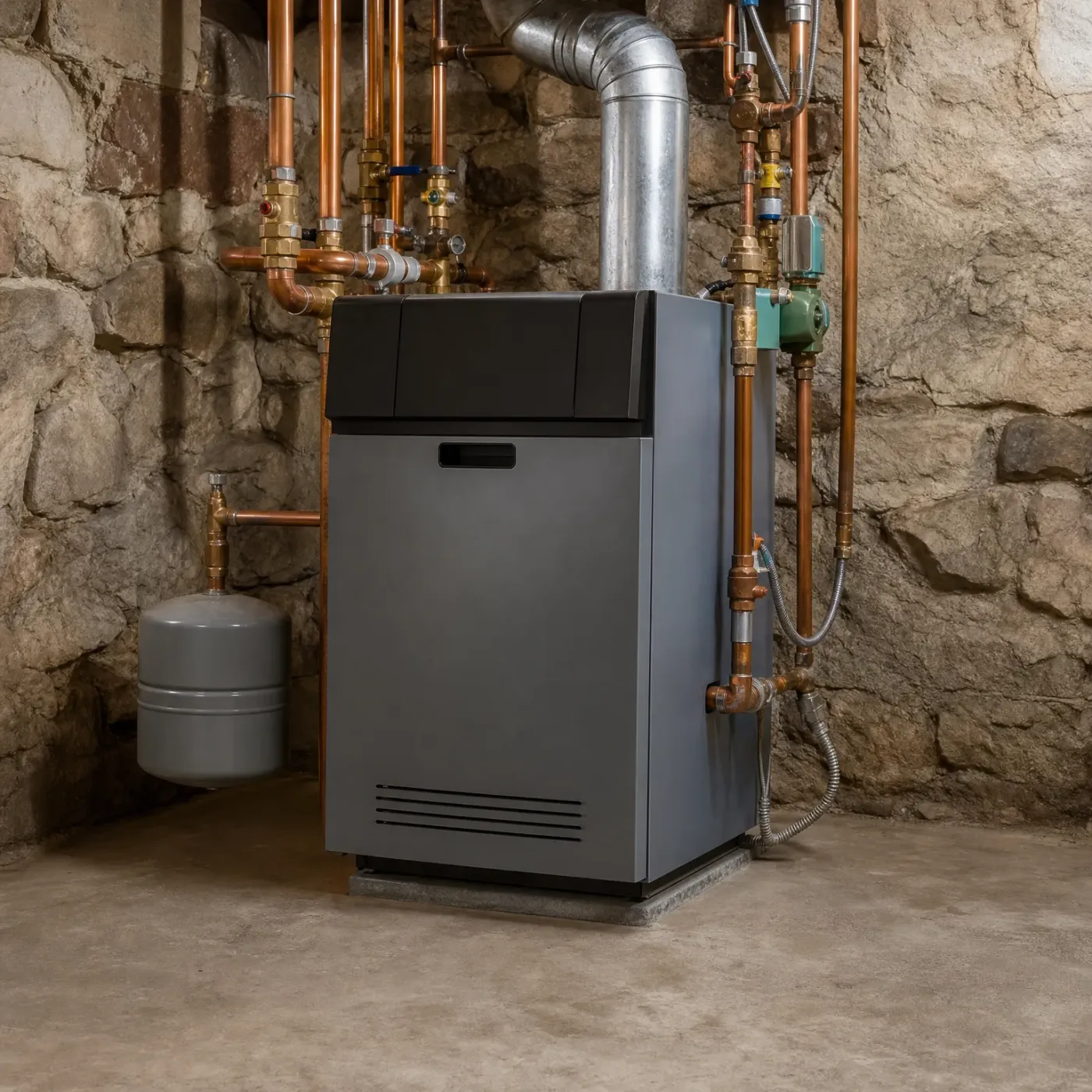
That rumbling, banging or popping coming from your boiler is kettling. It happens when scale and sediment build up on the heat exchanger and trap water against the hot metal. That trapped water flashes to steam, and the noise you hear is the steam collapsing back into water, over and over. It gets worse the longer it runs, and it means your boiler is working harder than it should to heat your home.
Left alone, kettling strains the heat exchanger. The hot spots that cause the noise are the same spots that crack a cast iron section or burn through a steel one. That is a repair that costs a lot more than the scale that caused it.
Gas heats most homes in North Dakota, and with winters here the way they are, a boiler that's struggling is not something to sit with. A noisy boiler now is one thing. A boiler that quits in January is another.
Finding someone qualified to deal with a kettling boiler takes work most people don't have time for. You would be searching for heating contractors, calling a few, explaining the banging and popping to each one, waiting to hear who actually works on boilers rather than furnaces, and then comparing whatever quotes come back. All of that is time spent before anyone even looks at your system.
Send the form on this page and that search is done. You are not the one tracking down a contractor or vetting who knows boilers from who doesn't. That part is off your plate the moment you submit it. What is left is getting the scale cleared and the heat exchanger checked before a small noise turns into a cracked section and a cold house.
That noise means scale has built up inside the heat exchanger, usually from years of hard water moving through the system. A thin layer of scale acts like an insulator, so the water touching the metal gets hotter than the water around it and turns to steam in small pockets. When those pockets collapse, you hear the banging or kettling. North Dakota's water running through a gas boiler all winter will build scale over time no differently than anywhere else, but once it starts, the noise doesn't go away on its own and the buildup keeps getting worse. Left alone, that spot on the heat exchanger keeps overheating, which stresses the metal and can crack it. A boiler making this noise needs the heat exchanger cleaned or descaled before that happens.


Hand off the boiler problem
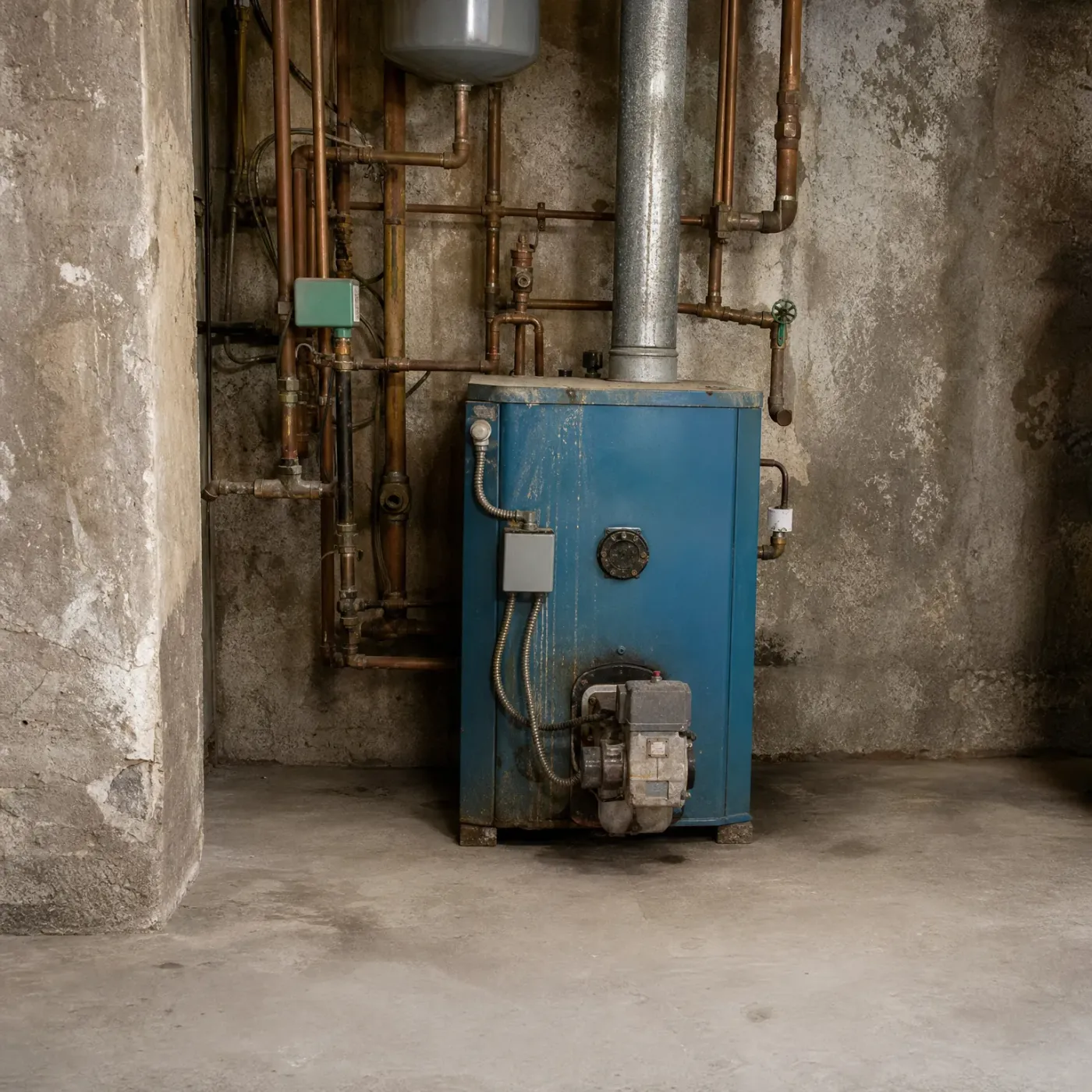
That banging doesn't go away on its own, and running the boiler through another North Dakota winter with scale building against the heat exchanger risks a crack you'll notice as a leak under the unit. Gas heats most homes here, so when the boiler's down, you're down, and with power cheap but gas doing the real work, a scaled exchanger is also quietly costing more to get the same heat out of your rooms. Finding someone to look at it the usual way means searching for a boiler contractor who still works on your make, calling a few, explaining the kettling noise over and over, then sitting on quotes trying to tell a fair price from a guess. Send the request once and that work is off your plate. You go back to listening for the noise instead of chasing down who can fix it.
What scale does to the metal
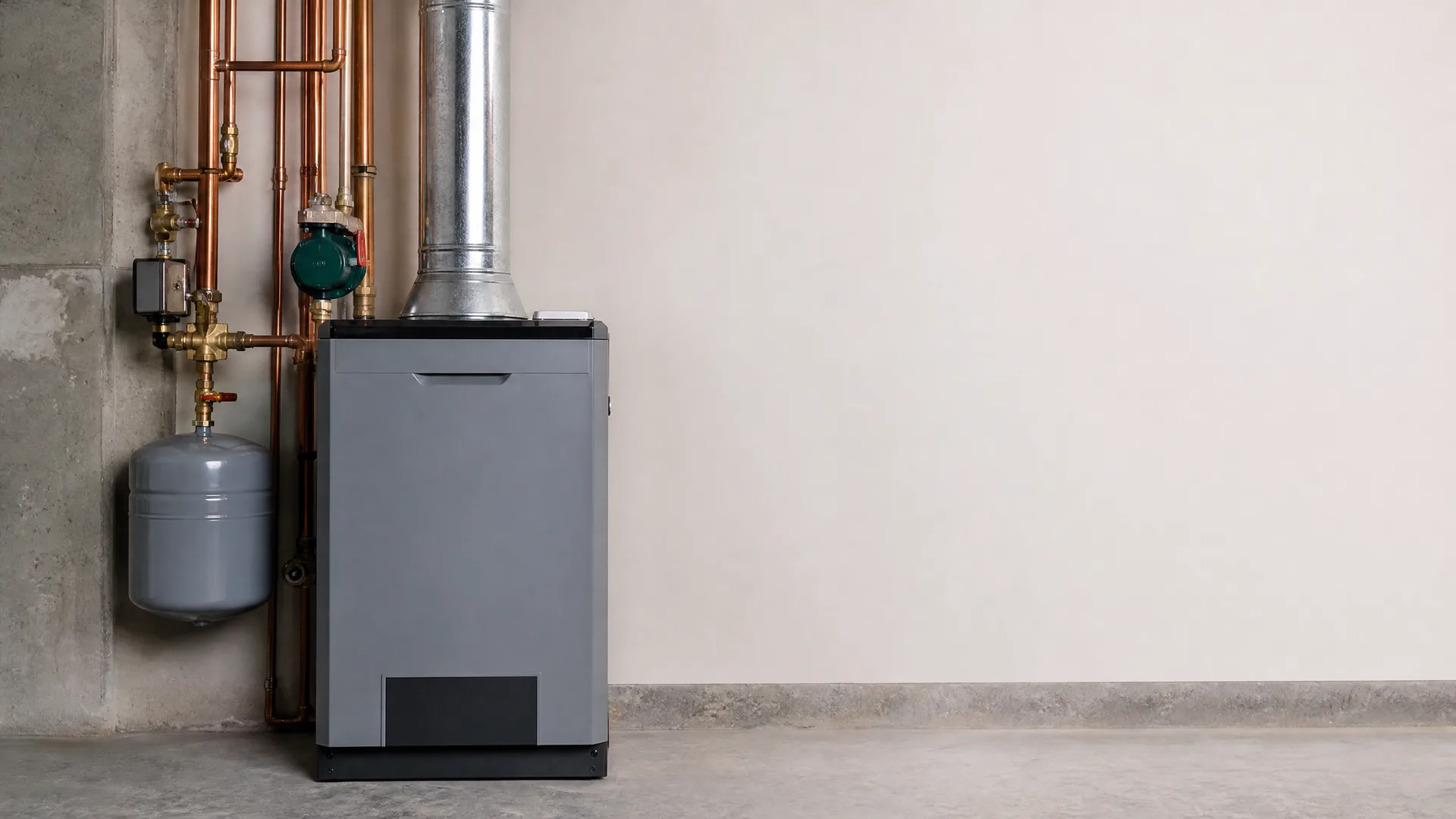
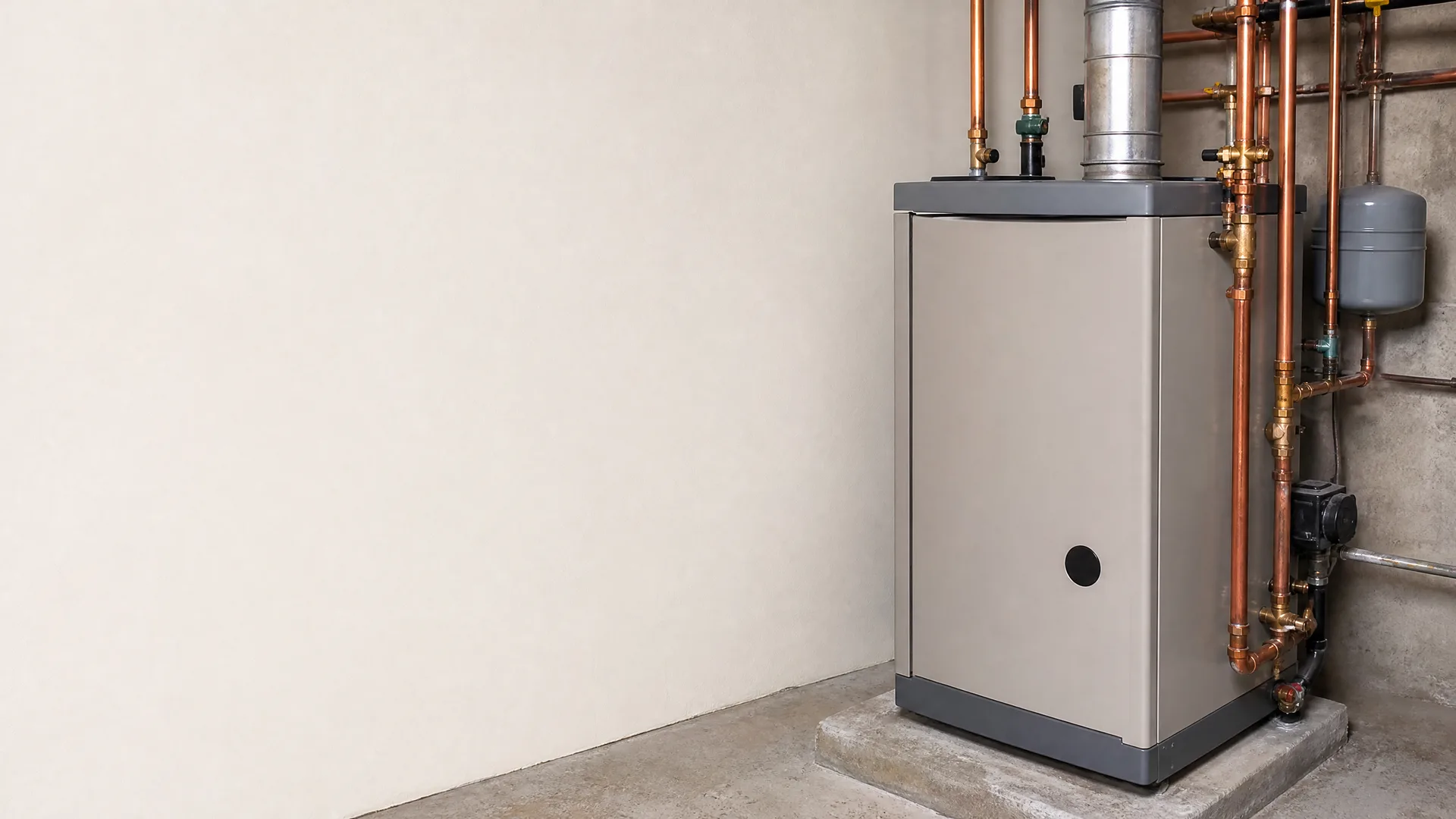
Scale builds up slowest at the top of the heat exchanger and thickest where the flame sits directly underneath. That's why kettling usually starts as a faint popping before it turns into banging you can hear from another room. The metal under a thick patch of scale can run far hotter than the water flowing past it, since the scale blocks heat from spreading evenly into the water around it.
Why North Dakota water matters here
Hard water leaves mineral deposits behind as it heats, and the harder the water, the faster scale builds inside the exchanger. A boiler running on softened water can go years without a noticeable buildup, while one on untreated hard water can start kettling much sooner. Once scale takes hold, it keeps collecting faster, since rough mineral deposits trap more sediment than bare metal does.
Winter nights average 4°F statewide
At 4°F on a winter night, your boiler isn't cycling off much. It's running long, steady stretches to hold the house at temperature, and that means more hours with water sitting against a scaled heat exchanger. The kettling gets worse the longer that keeps up.
NOAA nClimDiv 1991-2020 county normals weighted by homes
Kettling Won't Fix Itself
- Kettling is scale trapping water against the heat exchanger until it flashes to steam.
- The popping and banging gets louder as more scale builds and the trapped layer thickens.
- Long winter run times at low outdoor temperatures give scale more hours to do its work.
- Left alone, the scaled spot can crack and show up as a leak under the boiler.
- A technician can descale or flush the exchanger before a crack forces a bigger repair.
- The noise points to one cause, and it only gets worse while the boiler keeps running.
The sound has one cause. Scale has built up inside the heat exchanger and water is getting trapped against metal hot enough to turn it to steam, and that's the banging you hear. It started quiet, probably a faint pop you could ignore. It won't stay that way. Every cold night the boiler runs long to keep the house warm, and every one of those hours is more time for scale to thicken and more water getting trapped under it. North Dakota winters don't give a boiler many breaks once it gets cold, so the hours add up fast. The risk isn't the noise itself. It's what the noise is sitting on top of. A heat exchanger that keeps overheating at the scaled spot can crack, and a cracked exchanger shows up as a leak under the unit, usually in the middle of the winter you were counting on it for. None of this reverses on its own. Scale doesn't wear away because the boiler keeps running through it, and the sound doesn't go away because you get used to it. A technician can open the unit, descale or flush the exchanger, and get water moving evenly through it again before a crack forces a repair that costs a lot more than a cleaning would. The boiler is telling you something specific. What happens next is up to whether you act on it or keep letting it run.




Boiler Repair
Send one request and you're done looking
Skip searching for a boiler pro and answer a few questions instead.
