Profile view of a bearded man wearing a black baseball cap and a dark gray T-shirt against a plain light background.

Why your boiler is leaking water in North Dakota

Step 1 of 3: Equipment

Why is my boiler leaking water?

You caught water pooling near the boiler or dripping from a pipe before it turned into a bigger mess. That's worth something. A leak usually comes from one of a few places: a worn valve, a loose fitting, a failing seal, or too much pressure inside the system. Catching it early, like you're doing, is what keeps a small leak from becoming a cracked heat exchanger or a flooded utility room.

Most often it's a pressure relief valve or a loose fitting

The pressure relief valve is built to open and release water when pressure inside the boiler gets too high, so a drip near that valve often means the system is running over pressure rather than the valve itself failing. A loose union or fitting on a pipe will weep slowly, leaving a small puddle or a rust stain underneath. The circulator pump has a seal that wears out over years of use and starts to drip when it goes. With gas heat common in North Dakota homes, a boiler runs hard from fall through spring, and that steady use is what wears these parts down. Where the water shows up points to which one it is.

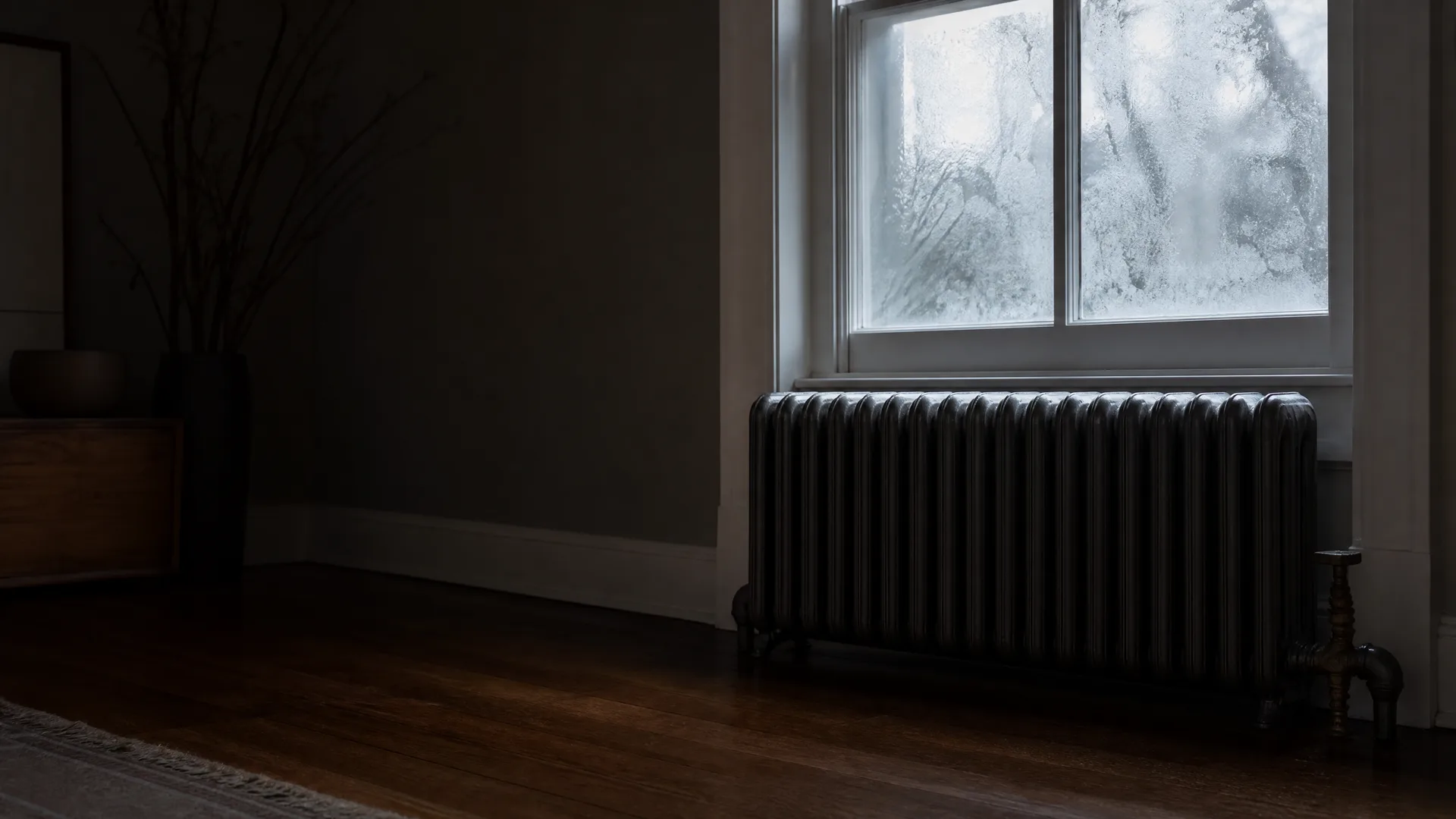
A cast-iron column radiator stands beneath a frosted window in a dim room with dark walls, a wood floor, and a vase of bare branches on a low cabinet at left.

You're up before the sun, same as always in January, and the living room is still dark except for the streetlight coming through the window. Ice has crept across the inside of the glass again, a thin white film at the corners. The cast-iron radiator under the sill is ticking as it heats, and that's when you see it: a thin line of water running down the leg and pooling on the floor underneath. You crouch down, touch the puddle with two fingers. Cold. You wipe it up with a towel, set a pot under the joint where it's dripping, and go find your phone.

A man seen from behind raises his hand to wave at a woman standing in the open front doorway of a single-story house with gray shingle siding, white columns and a gabled porch entry.

Where the water is actually coming from

A boiler runs on a closed loop, water circulating from the boiler through the pipes and radiators and back again. That water shouldn't go anywhere. When you see it outside the system, something specific let it out. The pressure relief valve opens on its own once pressure inside climbs too high, and water drips down the pipe it's attached to. A circulator pump has a seal around its shaft, and once that seal wears, water seeps out right at the pump housing. The pressure reducing valve, the one that feeds fresh water into the loop, can stick open and keep adding water the system never asked for. Each one leaves water in a different spot, and where you found it points to which part let go.

That's the kind of thing a licensed contractor checks by hand, not by guessing. Once you send in what you're seeing, a contractor who works on boilers like yours gets your details and reaches out. You won't be the one tracking down who's available or whether they handle your type of system. That part is off your plate the moment you submit.

A living room corner with a beige upholstered armchair holding navy and striped cushions, a small round wooden side table with a carved bowl and a potted green plant, a framed landscape picture on a pale wall, built-in shelving, and a curtained window.
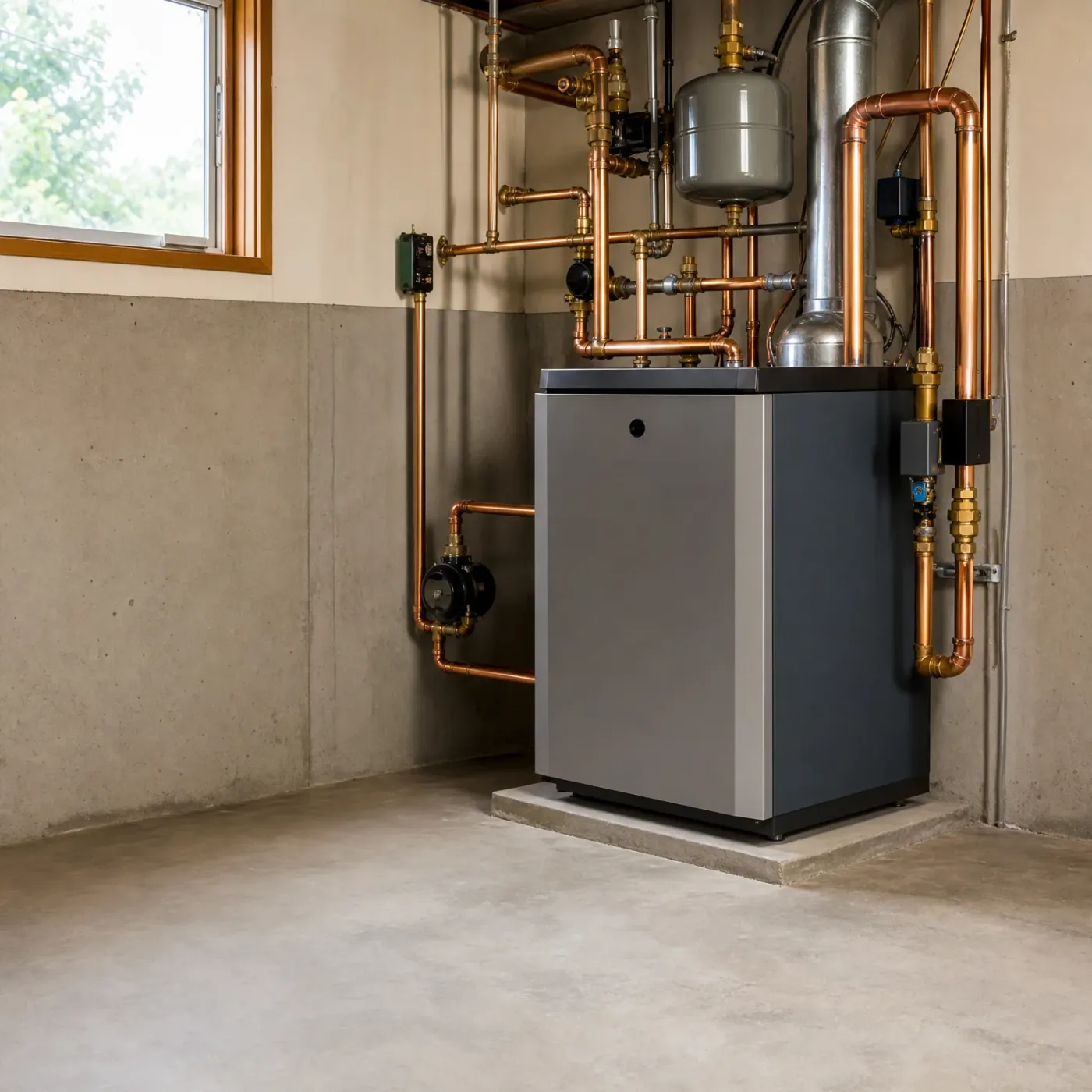
A gray floor-standing boiler on a concrete pad in a basement corner, connected to copper piping, brass valves, a circulator pump, an expansion tank, and a metal flue, with a window at upper left.

Dry and holding pressure

This is what a boiler looks like when nothing is wrong. The copper piping is dry, the fittings show no residue, and the pressure gauge sits where it should. The circulator pump runs quiet and the expansion tank does its job without strain.

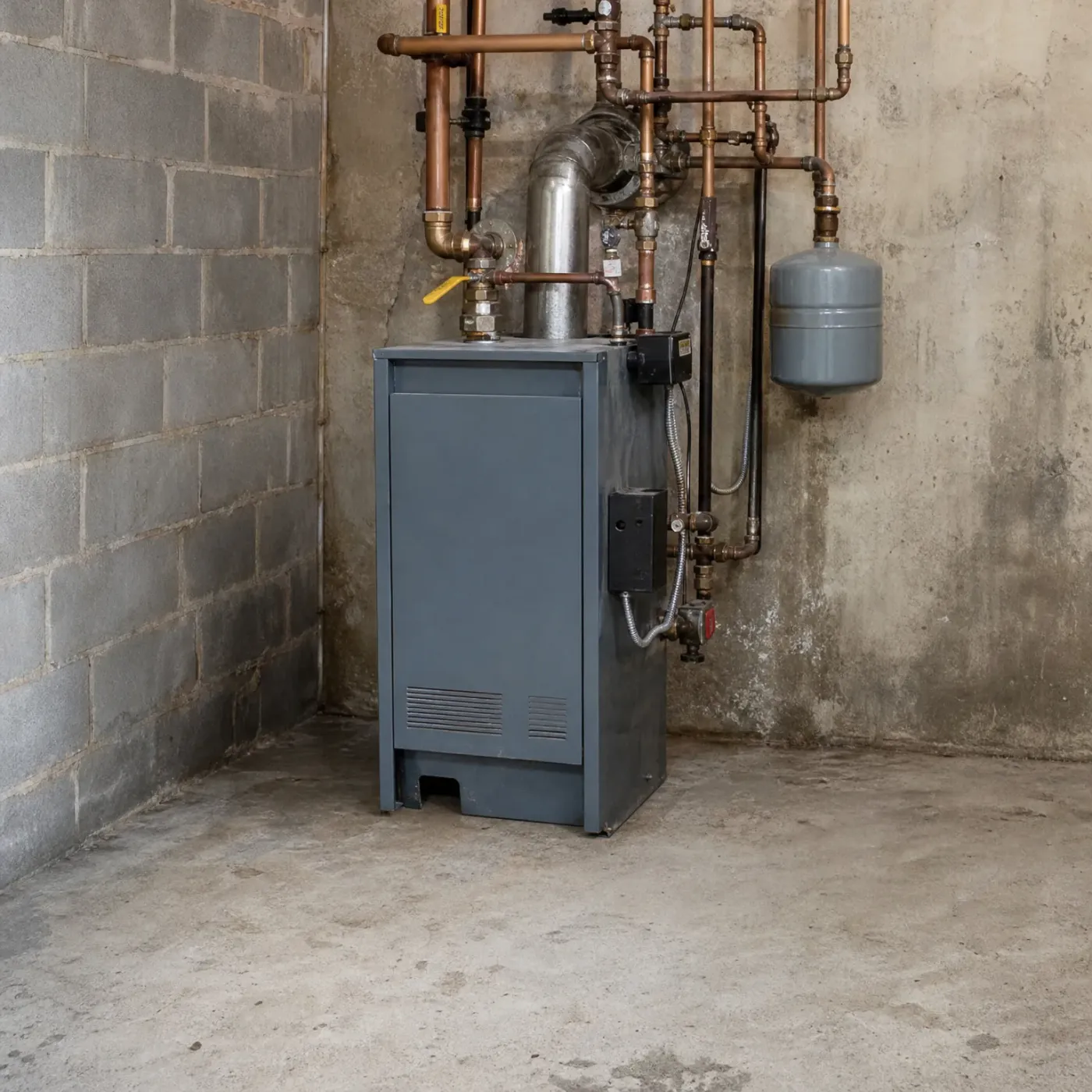
A gray floor-standing boiler in a basement corner with copper and black piping above it, a flue vent, and a gray expansion tank mounted on the concrete wall beside a concrete block wall.

Water where it shouldn't be

This is the same kind of unit with a problem underway. A damp patch on the concrete block, a stain running down from a fitting, or water pooling near the base means something in the loop has given way. Left alone, it gets worse, not better.

What are you noticing around your boiler right now

Maybe it's a damp spot on the basement floor that wasn't there last week, or a crust of white or green buildup on a pipe fitting. Maybe you've heard the boiler running longer than it used to, or noticed the pressure gauge creeping below where it usually sits. Rust forming on the tank itself, a musty smell near the unit, or water stains on the floor joists above it are all signs worth paying attention to. Left alone, a small leak can corrode the fittings around it or damage the floor and framing nearby, and the boiler may lose enough pressure to stop heating your house the way it should on the cold nights ahead.

A woman in a gray turtleneck sweater stands by a window looking outside at snowy ground, with a dimly lit living room containing a sofa, shelves, lamp and a lit candle behind her.
A woman in a cream cable-knit turtleneck sweater stands in a warmly lit living room with a fireplace and shelves behind her, looking out a window toward snow-covered trees and a railed deck.
A woman in a cream knit turtleneck sweater stands by a window looking out at snow, with a lit fireplace, sofa and lamp in the room behind her.
A woman in a gray knit sweater sits by a window looking out at falling snow, with a dimly lit living room containing a sectional sofa, pillows, a lamp and houseplants behind her.

A local pro for your boiler repair

Send it once and finding someone is no longer on you.

No fee to send it, and nothing to sign.

What the pressure gauge tells you

A boiler that's working right holds steady between 12 and 15 psi when the system is cold. If the needle creeps above that, the relief valve is doing exactly what it's built to do: opening to let water out before a pipe or fitting gives way somewhere worse. That's not the valve failing. That's the valve working, and the real question is why the pressure climbed in the first place. An automatic feed valve stuck open, or a fill valve someone left cracked, will keep pushing water into the loop until it has nowhere to go but out.

Why North Dakota winters raise the stakes

Gas boilers here run hard from fall through spring, and a system that's cycling on for hours at a stretch puts more wear on every seal and joint than one that runs a few weeks a year. A seal that holds fine in July can start weeping once the boiler is firing most of the day. That's not bad luck. It's the same part doing more work under more heat. Power here is cheap enough that most people aren't rationing how often the boiler runs, which means a weak point gets found sooner rather than later, usually in the coldest stretch of the year.

A bearded man in a blue and brown plaid flannel shirt stands indoors looking out a window at snow-covered trees, with a ceramic mug on the windowsill.
A man in a blue T-shirt sits on a light gray sofa, laughing while looking at an open laptop in the foreground, with a framed picture, lamp and potted plant behind him.

A leak caught early

A loose fitting or a worn valve, found now, is a contained repair. You deal with it before it spreads to the heat exchanger or the floor underneath.

Get a local pro

A leak left alone

Water finds its way to wiring, the floor, or the heat exchanger itself. What started as a drip near a fitting ends up as a bigger job.

Get a local pro
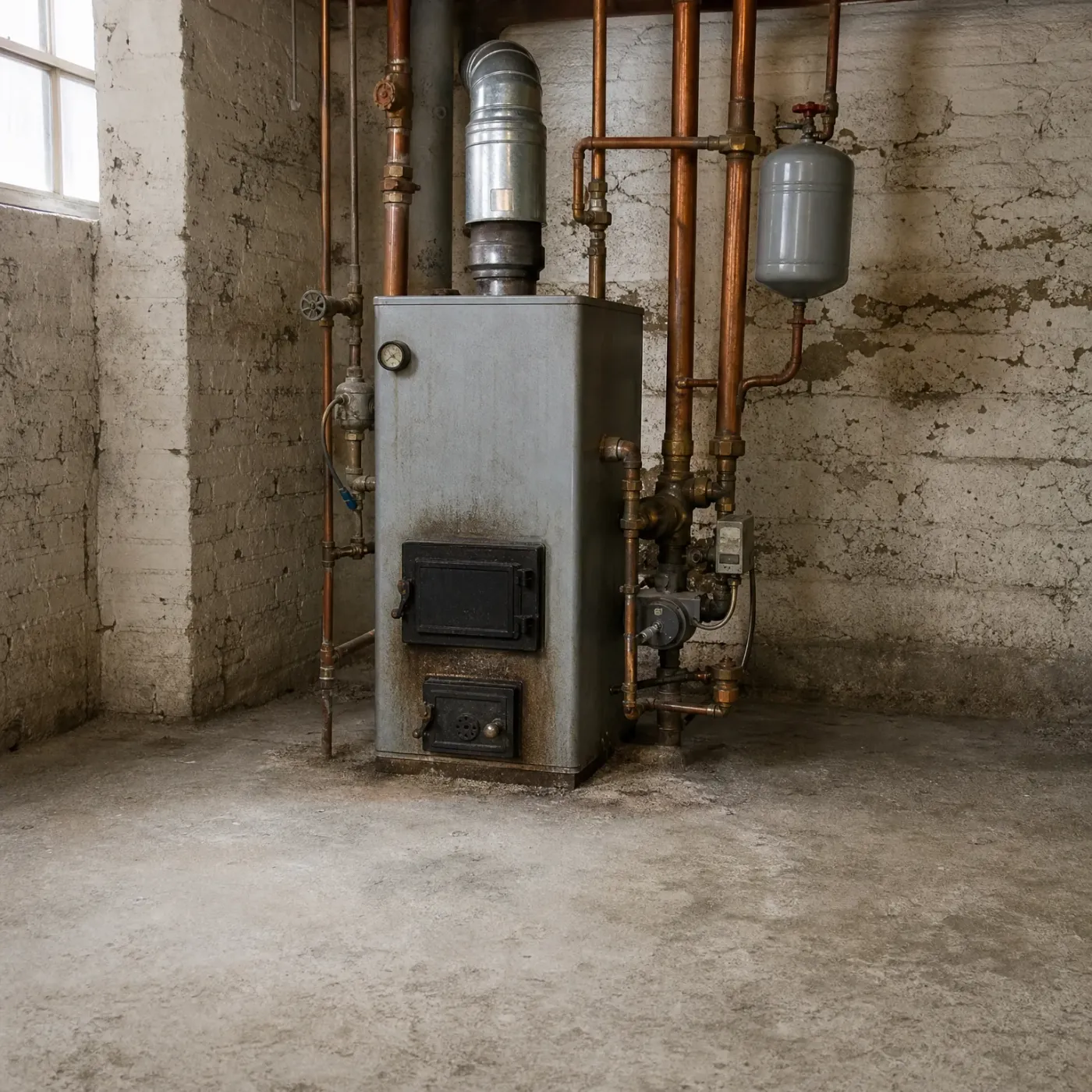
An old gray boiler with copper piping, a flue duct, pressure gauge and an expansion tank stands in the corner of a basement with painted masonry walls and a bare concrete floor.
Before you get your boiler repair
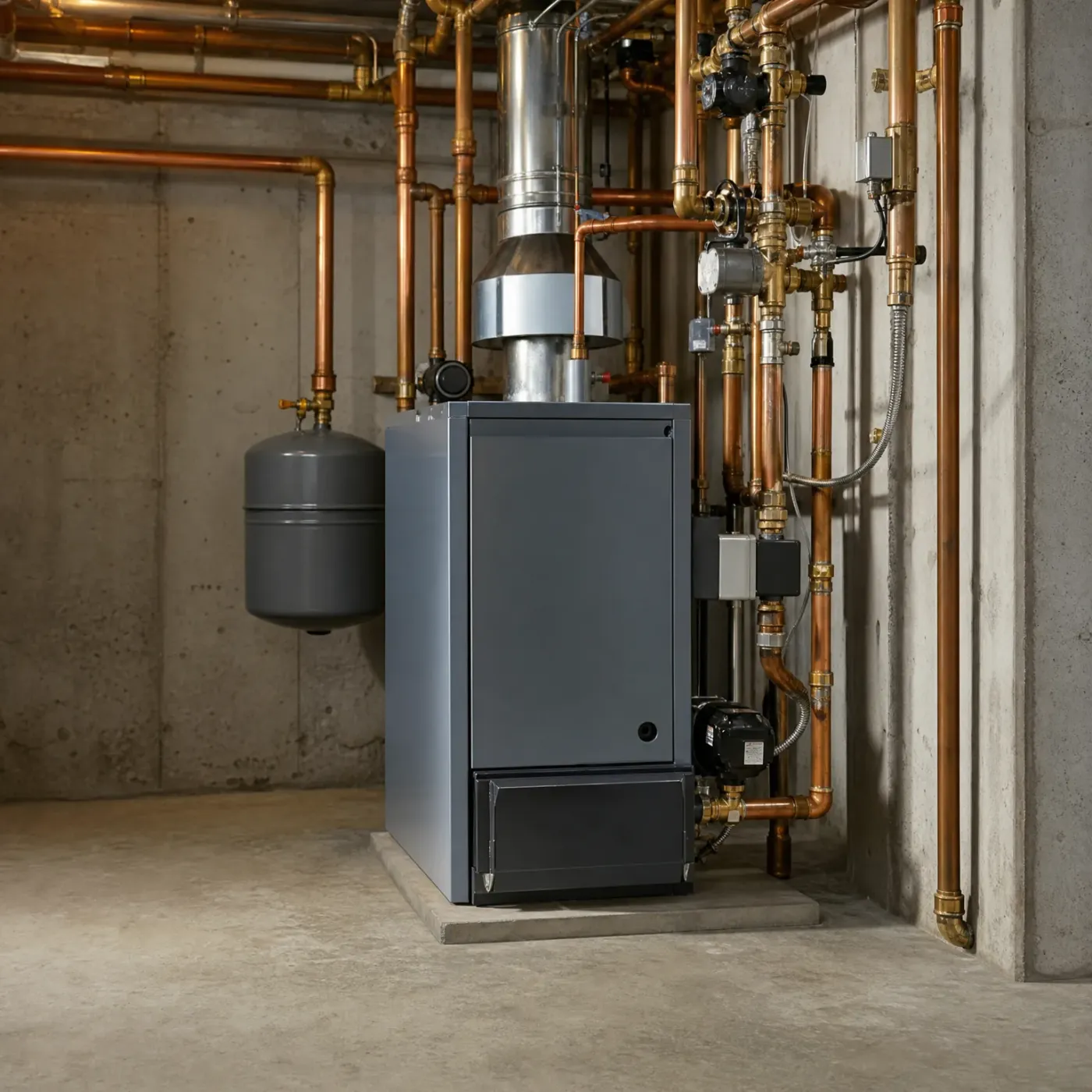
A gray boiler on a concrete pad in a basement, connected to copper piping, valves, circulator pumps, a metal flue, and a wall-mounted expansion tank.
After you get your boiler repair

Where the water actually starts

  • The relief valve is set to open at a specific pressure, usually around 30 psi, as a safety limit.
  • A pinhole leak in the heat exchanger often shows up as water only when the boiler is firing, not when it sits idle.
  • Mineral deposits build up inside fittings over years and eventually force water out through a seam that used to hold.
  • The circulator pump has its own seal, and that seal wears separately from the valves and fittings around it.
  • Expansion tanks that have lost their air charge let system pressure spike, which pushes water out wherever it's weakest.
  • A leak at a union fitting usually means the washer or gasket inside it has hardened and shrunk.

The relief valve, the heat exchanger, the fittings, the circulator pump, the expansion tank. Each one fails on its own schedule and for its own reason, and knowing which one is leaking tells a contractor what to bring before they even open the panel. The relief valve is doing its job when it opens at high pressure. That's not a failure, that's the valve protecting the rest of the system from a problem somewhere else, usually the expansion tank. When that tank loses its air charge, it can't absorb the water's expansion as it heats, so pressure climbs until the relief valve has no choice but to let water out. A pinhole in the heat exchanger behaves differently. It only shows up while the boiler is actually firing and the metal is expanding with heat, so a dry heat exchanger at idle doesn't mean the leak is gone. Fittings and unions leak for a slower reason. Minerals in the water build up inside them year after year, and the washer or gasket inside a union hardens and shrinks until it can't hold a seal anymore. The circulator pump has its own seal entirely, separate from all of this, and it wears out on its own timeline regardless of what's happening elsewhere in the loop. None of these are related to each other. A leak at the pump doesn't mean the heat exchanger is next, and a weak expansion tank doesn't mean a fitting is about to go. Each one points to a different fix.

Winter nights average 4°F statewide

At 4 below zero most winter nights, your boiler is running long stretches to keep up, and that's more hours for a worn valve or loose fitting to show itself. A slow leak you could ignore in October won't wait until spring.

NOAA nClimDiv 1991-2020 county normals weighted by homes

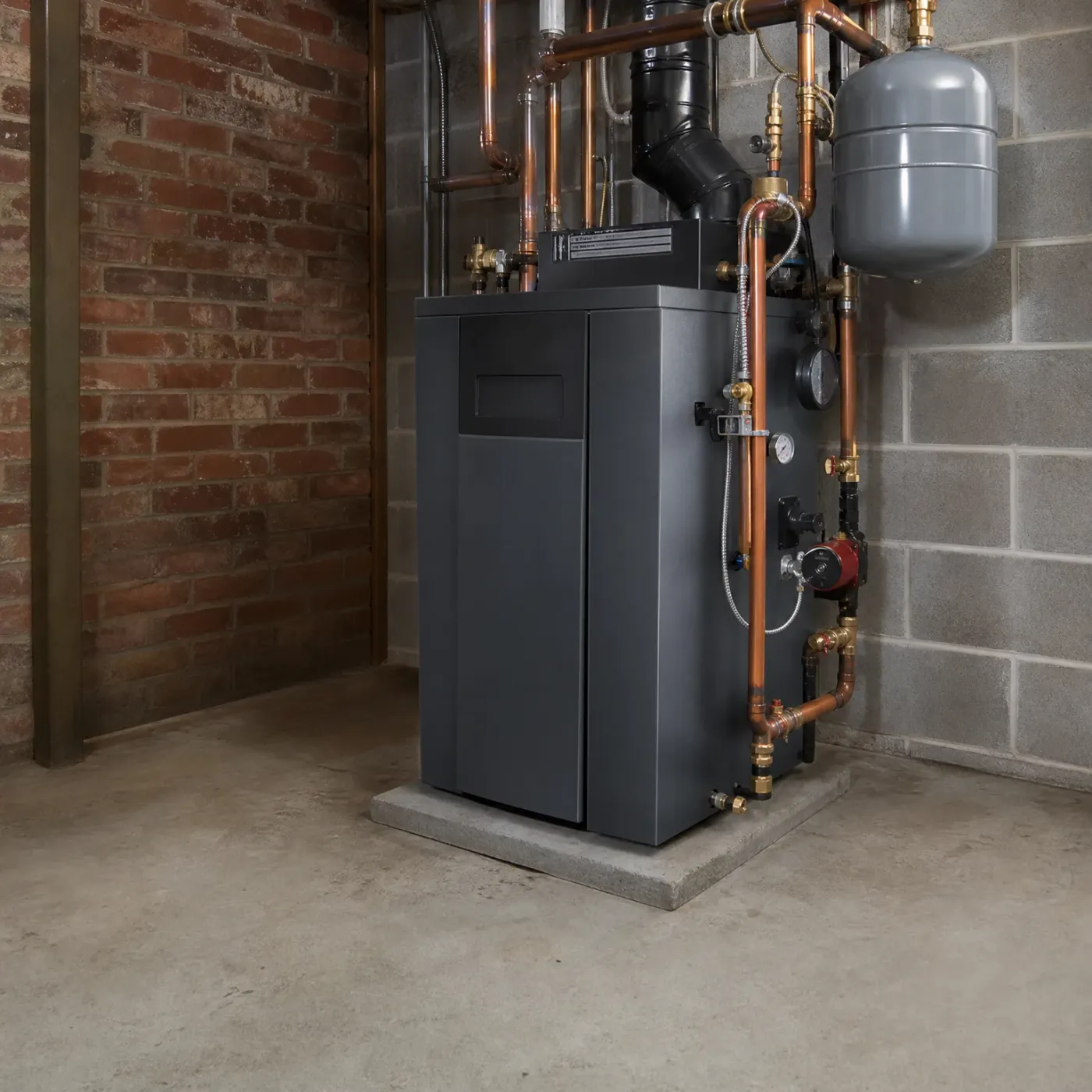
A dark gray floor-standing boiler on a concrete pad in a basement, connected to copper piping, valves, a circulator pump, a gauge, a black flue pipe, and a gray expansion tank, with a brick wall on the left and concrete block wall behind.
A boiler that's holding pressure right, with clean copper lines and no residue at any joint, keeps running the way it should through a North Dakota winter.
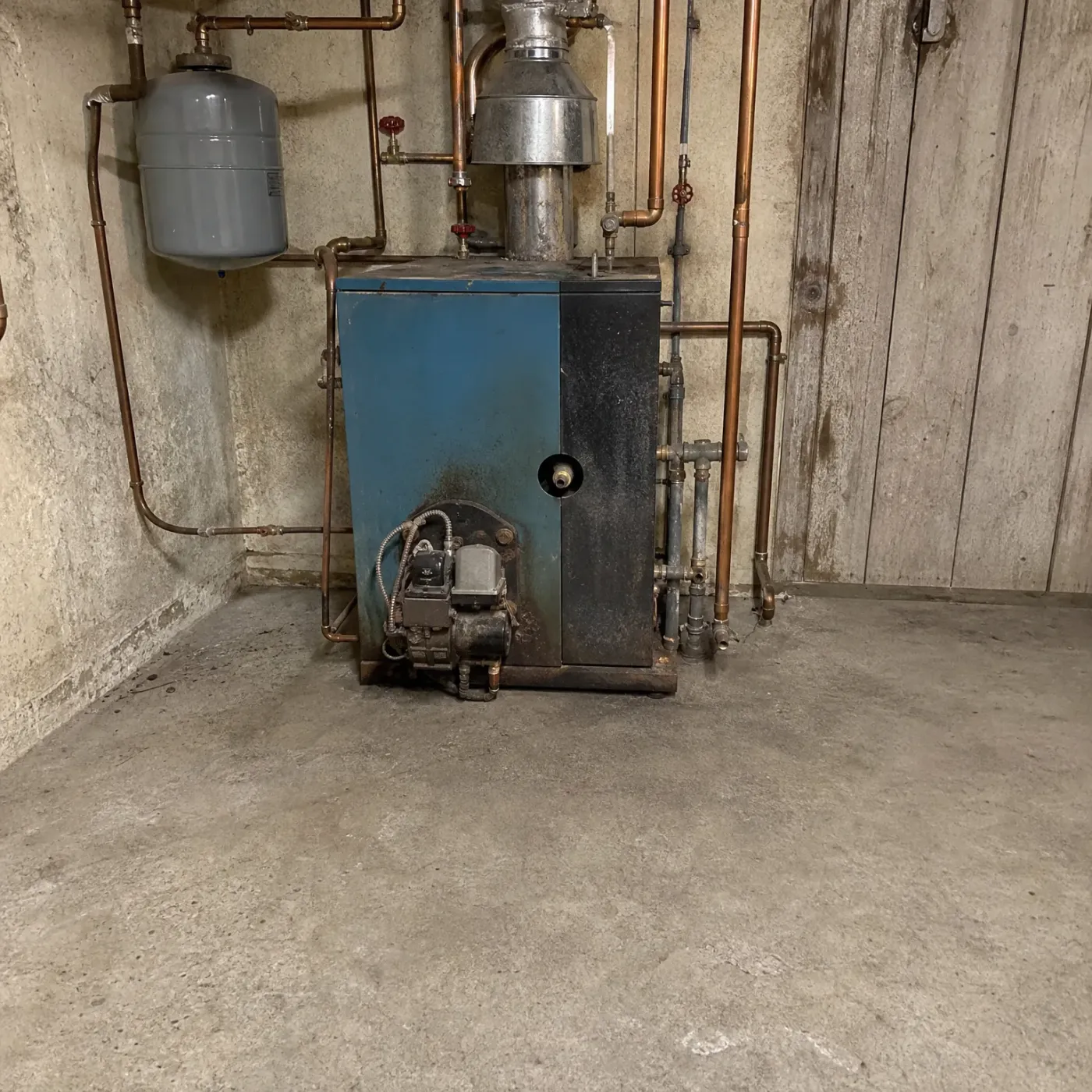
A blue and black boiler with a burner unit, flue, expansion tank and copper and steel piping stands on a concrete basement floor against a concrete wall and wooden plank partition.
An aging boiler like this, with bare metal and no sign of insulation on the lines, is the kind more likely to show a leak at a fitting or seam.
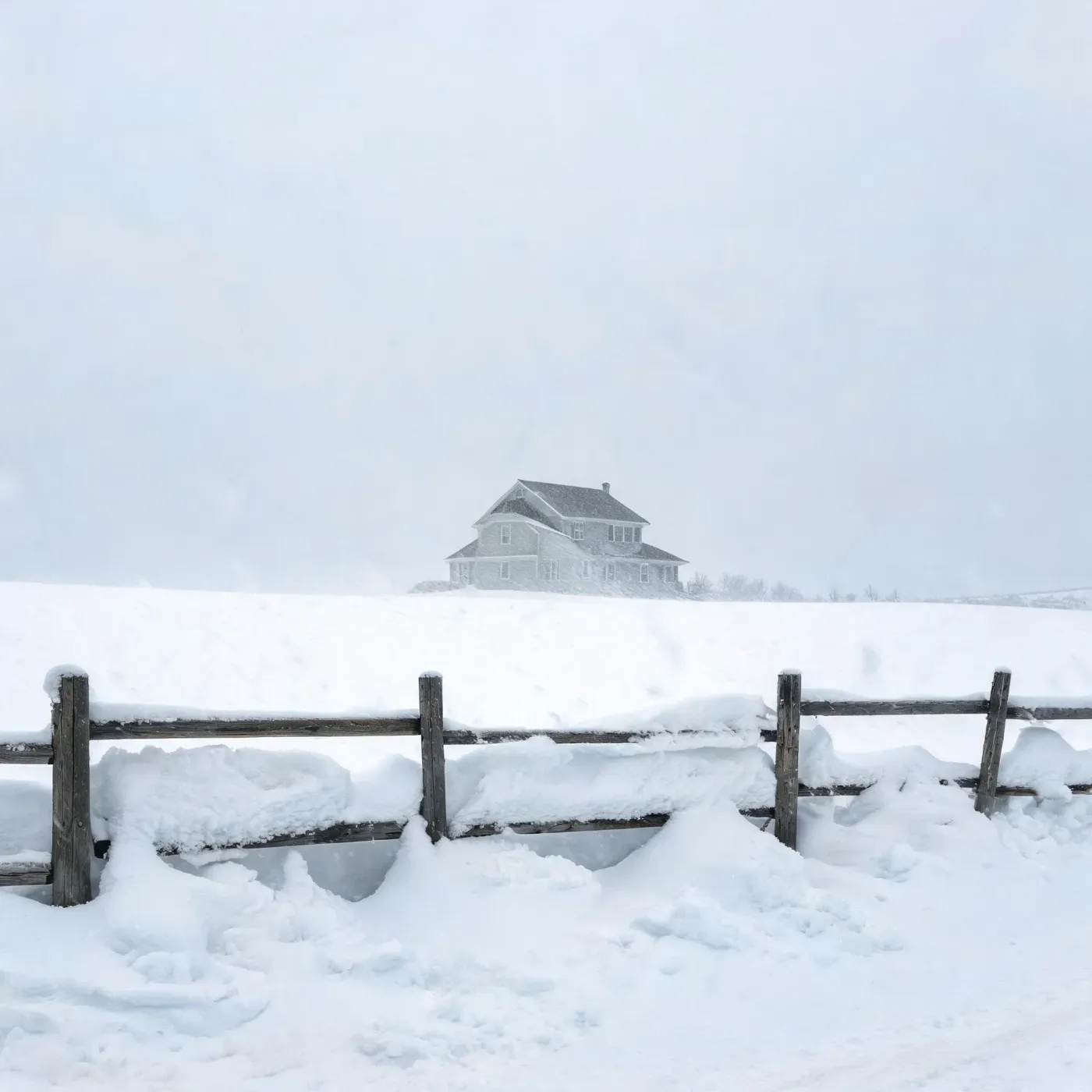
A two-story gabled house stands on a snow-covered rise under a pale overcast sky, with a snow-laden wooden rail fence crossing the foreground.

Winter nights average 4°F statewide, according to NOAA climate data, and your boiler has to run long, steady cycles to hold the house at temperature through that kind of cold. Those long runs mean more pressure cycles on every fitting and valve in the system, night after night. A joint that only wept a little in fall can start dripping steadily once the boiler is working this hard. If you've got a leak now, the cold isn't going to let it rest. It's worth having someone look at it before the coldest stretch of the season gets here.

NOAA nClimDiv 1991-2020 county normals weighted by homes

A boiler leaks for a reason, not bad luck, and the reason is almost always something small that gave out: a valve, a seal, a fitting, a crack from pressure that climbed too high. You caught it instead of finding out the hard way, in February, with the floor wet and the heat down. That's the whole difference. Fixing a loose fitting or a worn valve now is a short job. Waiting turns it into a replaced heat exchanger or a boiler that won't hold heat on a night at 4 below zero. Once you send the form, you're done with the hunting around, the calls, the trying to find someone who knows boilers and has time this week. That part's off your plate. A contractor who handles this gets matched to you and reaches out. You don't have to track anything down or figure out who's any good. You already did the hard part, which was noticing. The rest is someone else's job now.

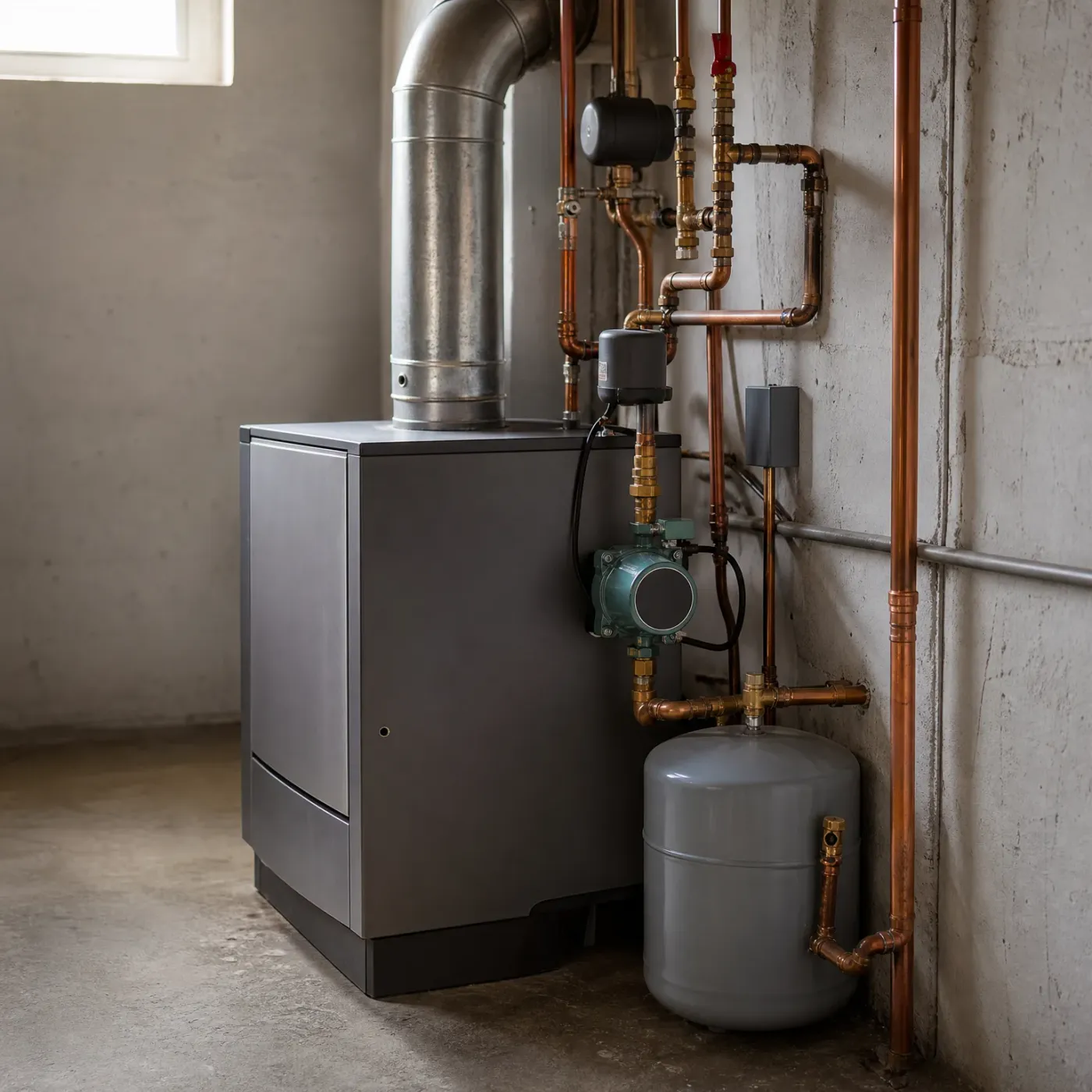
A gray boiler with a metal flue pipe stands in a concrete-walled basement, connected to copper piping, a circulator pump, and a gray expansion tank on the floor.

A pro who works on boilers

Match me with a pro

Get the boiler repair search off your mind today.

You're not committing to anything by asking.