Why your boiler is losing pressure in North Dakota
Tell a local repair pro what your boiler is doing.
A boiler that keeps losing pressure is telling you something is letting water out of a closed system, or letting air in where it shouldn't. In North Dakota that trouble shows up most in January and February, right when you need the heat the least able to wait.
The gauge creeping down isn't something to watch for a few weeks and see what happens. Pressure that drops once a month and pressure that drops every few days point to different problems, and either one left alone tends to get worse, not better. A pinhole leak at a fitting, a failing relief valve, a bad seal inside the expansion tank. Each of those needs a different fix, and guessing wrong means paying for a repair that doesn't hold.
What you actually need isn't a diagnosis you perform yourself. It's someone who can look at your system, find where the water or pressure is actually going, and fix that specific thing. That's what happens once you send the form on this page. You get matched with a contractor who works on boilers like yours and handles this kind of pressure loss, and they'll reach out to you directly.
You don't have to track down who's licensed, who answers the phone, who actually knows boilers instead of just furnaces. That part becomes someone else's job the moment you submit the form. With gas as common as it is for heat here, and a cold snap always close enough to plan around, having that step already handled means one less thing sitting on your list when the temperature drops again.
Send the form, and let the search for the right contractor stop being yours to run.
Why does my boiler keep losing pressure?
You've checked the pressure gauge a few times now and it keeps creeping back down below where it should sit, even after you top it up. You're not looking to just add water again and hope. You want to know what's actually causing it, especially with the cold months here putting real demand on the system.
Water is escaping somewhere, or your expansion vessel has failed
Most of the time a boiler loses pressure because water is finding a way out of the system, through a worn valve, a loose fitting, or a small leak in a radiator or pipe joint you haven't spotted yet. The other common cause is the expansion vessel. Its internal bladder absorbs pressure as water heats and expands, and once that bladder fails, the system can't hold pressure the way it should. Topping up the pressure yourself might get you through a cold night, but it won't fix either problem. With a North Dakota winter running the boiler hard through January and February, a system that's slowly leaking or has a bad vessel will keep dropping pressure right when you're relying on it most.
A boiler losing pressure in the cold doesn't wait for a convenient week. Topping it up might buy you a few days, but if water is finding its way out through a pinhole in a pipe, a worn valve seal, or the expansion tank, that loss keeps coming back, and it tends to get worse the colder it gets outside. Pressure that keeps dropping usually means something a visual check and a refill can't fix on its own. Finding and sealing a leak, or replacing a valve or expansion tank, is work for someone who can get inside the system and see where the water is actually going. With a January or February cold snap on the way, the sooner that gets looked at, the sooner you stop watching the gauge every morning wondering if today's the day it won't come back up. Send the request and let a contractor take it from here.
Where the water is actually going
A boiler is a sealed loop. The water inside is supposed to stay there, heat your home, and come back around. When it drops, the water went somewhere. Sometimes that's obvious, like a damp patch under a pipe fitting or a valve that weeps when the system runs. Sometimes it's not visible at all, because it escaped as steam through the pressure relief valve when the system got too hot, or it's seeping so slowly into a joint that it evaporates before you'd ever see a puddle. A gauge that won't hold steady is telling you one of those is happening, even if you can't find it yourself.
Why the cold makes it worse
Pipes and fittings that hold fine most of the year can start to let go once your house is running its boiler hard through January and February. Metal contracts in the cold, and a seal or joint that was just barely holding can open up a path for water to escape once the system is cycling on and off all night. The expansion tank works the same way, it has to absorb the water as it heats and cools, and if the air charge inside it is off, pressure swings get worse with every cycle instead of settling down.
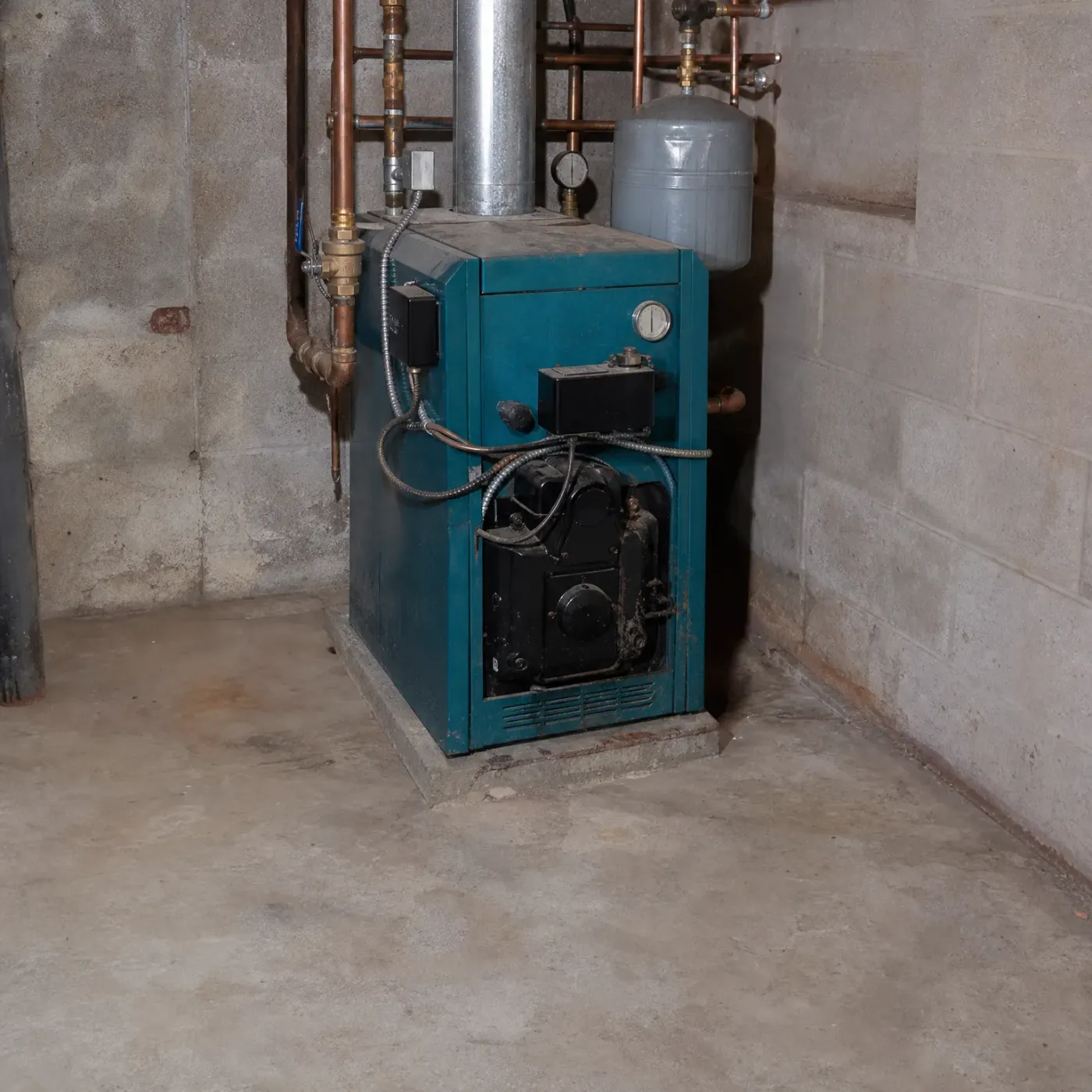
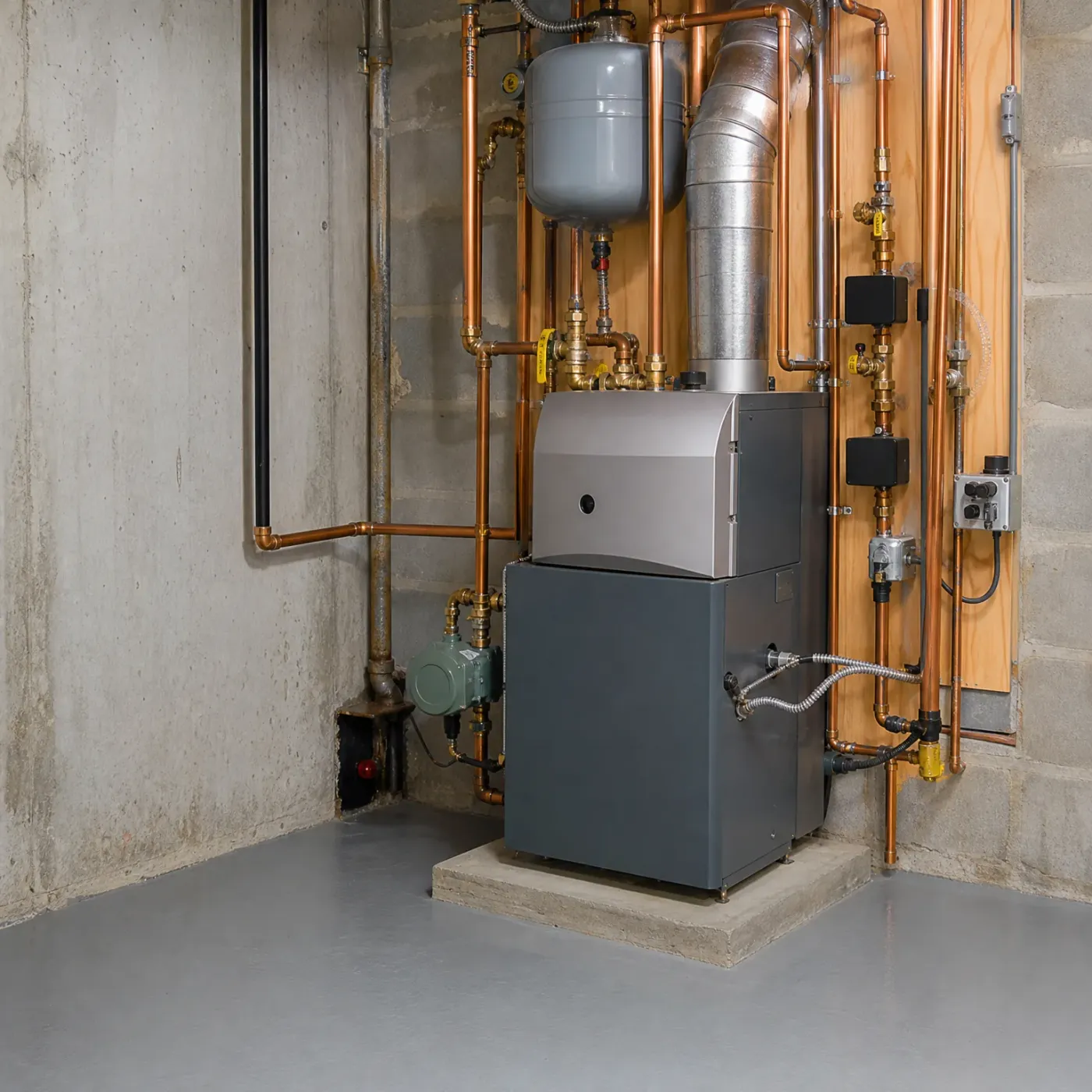
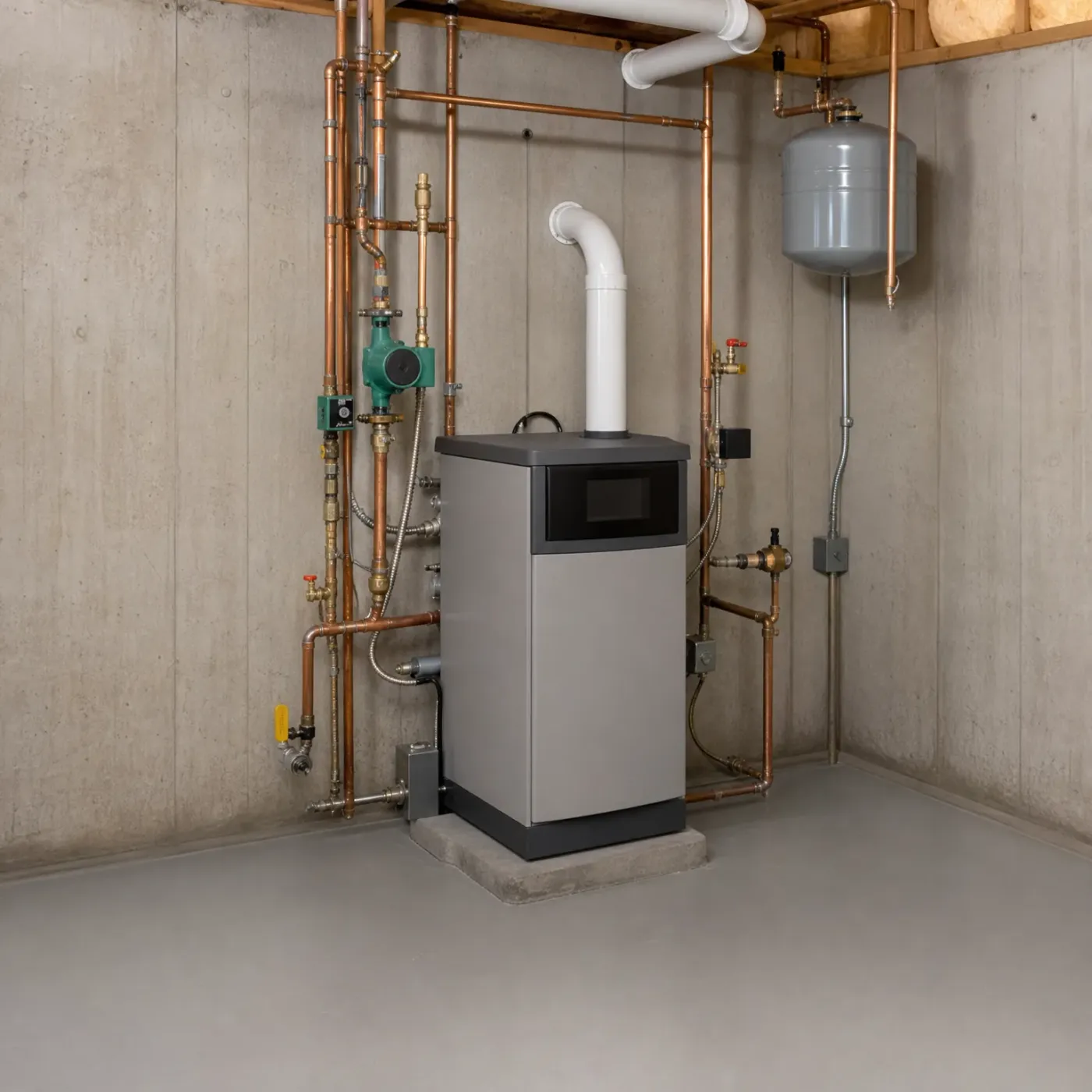
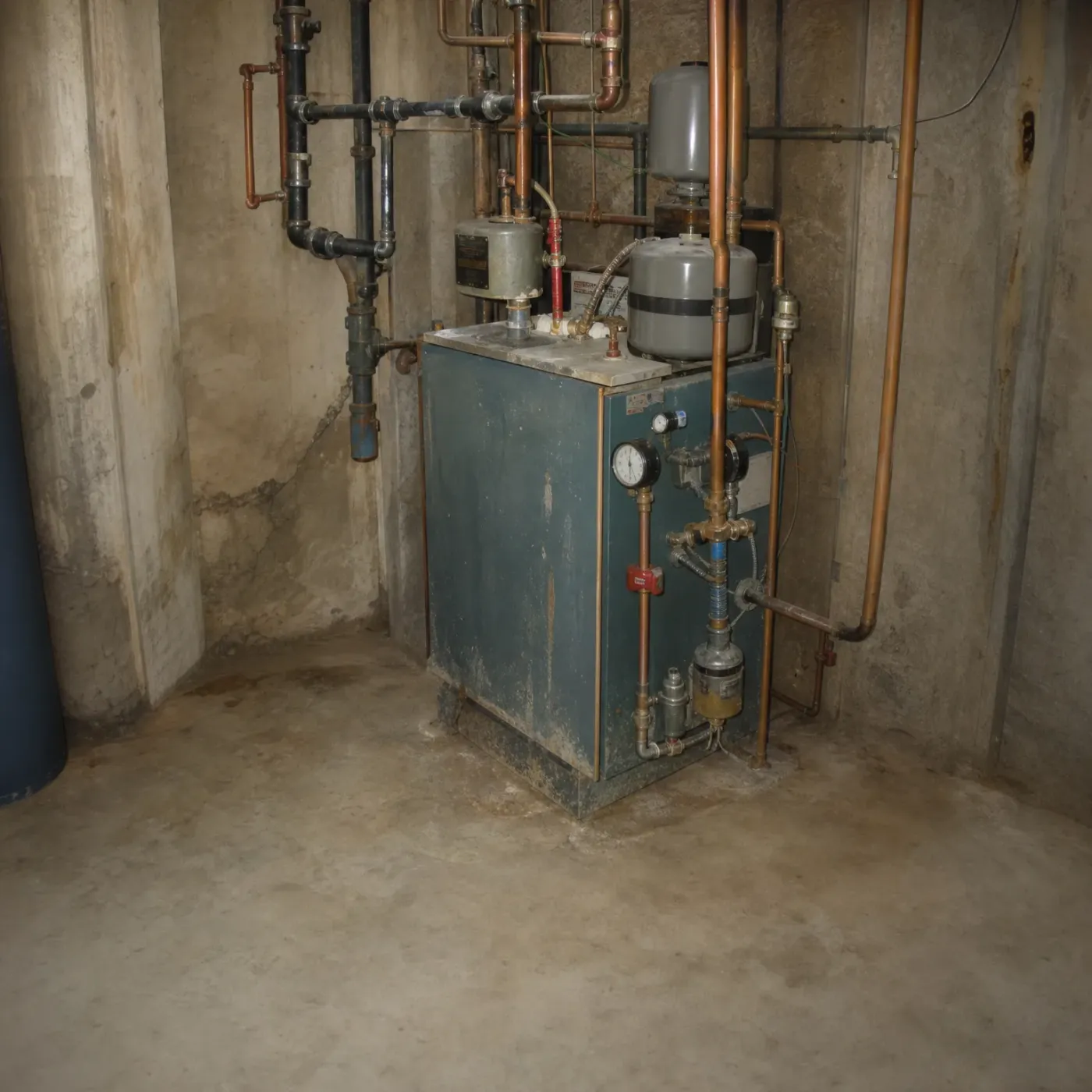
Before you get your boiler repairAfter you get your boiler repair
Pressure holding steady
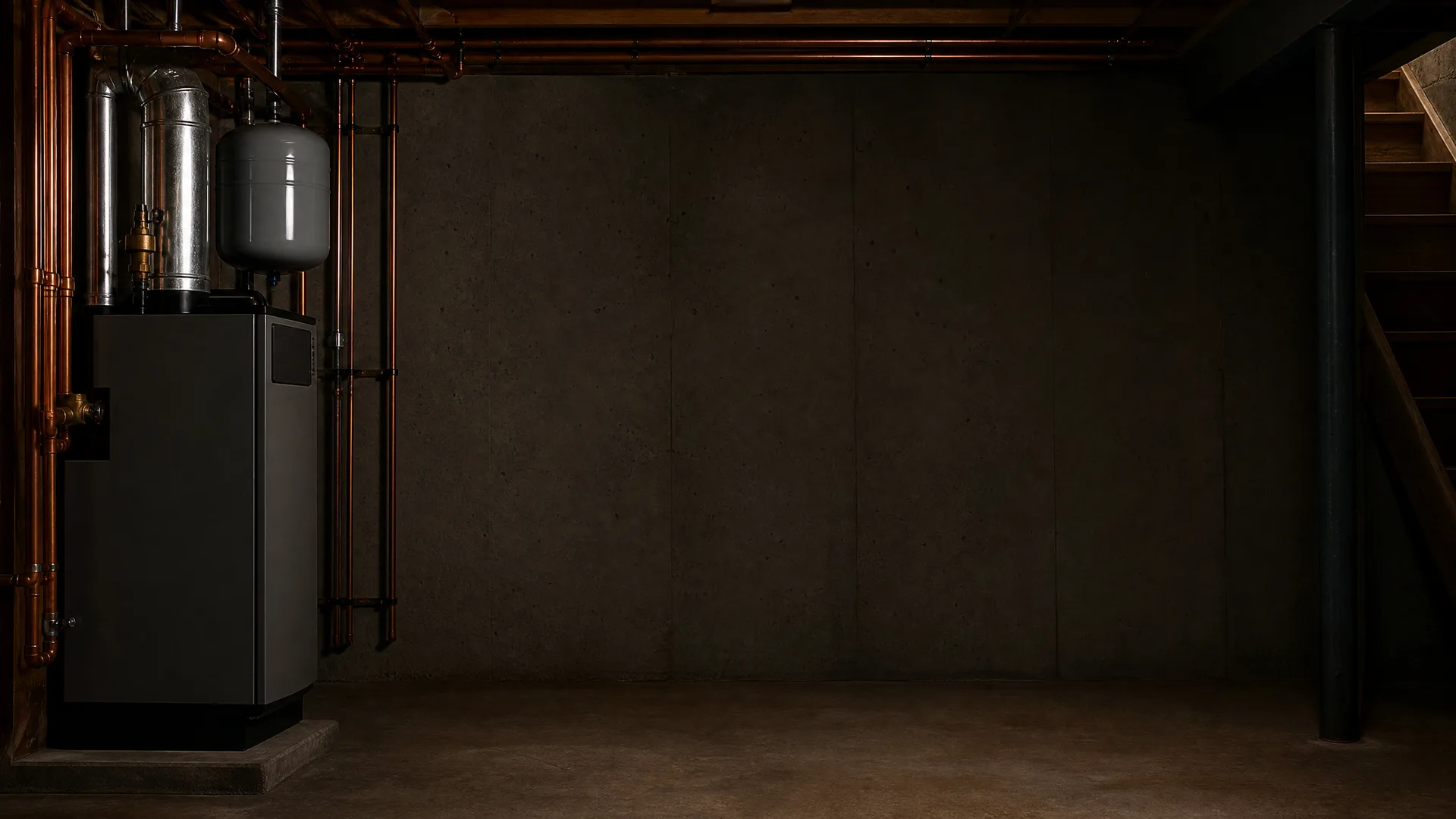
The gauge sits in the green zone and stays there. Water moves through the copper pipes and the circulation pump, out to the radiators and back, without losing any along the way. The expansion tank on the wall is doing its job, absorbing the pressure swings as the water heats and cools.
Pressure dropping again
The gauge keeps sliding below where it should sit. Somewhere in that network of copper and black iron pipe, water is getting out, through a loose fitting, a worn valve, or the expansion tank itself. Adding water buys a few days, not an answer.
Winter nights average 4°F statewide
At 4 below zero outside, your boiler is running close to flat out most of the night to keep up. That kind of steady, hard running puts more strain on the same pipe joints, valve seals and expansion tank already losing water. The colder it gets, the faster a small leak turns into a pressure drop you notice.
NOAA nClimDiv 1991-2020 county normals weighted by homes
A boiler that keeps losing pressure has water going somewhere it shouldn't, through a pinhole, a worn seal, or a expansion tank that's given out. Topping off the gauge again won't change that, and in a North Dakota winter you don't want to find out the hard way what happens when it finally drops too far on a night like the ones you've been having. A contractor can pressure test the system, find where the water is actually leaving, and fix that instead of the symptom. Send the form and the search is no longer yours to run. You stop checking the gauge every night wondering if today's the day it falls too far, because someone else is already on it, matching you with a contractor who handles this kind of repair and reaching out to you directly. That's one less thing sitting on your evening.