Why your boiler keeps turning off in North Dakota

Step 1 of 3: Equipment

A boiler that shuts off on its own is usually protecting itself, not failing outright. The most common cause is a pressure switch or low water pressure tripping a safety lockout, especially once outdoor temperatures drop hard through a North Dakota winter and the system runs long hours without a break. A dirty flame sensor or a clogged condensate line can do the same thing, cutting the burner off mid-cycle because the boiler reads a fault even though nothing is seriously wrong yet. Short cycling like this is also common with a thermostat that's miscalibrated or a circulator pump that's struggling. None of these are things to wait out. A boiler that keeps tripping off is telling you something specific, and the longer it runs that way, the more it stresses the parts around the one that's actually failing.

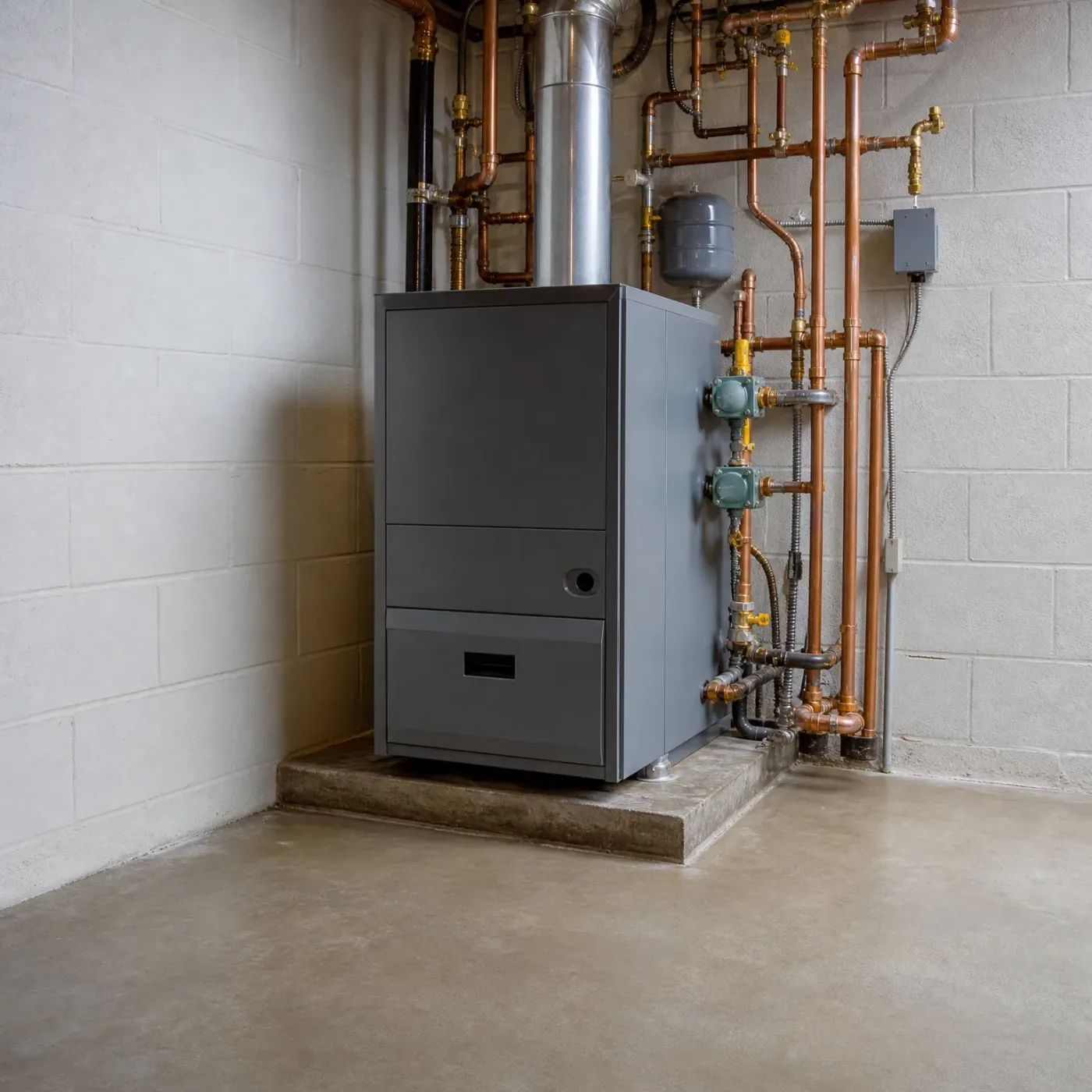
A gray boiler unit on a concrete pad in a basement corner, connected to copper piping, valves and a metal flue against painted concrete block walls.

Running the way it should

A boiler in good shape cycles on, satisfies the thermostat, and shuts off clean. Pressure holds steady on the gauge. The pipes and fittings stay dry, the flue draws right, and the unit answers a cold snap without tripping out.
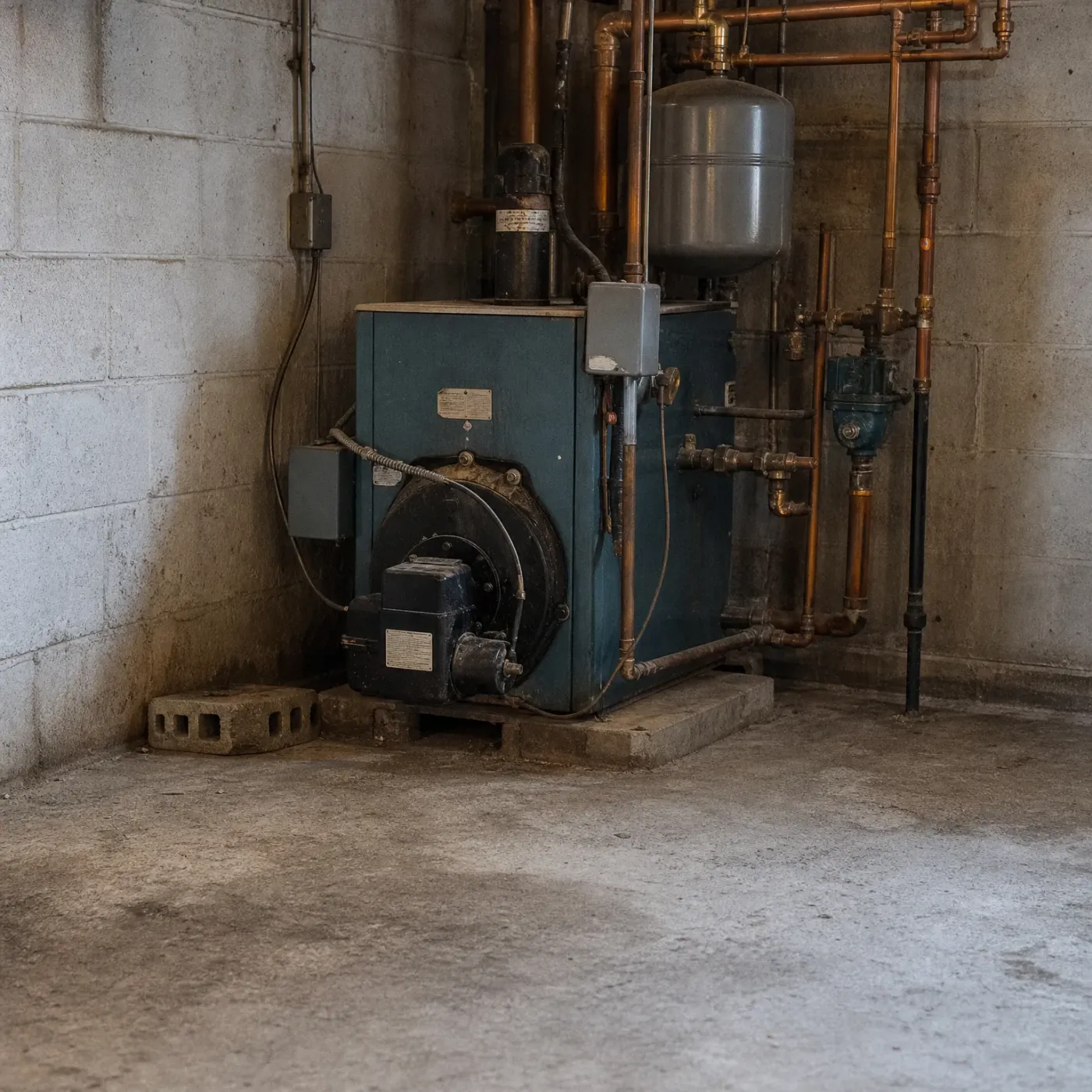
A blue oil-fired boiler with a burner unit sits on a concrete pad in a basement corner, with copper piping, valves and a gray expansion tank overhead against concrete block walls.

Shutting off on you

An older boiler that keeps cutting off is usually telling you something through a safety switch. Mineral buildup in iron pipes, a weak expansion tank, or corrosion around the fittings can all push pressure or water flow out of range and trip the lockout.

What are you noticing when it shuts off?

You hear the burner fire, then go quiet again before the house warms up. The display shows a lockout code, or it's just dark. Some rooms stay cold while others get heat, or the whole system goes down at once, usually on the coldest nights when it's working hardest. You might see the pressure gauge sitting low, or notice a faint smell near the boiler that wasn't there before. If this keeps happening through a hard stretch of North Dakota cold and gets ignored, the lockouts tend to come more often, and a house that depends on one boiler for heat can end up with none at all on the night it matters most.

  1. Water pressure drops below the minimum the switch allows.

  2. The pressure switch opens and cuts power to the burner.

  3. The control board reads this as a fault and locks out.

  4. The boiler stays dead until pressure is restored and reset.

A woman in a cream cowl-neck sweater sits by a window with snow outside, in a dimly lit living room with a sofa, lit lamp, mirror, candles and a fireplace.
A woman in a gray turtleneck sweater sits beside a large window looking out at snow-covered evergreen trees, in a dimly lit living room with a lit fireplace, lamps, couch and houseplant.
A woman in a cream turtleneck sweater stands beside a large window with snow-covered ground and bare trees outside, in a dimly lit living room with lamps, a sofa and framed art.
A woman in a grey cowl-neck sweater stands indoors near a window, looking out at falling snow, with a lamp, framed picture and couch in the warmly lit room behind her.

Why cold snaps trigger it

A pressure switch is set to a tight range, and cold weather works against it. Water contracts as it cools, so a system that was sitting at 15 psi in August can read lower once temperatures outside drop toward zero. If the boiler sits in an unheated space, or the near-boiler piping runs through one, that pipe run loses heat faster during a hard freeze, and the pressure reading at the switch follows it down. The switch does not know why pressure is low. It only knows the number is under the line it is set to protect, and it cuts the burner before the boiler tries to fire without enough water moving through it.

What a lockout code is telling you

The control board does not shut the boiler off to be difficult. It is recording what the pressure switch, the flame sensor, or the limit switch reported at the moment of the fault, and most boards store that code until someone checks it. A pressure fault and a flame sensor fault look the same from the living room, a boiler that stops heating, but they come from different parts and get fixed different ways. Resetting the board without reading the code just restarts the same problem. Writing down the code, or a photo of the display, gives a contractor the actual fault instead of a guess at it.

A bearded man in a plaid flannel shirt stands indoors looking out a frost-covered window, with a steaming dark blue mug on the wooden sill and snow-covered trees outside.
A smiling man in a dark blue T-shirt sits on a light gray sofa in a living room with a wooden shelf and window behind him, with a laptop edge visible in the foreground.
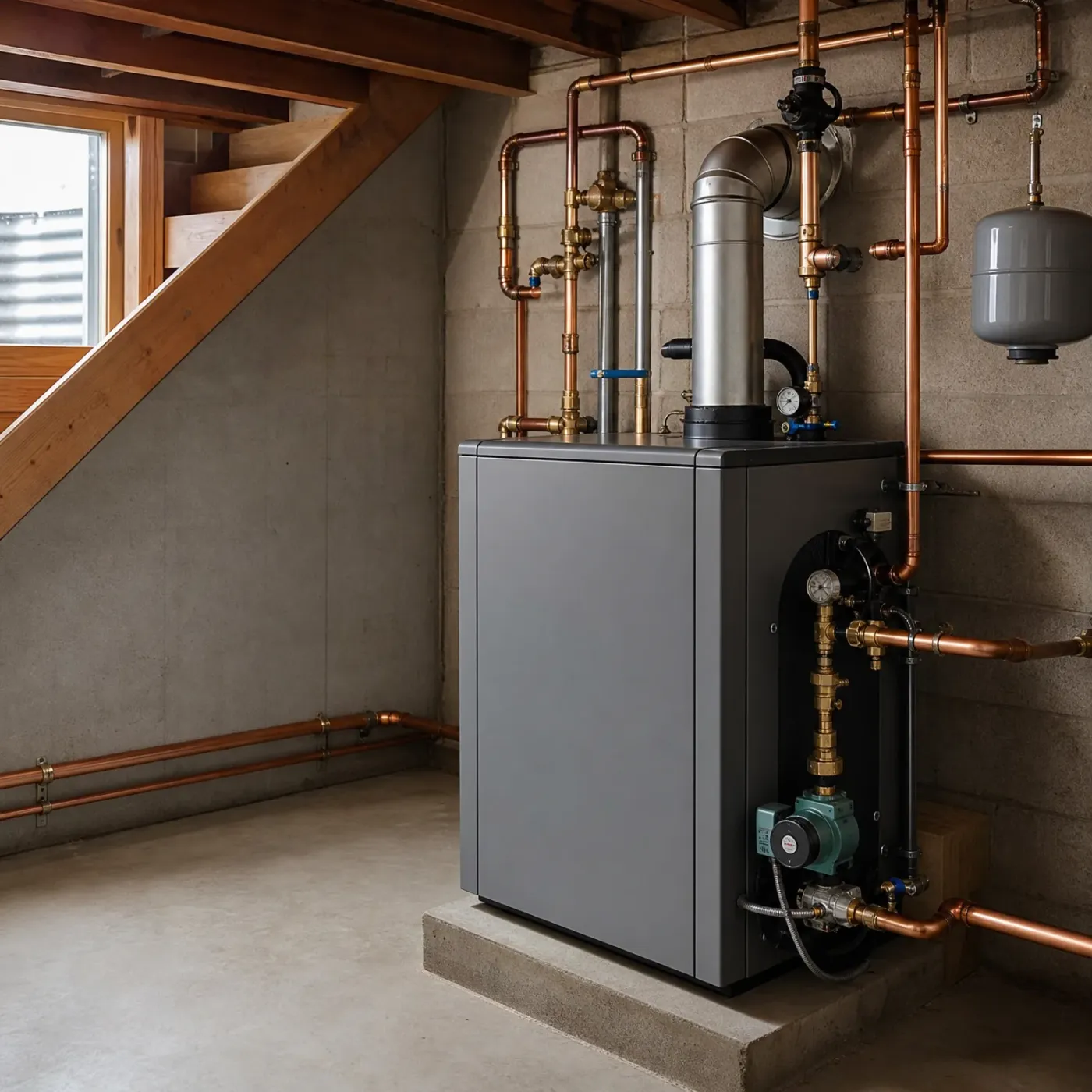
A gray boiler on a concrete pad in a basement, connected to copper and black pipes with valves, gauges, a circulator pump, a flue, and a wall-mounted expansion tank, beside a wooden staircase.

A pro who works on boilers

Send the request today and let a boiler pro reach out to you.

Tell a local repair pro what your boiler is doing.

Find a pro near me

You only hire the pro if you want to.

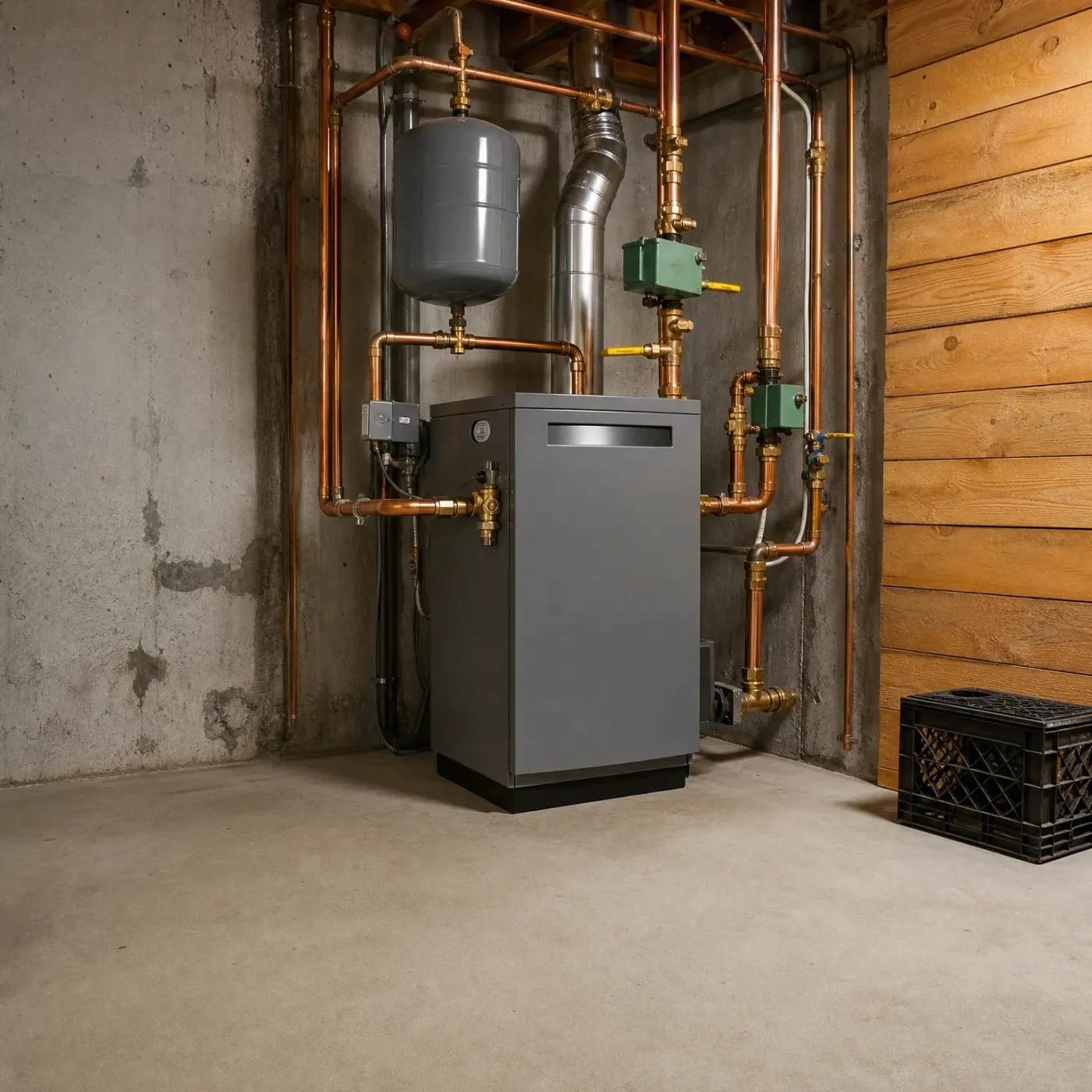
A gray boiler unit in a basement corner with copper piping, brass valves, a gray expansion tank, a metal flue duct, concrete walls and a wood-paneled wall, with a black plastic crate on the floor at right.
Pressure stays at 12 to 15 psi, and the zone valves open and close without a fight.
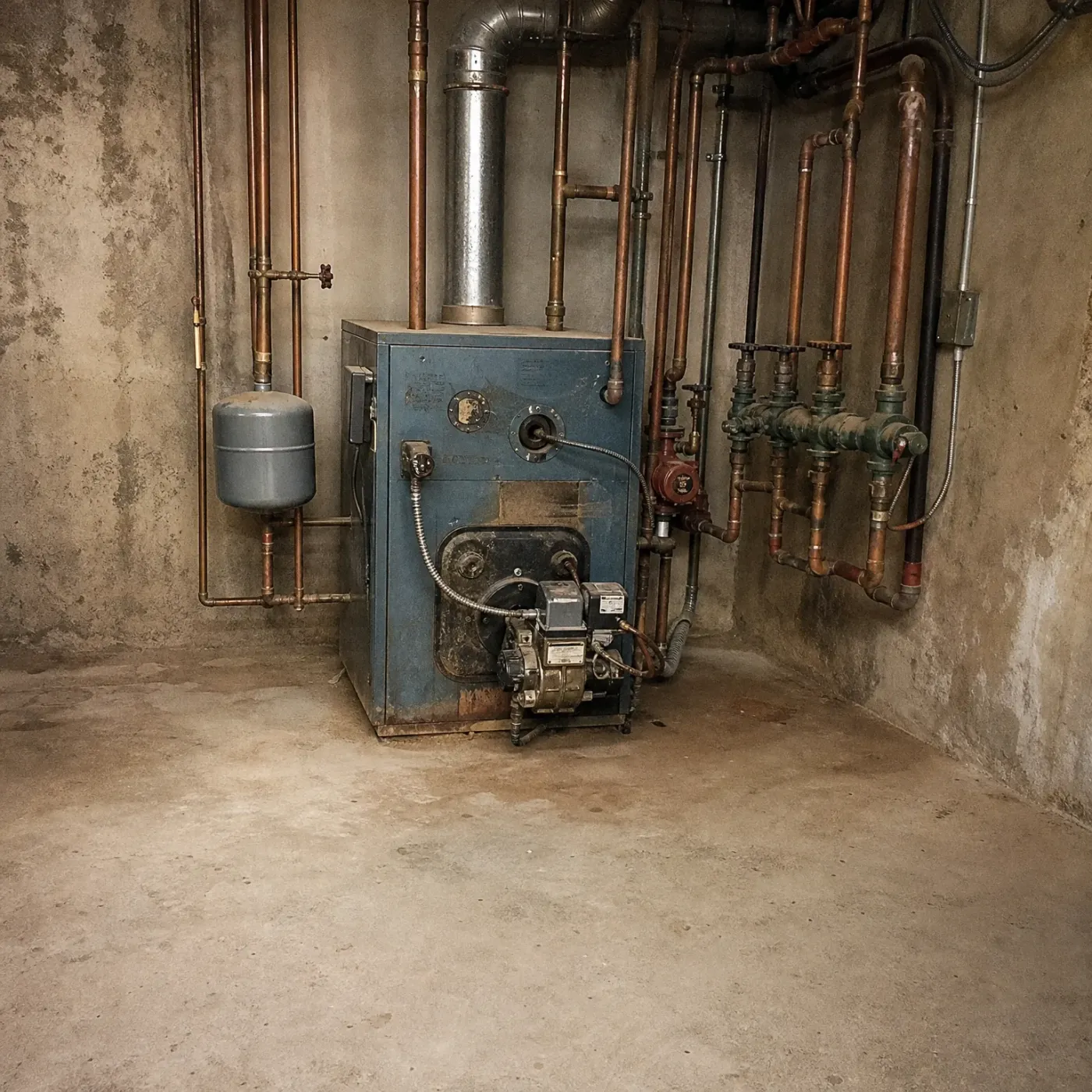
An older blue boiler with a burner unit stands in a concrete basement corner, connected to copper and steel piping, valves and a gray expansion tank on the wall.
This one still has a galvanized flue and an old expansion tank, both worth a second look.
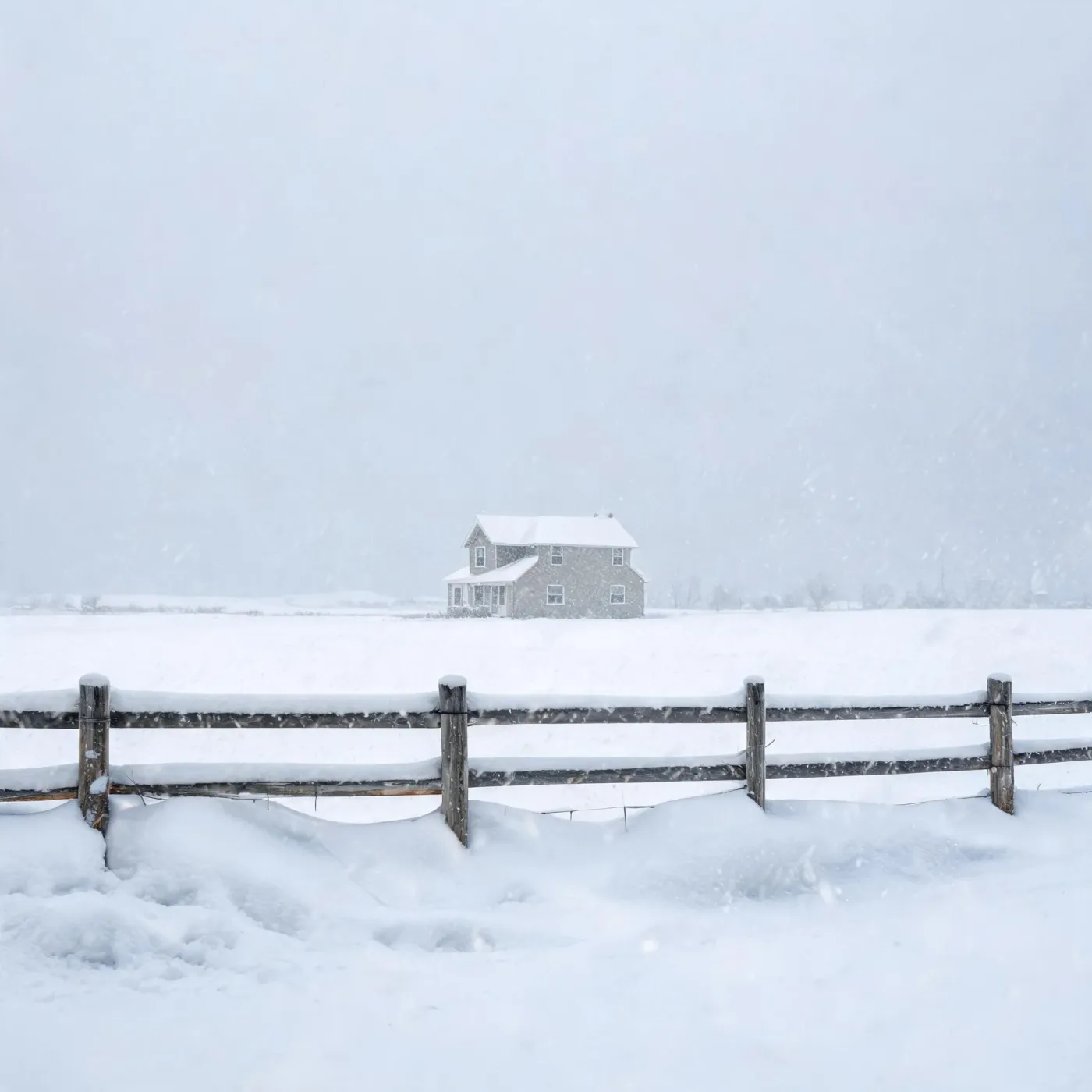
A two-story gray house with a snow-covered roof stands alone in a flat snow-covered field during falling snow, with a weathered wooden post-and-rail fence in the foreground.

Winter nights here average 4°F statewide, per NOAA. That kind of cold pulls heat out of a basement or utility closet fast, and the water in your boiler's loop cools and contracts right along with it. A system holding 15 psi on a mild day can drop below the minimum the pressure switch allows once a hard cold snap sets in overnight. You'd notice the burner fire for a bit, then go quiet, with the gauge reading lower than you remember and no heat coming back until someone resets it. The colder it gets outside, the more that gauge matters.

NOAA nClimDiv 1991-2020 county normals weighted by homes

One Trip or a Pattern

Keeps happening

  • The boiler locks out more than once a week, even after you reset it and pressure looks fine on the gauge.
  • You hear the burner try to fire and quit within a few seconds, not after it's warmed the house.
  • Bleeding air from the system or adding water only buys a day or two before it trips again.
  • The lockout shows up at the same point every cycle, like right after the pump kicks on.
  • Pressure keeps falling below 12 psi within hours of you topping it back up.
  • A room or zone stays cold every time, not just during the worst of a cold snap.

One-off trip

  • It happened once, during a hard cold snap, and has run clean since you reset it.
  • Pressure held steady at 12 to 15 psi before and after, with no slow leak showing up.
  • The reset button brought it back and it's cycled normally for days without tripping again.
  • No water showing up around valves, fittings, or the base of the unit.
  • The flue still draws the way it should and the burner flame looks even, not yellow or lifting.
  • Every zone in the house is getting heat the same as before the lockout.
A green oil-fired boiler with a flue pipe, burner and circulator pumps sits on a concrete pad in a basement corner, surrounded by copper piping and an expansion tank against concrete walls.
Before you get your boiler repair
A gray and blue floor-standing boiler in a basement corner, with a metal flue pipe and copper and black piping, valves, and a gray expansion tank mounted on an unfinished wood-framed wall beside a concrete wall.
After you get your boiler repair

What to do about it

  • A boiler that locks out on cold nights is telling you something specific, not failing at random.
  • Low pressure, a tripped switch, and a lockout code almost always trace back to the same chain of events.
  • A gauge reading below 12 psi after a hard freeze points straight at the cause.
  • Resetting it without finding why pressure dropped just sets up the next lockout.
  • A contractor who sees this pattern can usually trace it to one part worth fixing.
  • Once you send the form, the search for who to call is off your plate.

A boiler that cuts out on a cold night is reacting to something you can usually trace. Pressure drops, the switch opens, the board reads a fault, and the burner stays off until someone finds out why. The gauge tells you most of it. Below 12 psi after a hard freeze, the chain is almost always the same one: water contracted as it cooled, pressure fell under the switch's minimum, and the lockout did what it's built to do. Resetting the boiler clears the code for now, but it doesn't touch the reason pressure fell in the first place, so the same cold snap next week trips it again. That's the part a contractor sorts out, not by guessing but by checking where the system is losing pressure and whether the switch itself is still reading right. Some of this is a quick fix. A feed valve closed too far, a small leak at a fitting, an expansion tank that's gone waterlogged, these show up once someone's looking for them. Once you send the form, you're done hunting for who to call. That part moves to someone else, and what's left for you is answering when they reach out. The boiler isn't ruined because it locked out. It did what it was built to do. What matters now is whether the cause gets found or just reset again.

Interior room corner with sunlight from a window, showing peeling paint and damaged plaster on the wall above a white baseboard, a wooden cabinet with a pale bowl on top, hardwood floor and a patterned rug.
Interior corner of a room with tan walls, white profiled baseboard and window trim, a wood-plank floor in sunlight, and green foliage visible through the window.
An empty room corner with cream walls, white baseboard, two windows with deep sills showing green foliage outside, and a wood plank floor lit by sunlight.
Empty room corner with beige walls, white beadboard wainscoting, chair rail and baseboard, a window with green foliage outside, and sunlight casting leaf shadows on the wall above a wood floor.
Sunlit room corner with a multi-pane window, beige walls, white baseboard, wood floor with a woven rug, and a dark wooden cabinet holding a ceramic table lamp below a framed picture.

Get your boiler to the right pro

Send the request today and stop worrying about who to call.

Get my match

Asking costs nothing, and the choice to hire stays yours.