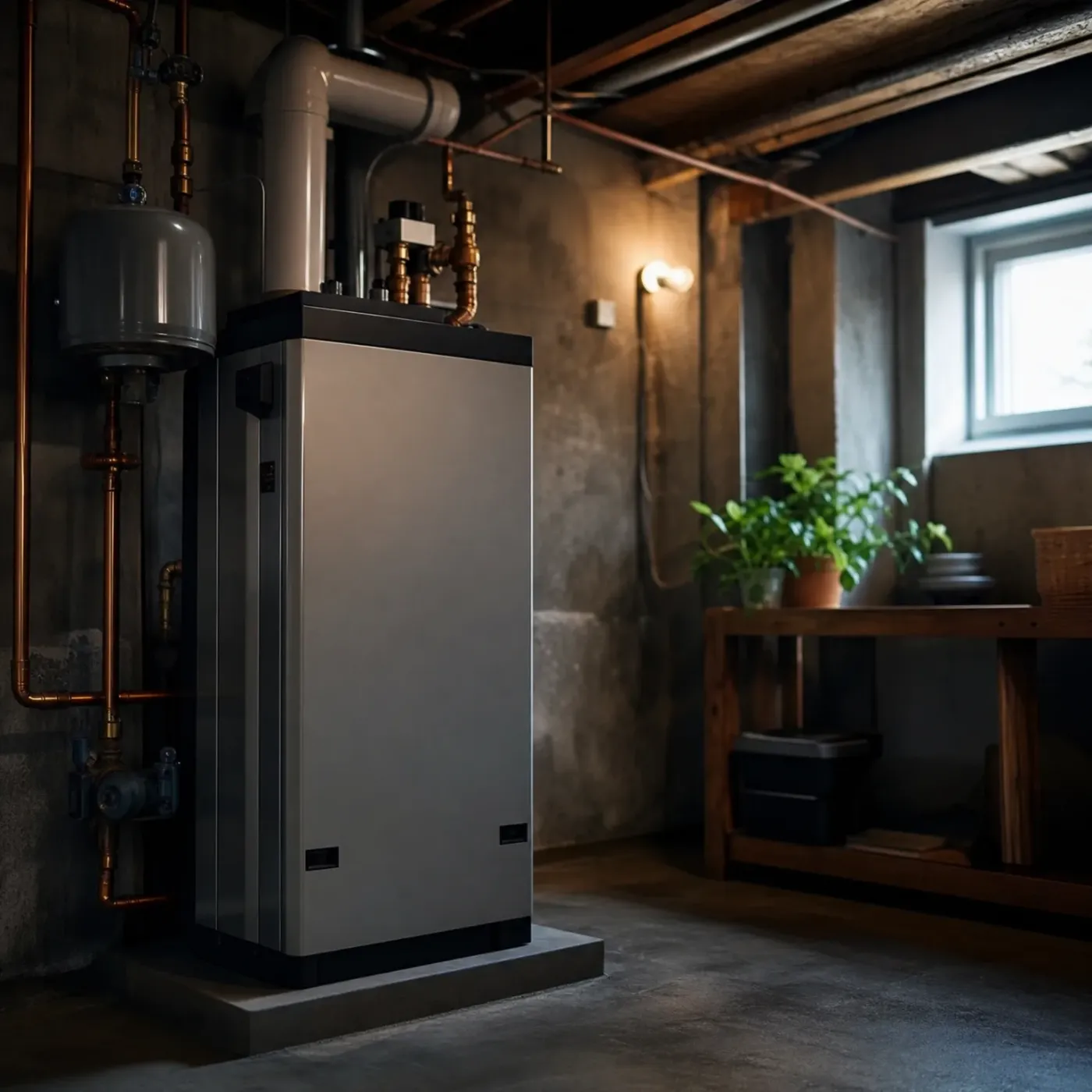
A floor-standing gray boiler unit on a concrete plinth in a basement, with copper pipes, an expansion tank, and a flue pipe above, a wall light, a small potted plant on a wooden shelf, and a window in the background.

No phone calls to make

Why your boiler won't turn on in a North Dakota winter

A boiler that won't fire when it's below zero outside means something specific stopped it, whether that's the igniter, a pressure problem, or the thermostat not calling for heat at all. This page covers what usually causes it. When you're ready for a fix, you'll reach a licensed North Dakota contractor directly, skipping the search, the calls, and explaining the problem over and over to get quotes.

Start one form

A boiler that won't turn on in the cold usually comes down to one of a few things. The pilot or igniter failed to light. The pressure dropped below what the system needs to run, which happens more in deep cold since a frozen condensate line or a leak can pull it down fast. A safety switch tripped because the water got too hot or too cold, or airflow somewhere is blocked. Some boilers also lock out entirely after a few failed attempts to light, as a safety step, and need to be reset before they'll try again. When it's well below zero outside and the system has no backup heat running, a boiler that stays off is not a small thing to wait out. Whatever tripped it needs to be found and fixed, not just reset and hoped past.

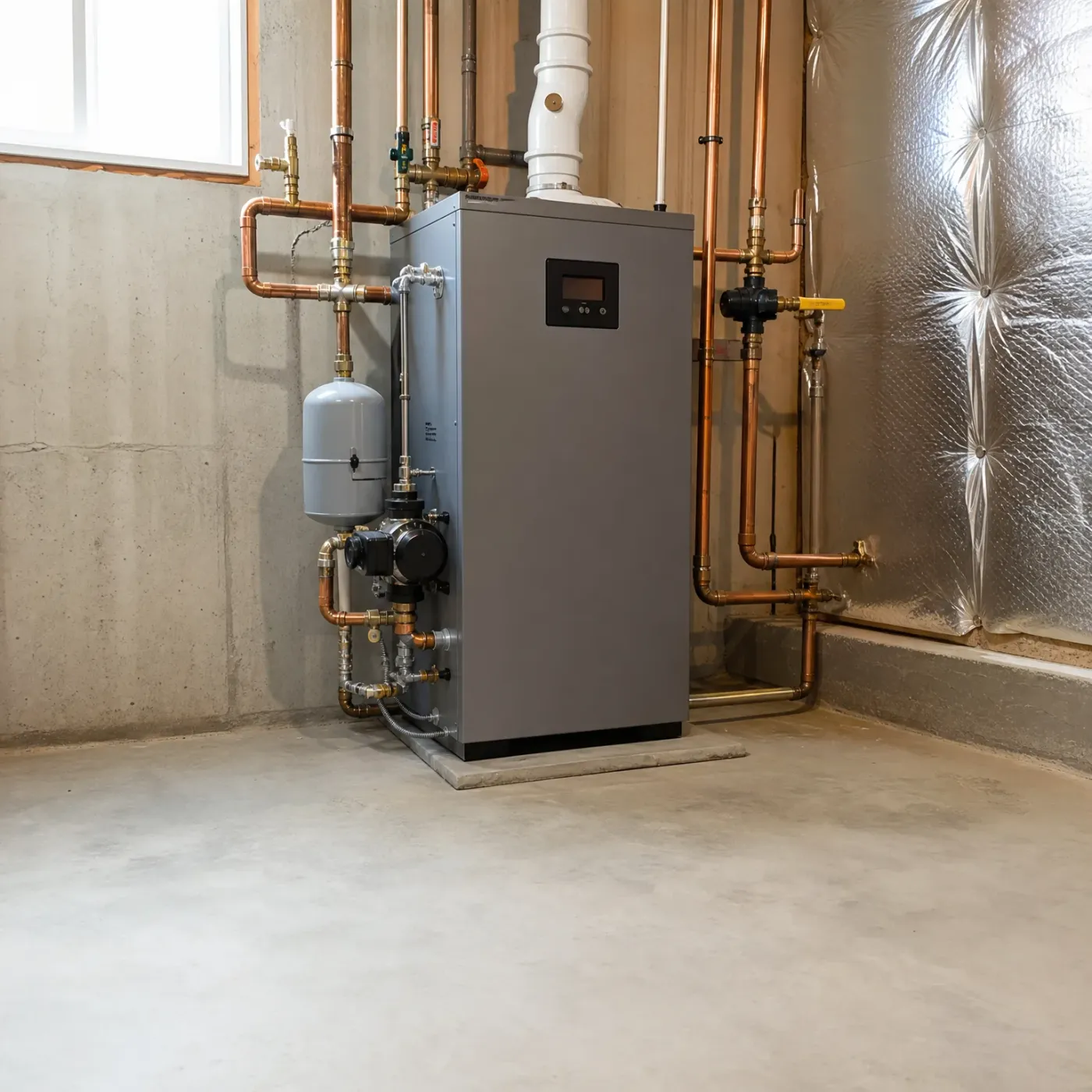
A gray boiler unit with a digital display stands on a concrete basement floor, connected to copper piping, a gas valve, a circulator pump and an expansion tank, beside a concrete wall and foil-faced insulation.

A boiler running clean

This is a boiler doing its job. Pressure holds steady, the pump keeps water moving, and the igniter fires every time the thermostat calls for heat. Nothing here needs attention yet, but a boiler this age still deserves someone checking the pressure and the vent once a year before a cold snap finds the one part that's starting to go.
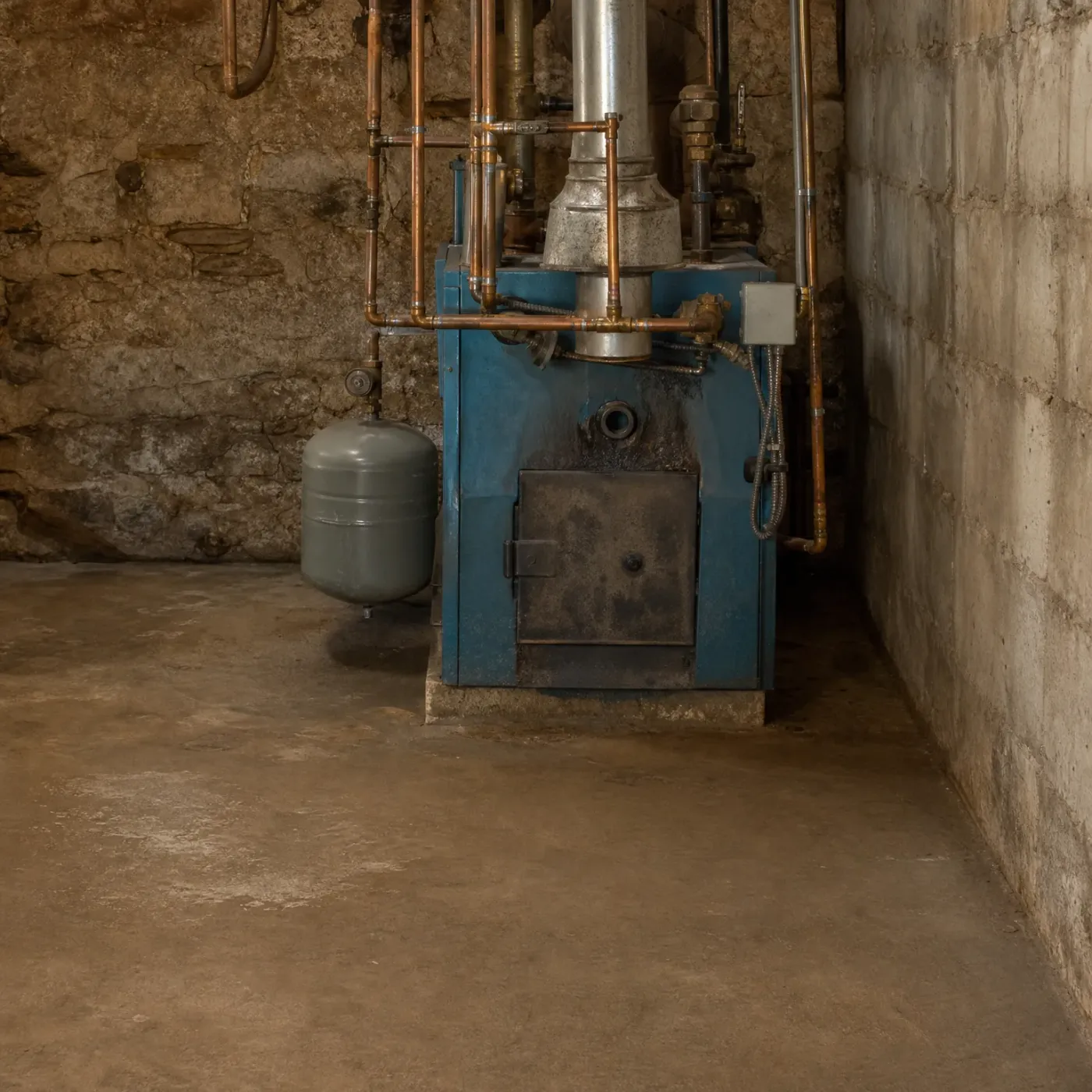

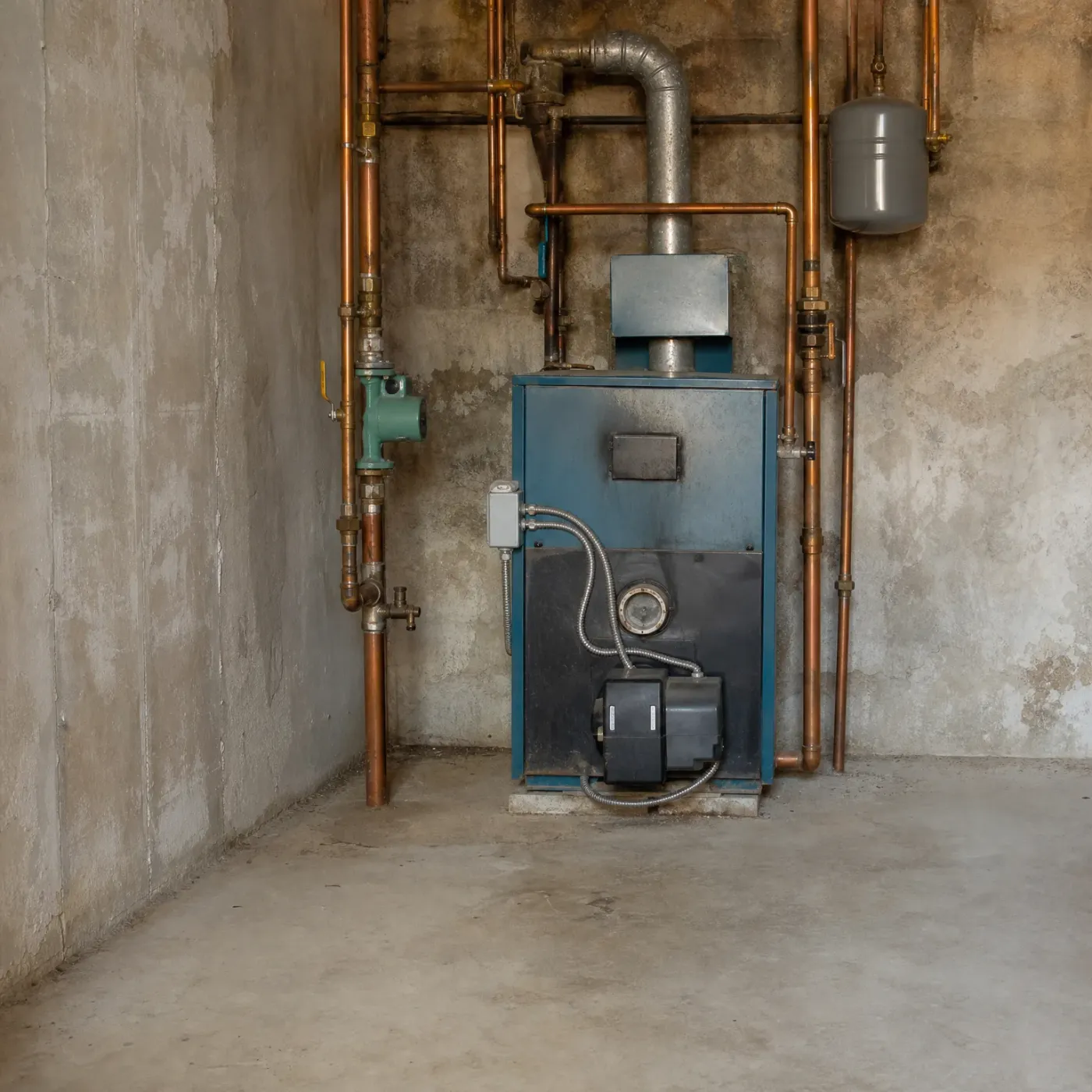
A blue cast-iron boiler with a metal flue pipe and copper piping stands against a stone and concrete block basement wall beside a gray expansion tank on a bare concrete floor.

A boiler on borrowed time

Rust around the access door and a floor-standing expansion tank like this one are signs of a system that's been running a long time. Cast iron boilers can last for decades, but corrosion like this often shows up right where a leak starts or a seal fails, and that's usually what takes the system down on the coldest night of the year.

A gray-haired man in a dark sweater sits on a light gray sofa in a living room, looking toward a sunlit window with trees outside.
A gray-haired man in a dark blue sweater sits on a light gray sofa in a sunlit living room, looking off to the side, with a potted plant, shelving unit, and large glass doors behind him.
A bearded man with graying hair in a dark green sweater sits on a sofa in a living room, looking off to the side, with a sliding glass door and a dim kitchen doorway behind him.
A gray-haired man in a dark knit sweater sits on a light gray sofa in a living room, looking toward a sunlit window, with houseplants, a lamp, and framed art in the background.

Below zero, a boiler has no margin

At those temperatures a stalled boiler can let pipes get dangerously close to freezing within hours. A no-heat call in a North Dakota winter isn't one to sit on.

Skip calling around

One call, one licensed contractor

Someone local who services boilers all winter and knows what a frozen condensate line or a failed igniter looks like, instead of you explaining the problem to several companies.

Skip calling around

Why does my boiler lose pressure when it's this cold out?

Your boiler's pressure gauge keeps dropping and you've noticed it gets worse the colder it gets outside. You're not imagining it. Something about deep cold makes a boiler lose pressure faster than it would on a milder day, and once the pressure drops too low, the boiler won't run at all, which is the last thing you need with temperatures well below zero.

Cold makes small leaks and condensate lines act up, and the boiler reads that as low pressure

A boiler holds water in a closed loop, and that water needs to stay at a set pressure to circulate. A slow leak at a valve or fitting that you'd never notice in October can drop pressure fast once pipes and fittings contract in extreme cold. Condensate lines are a common culprit too. If the line that drains the boiler freezes, water backs up and the system shuts itself down rather than run without draining properly. Either way, the boiler isn't failing on its own. Something is letting water or pressure out of a system that's supposed to stay sealed, and in a North Dakota winter that something gets found faster the colder it gets.

  1. Thermostat calls for heat and sends power to the control board.

  2. Control board opens the gas valve and starts the igniter.

  3. Igniter glows or sparks until the burner lights.

  4. Flame sensor confirms fire and keeps the gas valve open.

What are you noticing right now in your house

The house is getting colder and the radiators or baseboards stay cool to the touch, even with the thermostat turned up. You might hear the boiler try and fail, a clicking or a short hum that cuts out, or you might hear nothing at all. Check the pressure gauge on the front of the unit. If it's sitting low, that's likely part of why it won't fire. Some homes will start to feel the cold in certain rooms first, usually ones farthest from the boiler. Left alone in weather this cold, the real risk isn't comfort. It's pipes sitting in a cold house long enough to freeze.

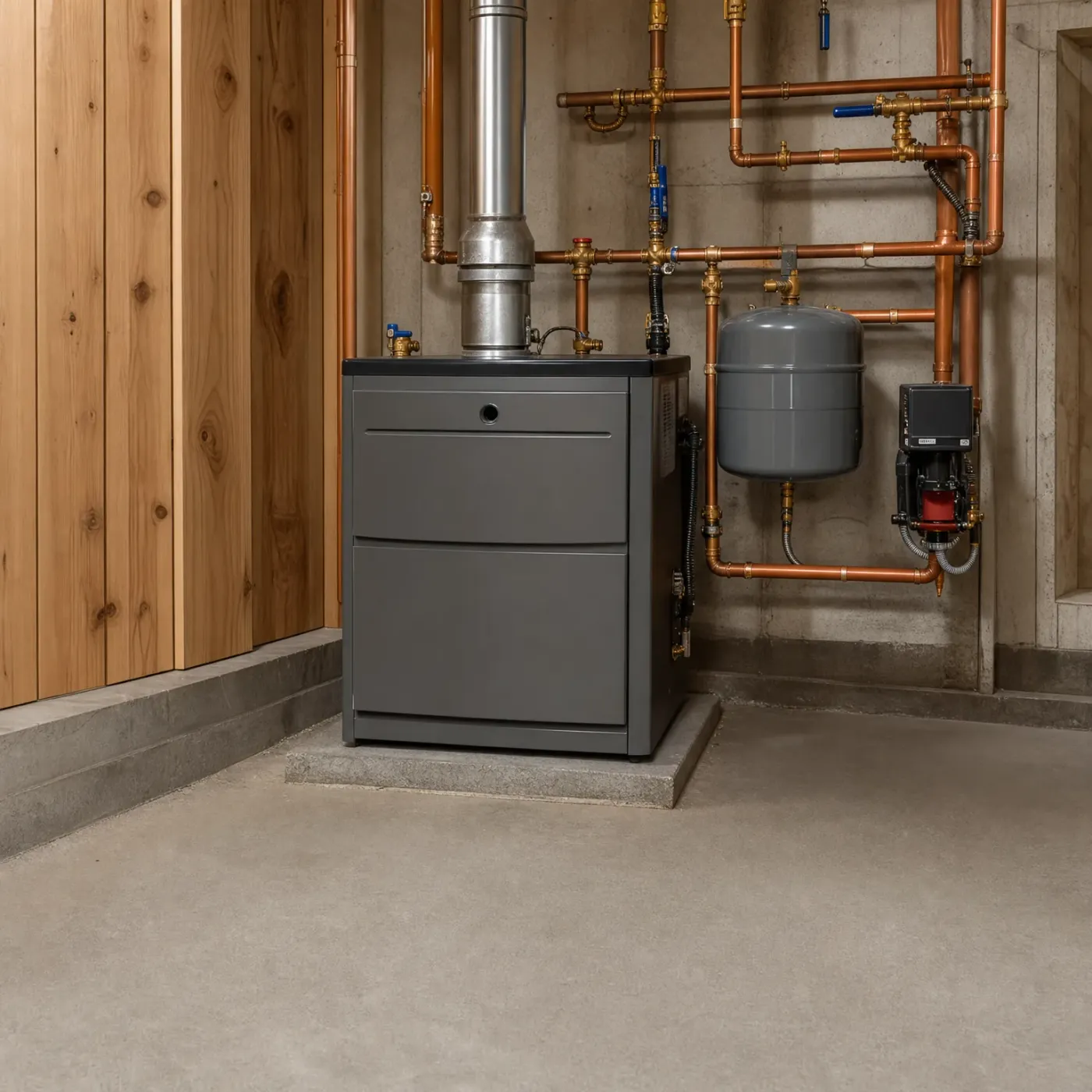
A gray boiler on a concrete pad in a basement, with a metal flue pipe and copper piping, brass valves, a gray expansion tank and a circulator pump mounted on the concrete wall beside wood paneling.

Running the way it should

The copper piping stays tight at every joint, the expansion tank holds its charge, and the pump moves water through the system without strain. A boiler set up like this on a solid pad, with a clean flue run, has what it needs to get through a North Dakota winter.

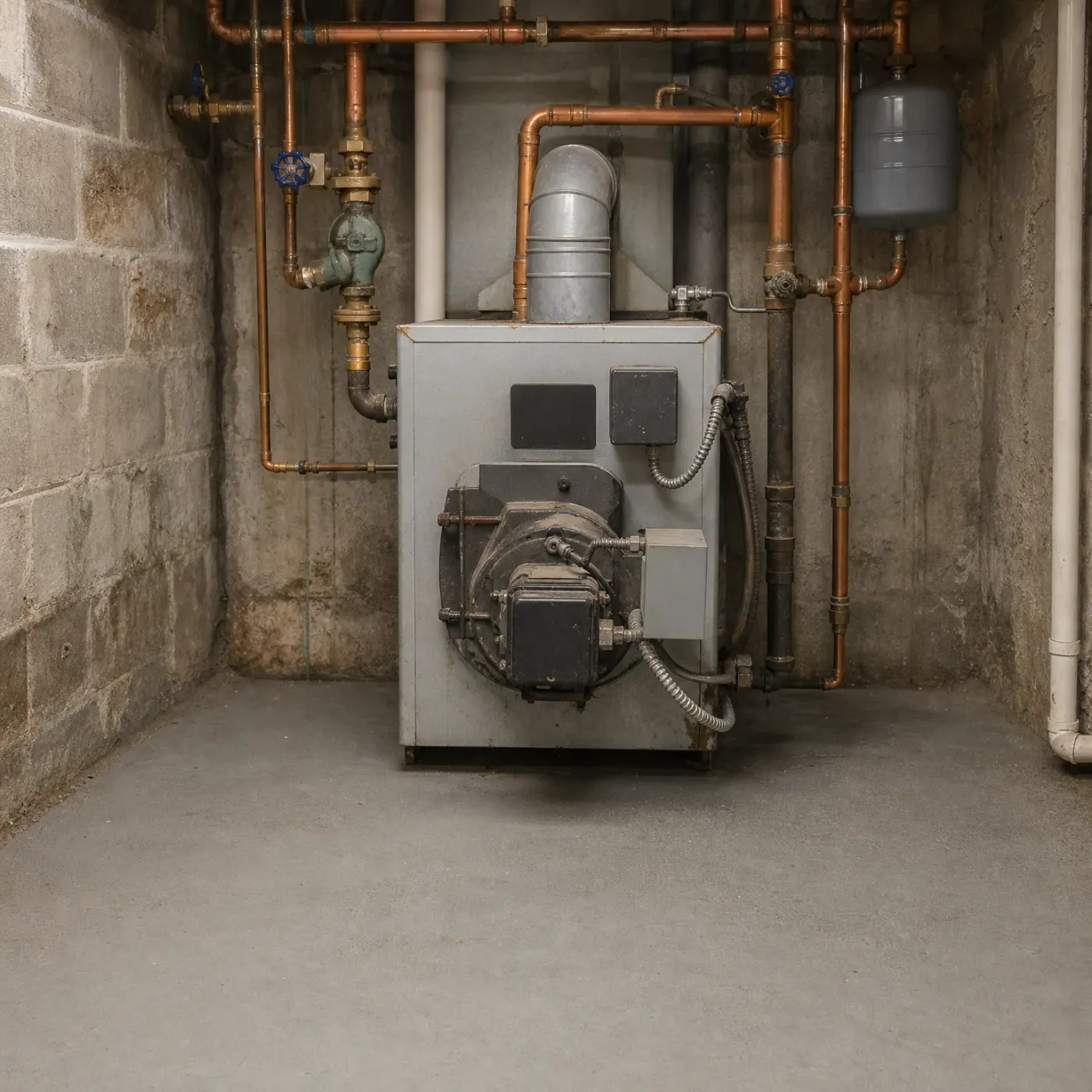
A gray boiler with a flue pipe and burner unit stands against a concrete block basement wall, surrounded by copper and steel piping, valves, and a gray expansion tank, on a bare concrete floor.

Running on borrowed time

Brass fittings and shut-off valves age, and in an unfinished basement they take on more cold and damp than a finished mechanical room does. A boiler like this can still run fine today, but a corroded valve or a weeping fitting is often how a no-heat call starts.

Winter nights average 4°F statewide

At 4°F overnight, which is normal here in December and January, a boiler doesn't have much time to waste once it stalls. Rooms cool fast and pipes along outside walls are the first to feel it. If yours won't fire tonight, that's not a wait-and-see problem.

NOAA nClimDiv 1991-2020 county normals weighted by homes

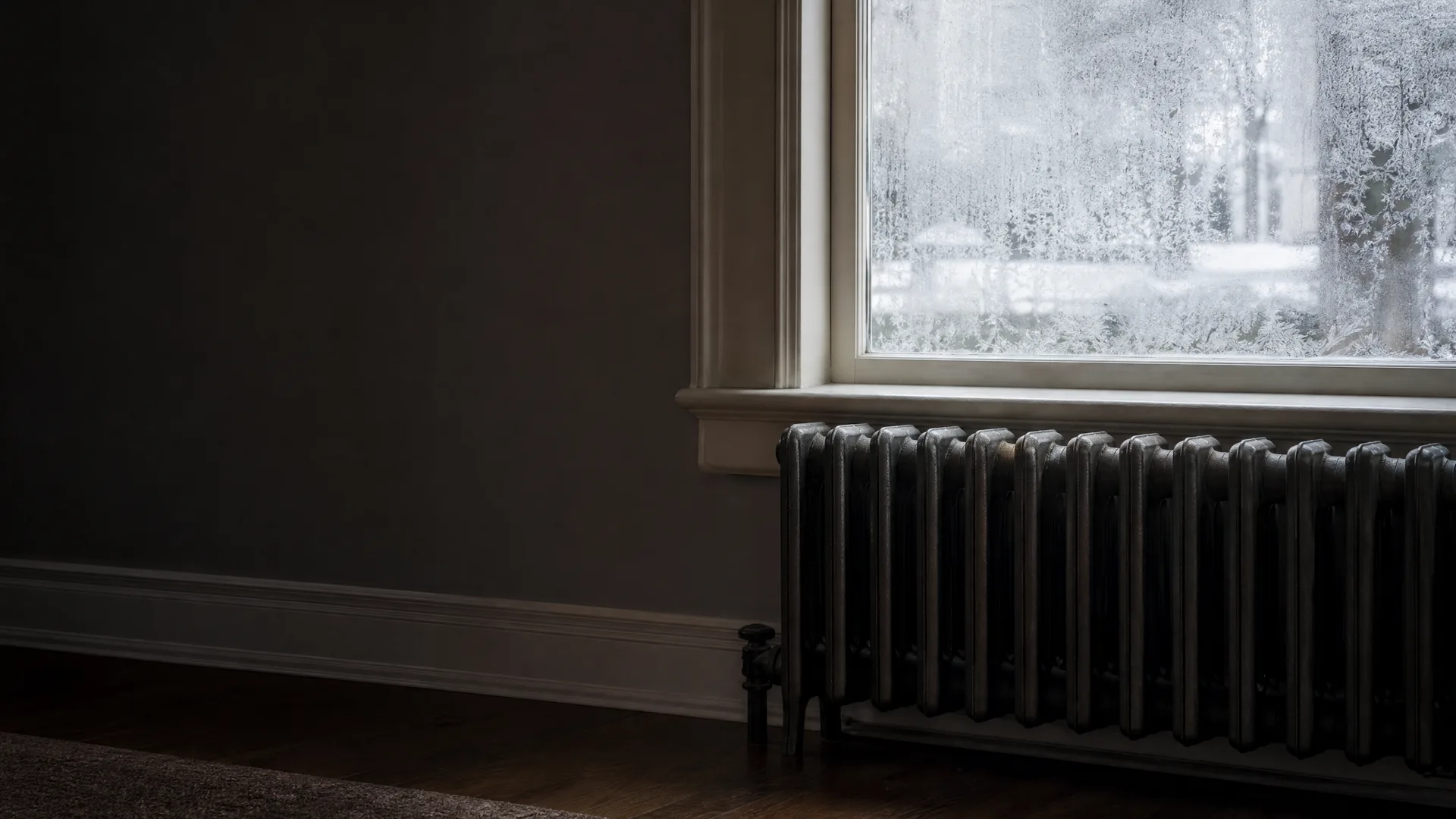
A cast iron column radiator with a valve stands beneath a window with a frosted pane showing snowy trees outside, in a dim room with dark walls and wood flooring.

The radiator under the window has been cold since you got up. Outside it's still dark, maybe four below, and the glass has a skim of ice across the inside of the pane. You've got the thermostat turned up past seventy and nothing's happening, no clank in the pipes, no tick of the burner catching. You go downstairs in your coat because the living room feels worse than the hallway. The dog won't get off the couch. You put a hand on the cast iron and it's the same temperature as the wall behind it. Somewhere under the house the boiler is just sitting there, and you're already thinking about who you'd even call for this, and whether they'd know this kind of system or just guess at it.

Skip the search

A boiler that won't fire doesn't leave you much room to shop around while it's below zero outside. Normally that means calling a few places, explaining the thermostat clicking and the cold radiators each time, then waiting on quotes to decide who to trust with it. None of that fits a night when pipes along an outside wall are already losing their margin. Send the request once and it goes to a licensed contractor working in your part of North Dakota, someone who deals with stalled boilers all winter and knows whether a frozen condensate line, a bad igniter, or lost pressure is the likely cause before they ever walk in. You're not fielding calls from five different companies trying to win the job. One contractor gets it, already knowing what this cold does to a system like yours. That's the part you can hand off right now, while you keep an eye on how fast the house is cooling.

Wait it out and keep calling the thermostat up, hoping the boiler catches on its own before pipes along an outside wall get cold enough to worry about.

Get a licensed contractor out to find what actually stalled it, the igniter, the pressure, the gas valve, while the house still has heat worth saving.

A blue residential boiler with a metal flue, pressure gauge and burner unit stands against a stained concrete basement wall, surrounded by copper pipes, a green circulator pump and a gray expansion tank.
Before you get your boiler repair
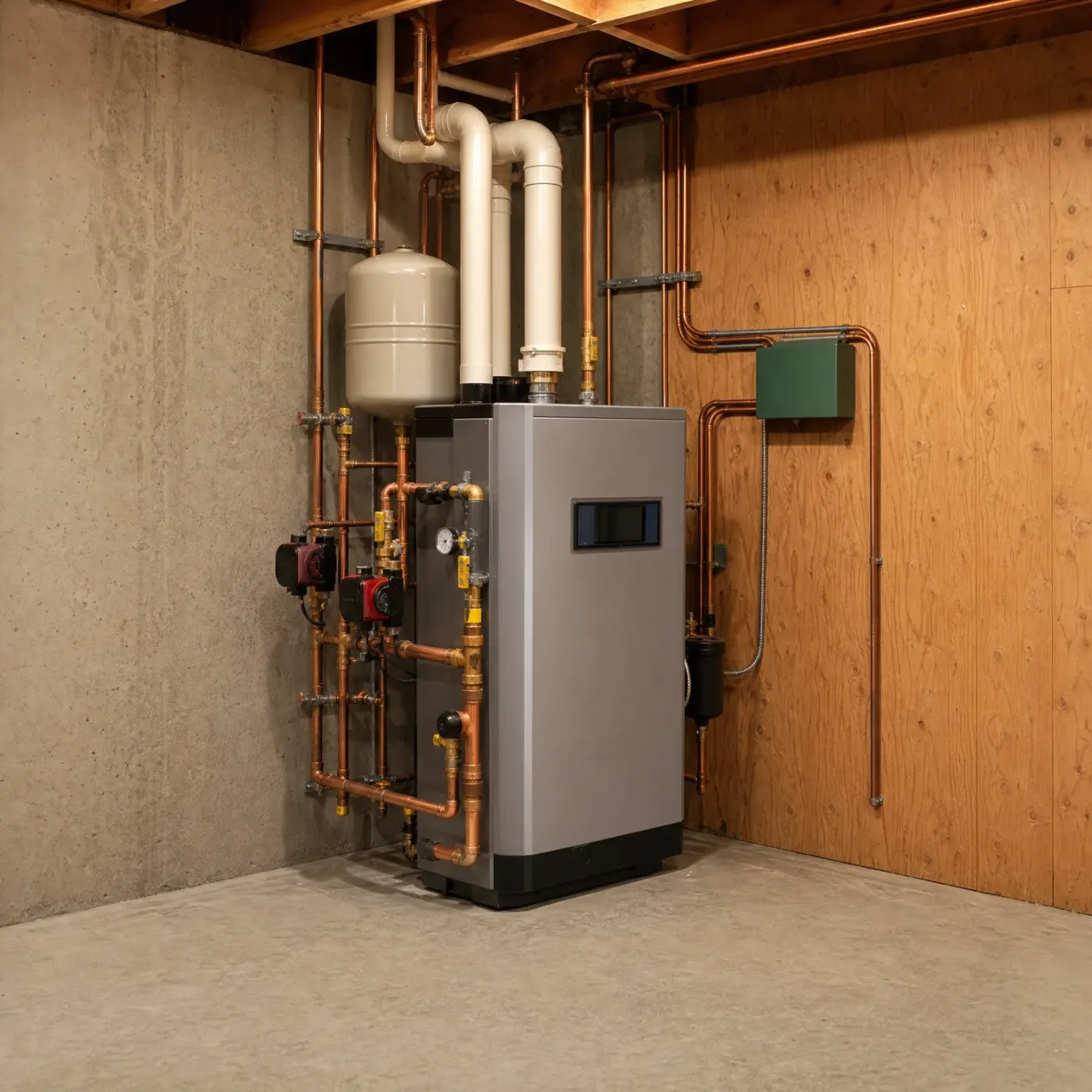
A gray floor-standing boiler in a basement corner with copper piping, two red circulator pumps, a beige expansion tank, white PVC vent pipes, concrete and plywood walls.
After you get your boiler repair

A boiler won't fire just because the thermostat asks it to. Between that call and a lit burner sits a chain of safety checks, and any one of them can stop the whole process cold. Water level and pressure get checked first, usually against a low water cutoff that shuts the burner down if either falls too low to run safely. The gauge needs to hold somewhere around 12 to 15 psi for the control board to move forward at all. An automatic feed valve is meant to top off pressure on its own, but if that valve sticks, the system stays low no matter how often it tries. Cold makes condensate traps freeze or clog, and a blocked trap trips a safety switch before the burner ever gets a chance. Even once gas and ignition get the green light, the igniter has only a few seconds to catch before the control board gives up and locks out. The aquastat, separate from all of this, is just watching water temperature to decide when the burner fires and when it rests.

The safety switches between thermostat and heat

  • A low water cutoff sits in the system to stop the burner if water level or pressure falls too far for safe operation.
  • Most boilers need somewhere between 12 and 15 psi on the gauge to let the control board call for ignition.
  • The aquastat reads water temperature and tells the burner when to fire and when to shut off, separate from the thermostat call.
  • An automatic feed valve is supposed to add water and restore pressure on its own, but a stuck valve leaves the system low.
  • A condensate trap that's frozen or clogged can back up and trip a safety switch that blocks ignition entirely.
  • The igniter only gets a few seconds to light the burner before the control board locks out and tries again or stops trying.
A middle-aged woman with shoulder-length dark hair, wearing a gray cardigan over a cream top, sits in an upholstered armchair and looks toward a sunlit window, with a shelf holding framed pictures and a plant behind her.
A woman and a child wrapped together in a knitted gray blanket on a couch, with the child's head resting on her shoulder and a lit table lamp and houseplant in the background.
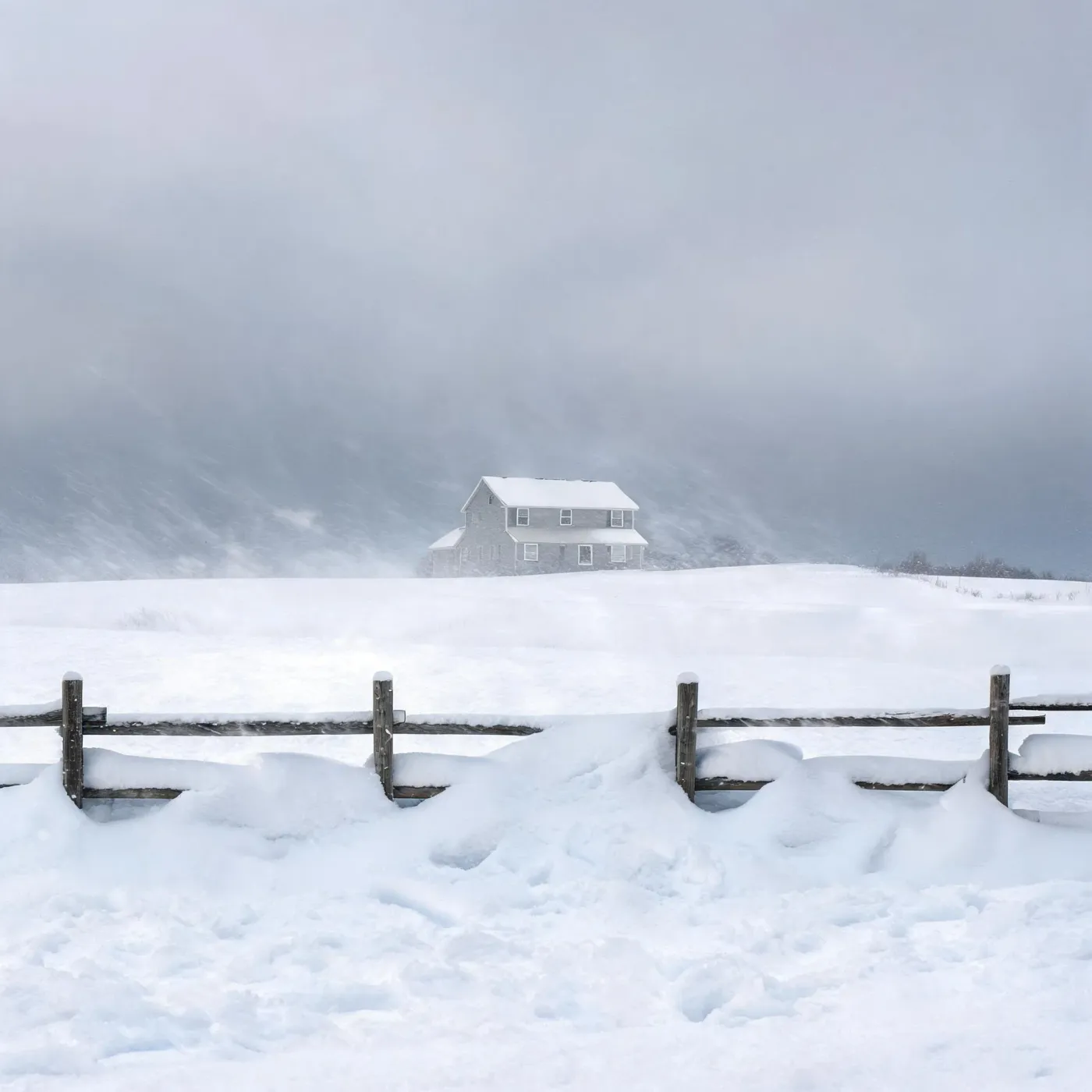
A two-story light-colored house stands on a snow-covered rise under a gray sky during blowing snow, with a partially buried wooden post-and-rail fence in the foreground.

Statewide, winter nights average 4°F, according to NOAA climate data for North Dakota. At that temperature a boiler isn't just heating your house, it's fighting to keep the water in its own pipes warm enough to move. A system that's low on pressure or slow to ignite has less room to recover before rooms start losing heat fast. You'd notice it first at the radiators farthest from the boiler, or along a wall that backs up to the outside, going cool while the thermostat keeps calling for more heat that never shows up.

NOAA nClimDiv 1991-2020 county normals weighted by homes

A closed silver laptop and a ceramic mug of dark coffee sit on a wooden table in front of two chair backs, with a kitchen counter, tiled backsplash, wooden cutting boards, a vase of greenery and a potted plant by a window behind.

A boiler that won't start has a reason, and it's one a licensed contractor can find

A dead igniter, a pressure drop, a tripped low water cutoff or a thermostat that never called for heat all look the same from where you're standing: cold radiators and a house that's losing ground. The difference matters for the fix, but not for what you do right now, which is get someone out who works on these systems all winter.

That's the part a licensed local contractor takes off your plate. Instead of searching around, calling two or three companies, walking each one through the same story about the clicking and the cold radiators, and sitting on quotes while the house keeps cooling, you make one call. One contractor who knows what tends to fail in a North Dakota cold snap comes out, finds the actual cause, and fixes it.

Interior corner with a beige sofa holding a dark green and a light cushion and a textured throw, a potted small-leaved tree beside a white-framed window, and a dark shallow bowl on a wooden coffee table in the foreground.
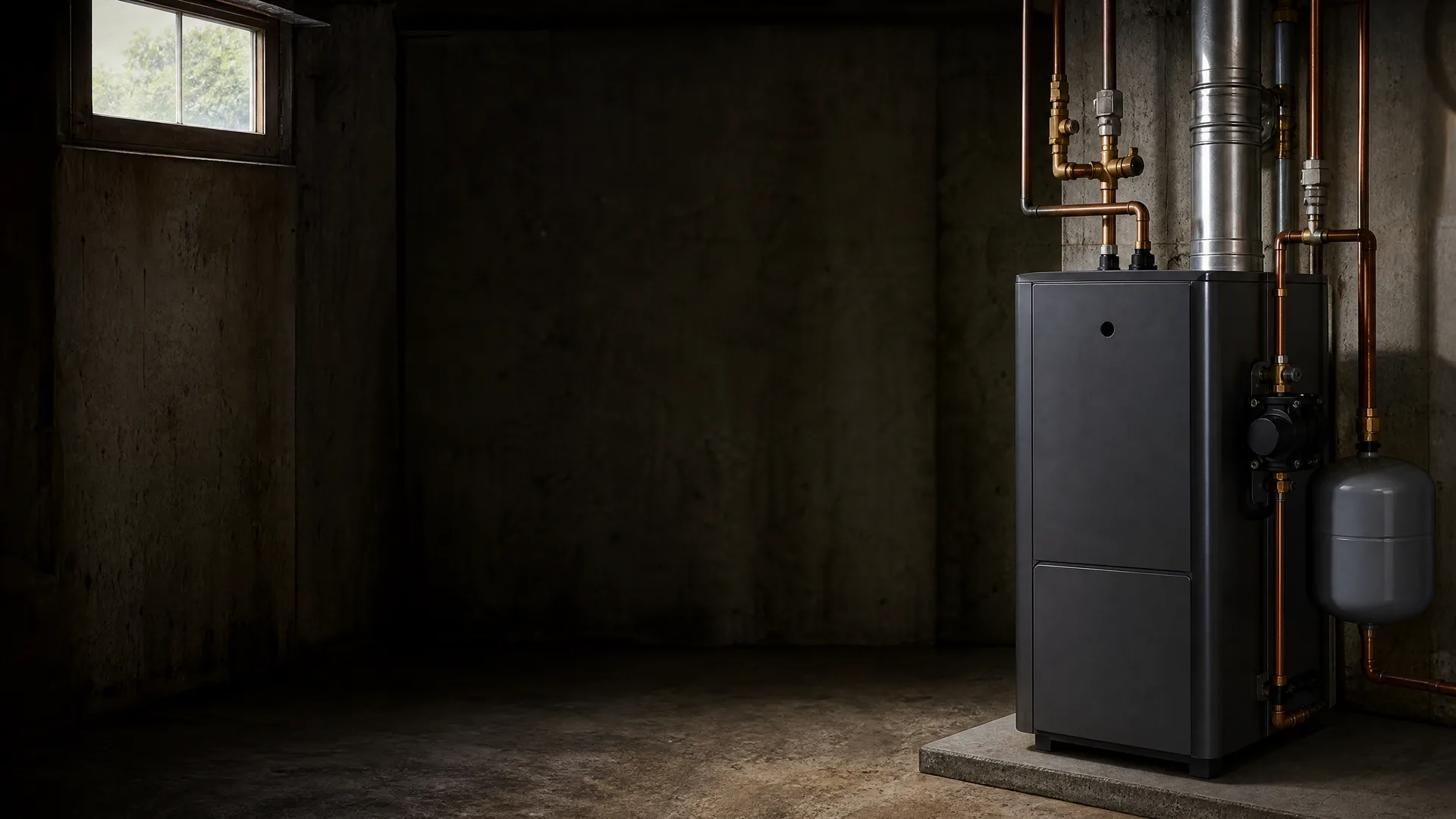
A dark grey boiler unit on a concrete pad in a dim basement, with copper pipes, a metal flue, and a grey expansion tank on the wall, and a small window with daylight on the left.

Explain it one time

Only one pro gets your request, so you hear from one company.

Step 1 of 3: Equipment