Tell us about the job
Takes about a minute. No obligation.
Homes in Stark County, ND run heat about ten months a year, from September through June. Cycling through most of a calendar year, the burner assembly and ignition components on a boiler accumulate wear in a way that a sealed heat exchanger or a pressure relief valve simply does not. When a boiler does go down, a contractor working the repair checks the ignition system and burner first, because those are the parts that have been starting and stopping through every cold snap since September. Corrosion and residue from combustion build up over a long run, and the idle months do nothing to reverse that.
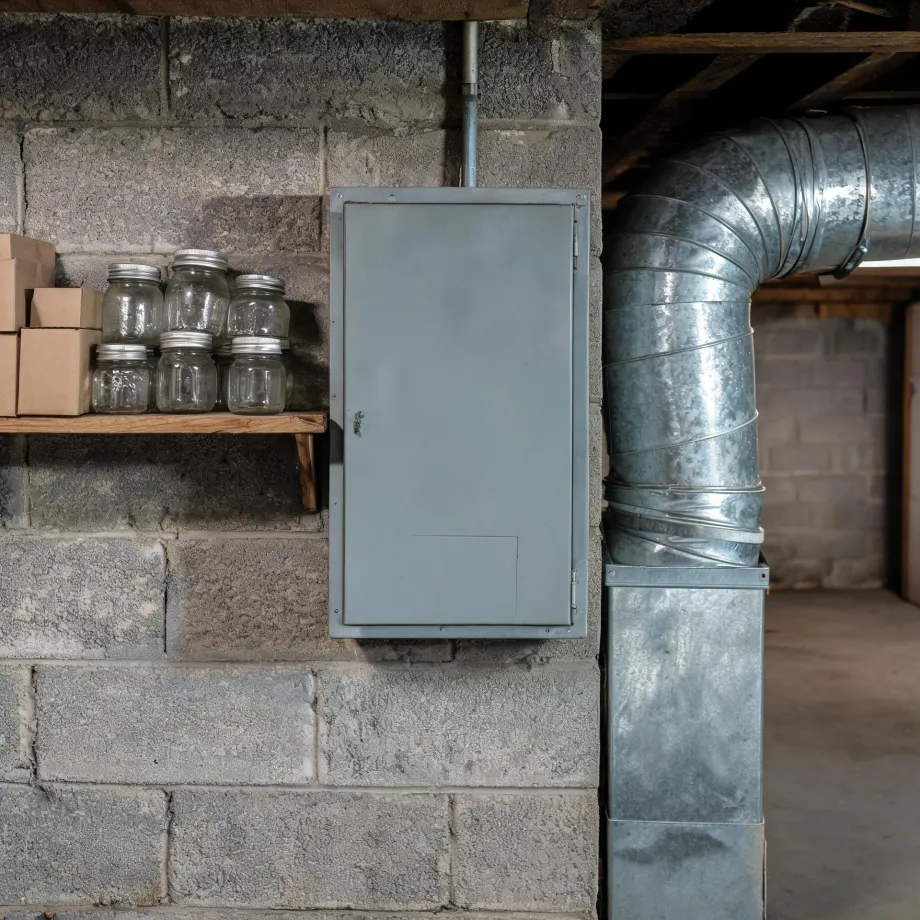
Boilers in houses like these have been cycled through cold season after cold season, and the interior of a system that old tends to show it: sediment at the bottom of the heat exchanger, seals that have gone brittle, and sections where corrosion has worked in along the joints. Half the homes in Stark County, North Dakota were built in 1986 or earlier (2020-2024 ACS 5-year). A contractor opening a boiler here is not guessing at condition from the outside. What they find inside decides whether the repair is a part swap or a full section replacement, and whether the parts the system takes are still being manufactured.
The Parts of a Boiler a Contractor Checks First
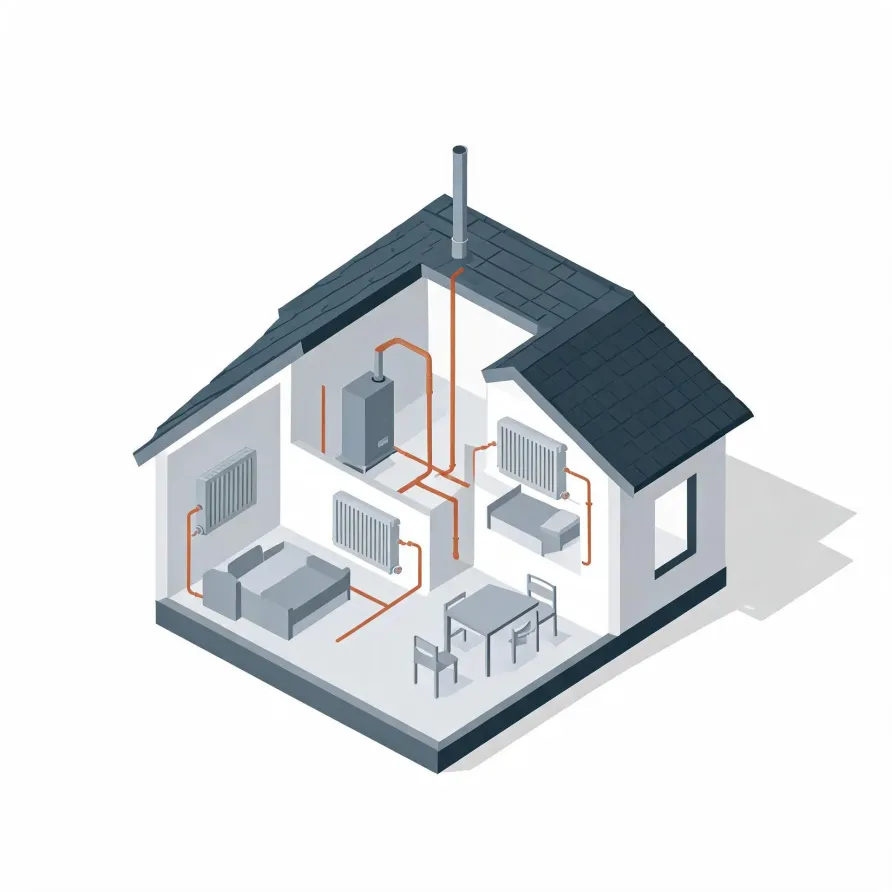
The boiler unit itself sits in the basement or a utility room and is the piece a contractor looks at before anything else. Inside it, the heat exchanger and burner assembly are the most common sources of trouble. A cracked heat exchanger or a burner that fires unevenly will show up in the unit's behavior before it shows up anywhere else in the house.
From the boiler, pipes carry hot water to radiators or baseboard units in the living spaces, and those distribution points are what the contractor follows next. The circulator pump, which pushes water through that loop, and the expansion tank, which manages pressure, both sit close to the boiler and are frequent stops when something is off.
The drawing shows a typical layout, and a licensed contractor determines which components apply to your specific system.
Find a contractor in Stark CountyStark County, by the numbers
185 severe weather events were recorded in Stark County, North Dakota between 2015 and 2024.
NOAA National Centers for Environmental Information, Storm Events Database, bulk CSV export, events 2015-01-01 through 2024-12-31.Half the homes in Stark County, North Dakota were built in 1986 or earlier (2020-2024 ACS 5-year).
U.S. Census Bureau, 2020-2024 American Community Survey 5-Year EstimatesStark County, North Dakota holds 15,514 housing units (2020-2024 ACS 5-year).
U.S. Census Bureau, 2020-2024 American Community Survey 5-Year EstimatesOwners occupy 66.8% of the occupied homes in Stark County, North Dakota (2020-2024 ACS 5-year).
U.S. Census Bureau, 2020-2024 American Community Survey 5-Year EstimatesBoiler & HVAC Repair Rules on the Books for Stark County, North Dakota1 codes, standards & licensing rules
Licensing and Legal Requirements in Stark County, North Dakota
North Dakota requires a contractor licence once the cost, value or price of a job exceeds four thousand dollars, and an unlicensed contractor may not bring a claim or a lawsuit in a North Dakota court over the work.
Severe Weather Events in Stark County
Stark County's weather puts real load on boilers, and equipment that runs hard through difficult conditions wears differently than equipment that does not. How often severe weather moves through an area shapes how much repair work the heating systems there actually need.
185 severe weather events, 2015–2024. Source: NOAA National Centers for Environmental Information, Storm Events Database.